

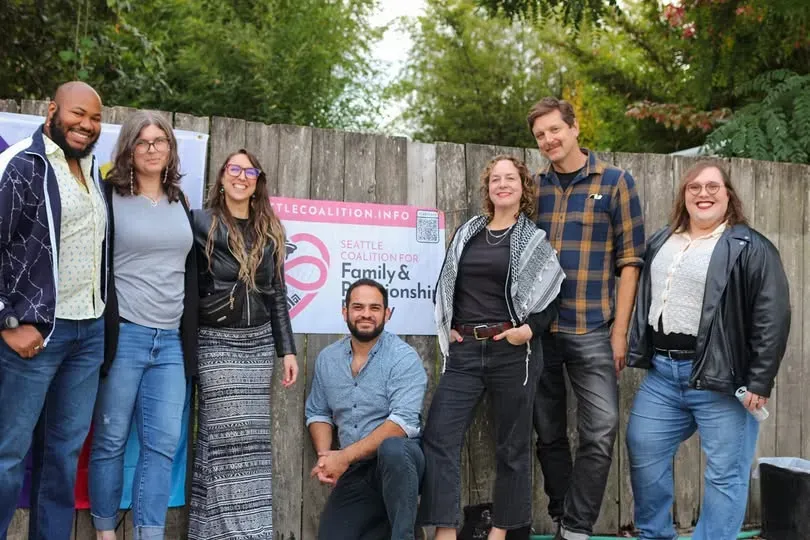
Jessa Davis is a Transgender woman and local Queer activist who, when she’s not volunteering as a member of Seattle’s LGBTQ Commission, advocates for legal protections for polyamorous people and alternative families in Washington state. On January 13, Davis’s organization, the Seattle Coalition for Family and Relationship Equity (SCFRE), alongside the Organization for Polyamory and Ethical Non-monogamy (OPEN), successfully put forward a bill to the Olympia City Council that would add “family or relationship structure” to the language of the city’s anti-discrimination laws. The council voted unanimously to bring it to a vote, which is slated for February 9.
Inspired by the work of OPEN and others, like the Harvard LGBTQ+ Advocacy Clinic, that helped pass similar legislation in Oakland, California, two years ago and Cambridge, Massachusetts, five years ago, Davis founded SCFRE as a way for Washington’s polyamorous practitioners to finally protect themselves legally against discrimination in employment, housing, and healthcare.
Now that the bill’s chances of passage in Olympia are looking strong according to Davis, she told the SGN that her organization’s next step will be to replicate the process — but this time at Seattle City Hall.
Polyamory in America
In recent years, there has been a growing cultural trend toward “nonmonogamous” forms of companionship in the US. The Polyamory Legal Advocacy Coalition (PLAC), created in 2020 and composed of a psychologist and five lawyers who focus on LGBTQ+ issues, estimates the number of “consensual nonmonogamous” relationships at about 4-5% of the US population.
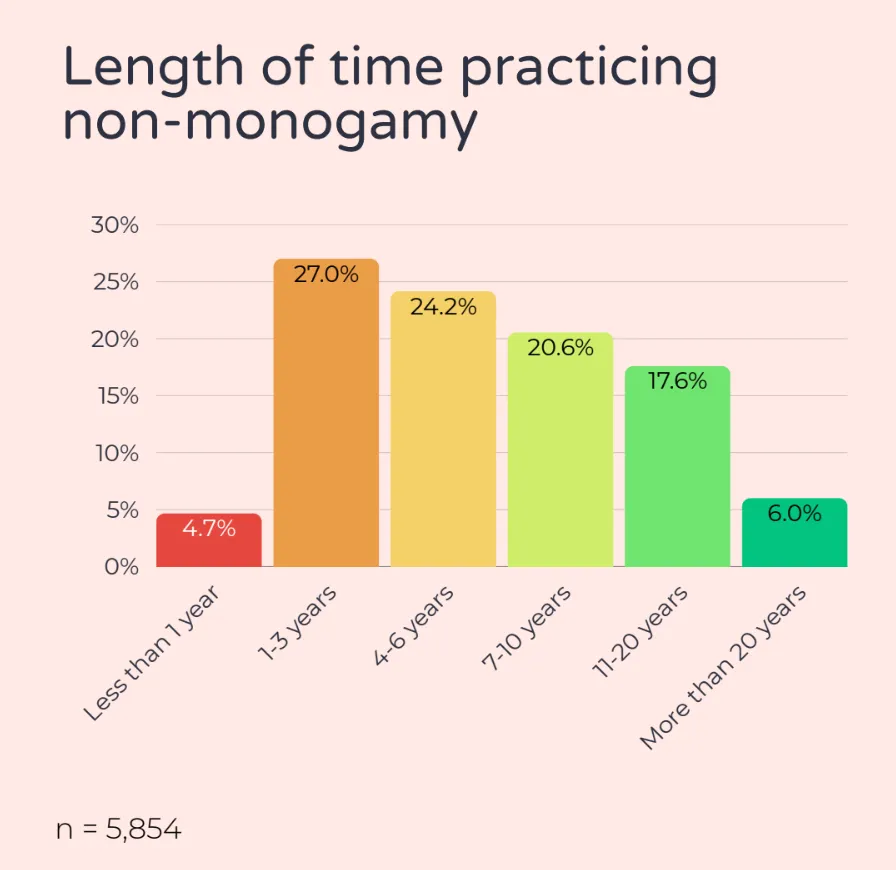
OPEN’s 2025 Community Survey Report claimed that nearly 6,000 respondents from 65 countries and 52 US states and territories participated. The survey asked respondents questions regarding their demographics, relationship practices, openness with others, and experiences with discrimination. Sixty-five percent of participants were based in the US, of which 8% were Washington residents (the second largest figure behind California)
Some of its key findings included the following:
- 66.8% of respondents had practiced nonmonogamy for at least four years
- 44.6% identified as Bisexual or Pansexual; 23.8% identified as heterosexual/straight
- 61% reported experiencing discrimination on the basis of their nonmonogamous identity over their lifetime (consistent with previous years’ findings); over 40% reported discrimination in the last 12 months
- a majority of respondents on a scale of 1-5 were (5) definitely not out or (4) mostly not out to their work peers (56.9%) and extended family (65.8%), while also being (5) definitely not out to members of their religious community (56.1%), work supervisors (57.1%), religious leaders (64.3%), and landlords (69.5%).
The group also claimed that, now in its fourth iteration, the 2025 survey “represents the largest dataset of nonmonogamous experiences compiled to date.”
The rise in popularity of dating apps like Feeld, built on a philosophy of romantic “openness,” and many others that allow users to choose between “monogamous” and “nonmonogamous” labels may indicate that the country’s views on relationships are shifting. And with literature like Ethical Non-Monogamy: A Practical Guide and also More Than Two: A Practical Guide to Ethical Polyamory, as well as TV shows like White Lotus and Succession, polyamory has steadily been entering the US cultural mainstream; it has even become the subject of nationwide conversation and critique in large, mainstream publications like The Atlantic, New York Times, and The New Yorker.
But over the years, there’s still been one element of society that polyamory hasn't caught up with yet: the law and legal protections.
Building a coalition
Davis, who lives in her Beacon Hill home with three other Trans women and two toddlers, related how she had practiced polyamory for several years and had been active in the community before she got involved with the legislative aspect. Her journey began while doing some research into the topic of protections for polyamorous people, after one of her partners experienced discrimination. She told the SGN that her partner was fired from their job in the medical field for being polyamorous, reportedly having been told by their supervisor that it was inappropriate for them in their position to have a “sex-craved lifestyle.”
“This is illegal — there should be something done about this!” was how Davis recalled her partner lamenting about the experience, and having already looked into its legality, she had no choice but to reply: “Well, technically, it’s not illegal.”
In the time since Davis founded SCFRE, the group has made a lot of progress in a short period of time. She explained how the organization has partnered with OPEN and works in coordination with other local affiliated groups, like the Poly Under 40 Meetup group and Evergreen Hearts, to help bring the various people who practice nonmonogamy in Washington state together.
On October 4, SCFRE held its first “Liberating Love Festival” in West Seattle, which featured a discussion panel, and provided prewritten letters requesting nondiscrimination laws for attendees to take, sign, and mail to their district representatives. Davis reported that around 80 people showed up and that it seemed that “people have been really craving this kind of community.”
In November, the event’s discussion panel was released as an episode of the Seattle-based Mistakes Were Made podcast, which is about “nonmonogamy for imperfect people.” The co-hosts, Alex and Sarah, were joined by Davis and other guests as they talked about antidiscrimination laws and the importance of building societal acceptance for polyamorous people. Elizabeth Cunningham, a life coach in the greater Seattle area who works with LGBTQIA+ people, brought up the importance of how social change works off of social networking, and that being openly polyamorous can have a “ripple effect” toward building allies and support for the movement. Conversely, Davis warned the audience how “the siloing of our communities and identities saps our collective power.”
Olympia bill
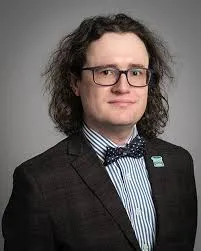
“Fifteen months ago, I did not think we’d be this far with this,” Davis reflected, as she related the story of how SCFRE ended up persuading the Olympia City Council to vote on the legislation, which would add nondiscrimination language to Olympia’s municipal code. Davis said that since the bill doesn’t look to add an entire new code or repeal one, that has helped immensely in convincing the city councilmembers to sign on. The SCFRE bill was able to garner support from several key players, including City Councilmember Robert Vanderpool as the bill’s sponsor; it also received endorsements from the Washington Human Rights Commission and Tacoma Democratic Socialists of America. She pointed out that even the bureaucratic process of getting the bill heard was fairly straightforward: “It was an email and two Zoom meetings, and now we have a bill being [considered],” she said with a laugh of surprise at its success so far.
Councilmember Vanderpool, in an interview with KOMO, spoke to why the protections were important: “With issues like this, you constantly find that — not that folks are underground but it’s hard for folks to come forward about these things, because it is a very private thing, and we want them to feel welcome in our community and not ostracized,” adding that “the biggest thing that comes up is housing. Folks that are in polyamorous relationships or nonmonogamous, or even chosen families — it’s hard in a chosen family to put someone on their mortgage.”
At the January 13 city council meeting, Davis described how even though a few people who gave public comment were opposed to the bill, the council was unanimous in its mindset on the issue. According to her, Olympia Mayor Dante Pain even responded to one commenter who accused polyamorous people of wanting to abolish monogamy and traditional marriage with “you’re wrong.” She also alluded to knowing somebody on the Olympia city council that is nonmonogamous but did not want to disclose their identity on the record for the sake of their safety.
Seattle strategy
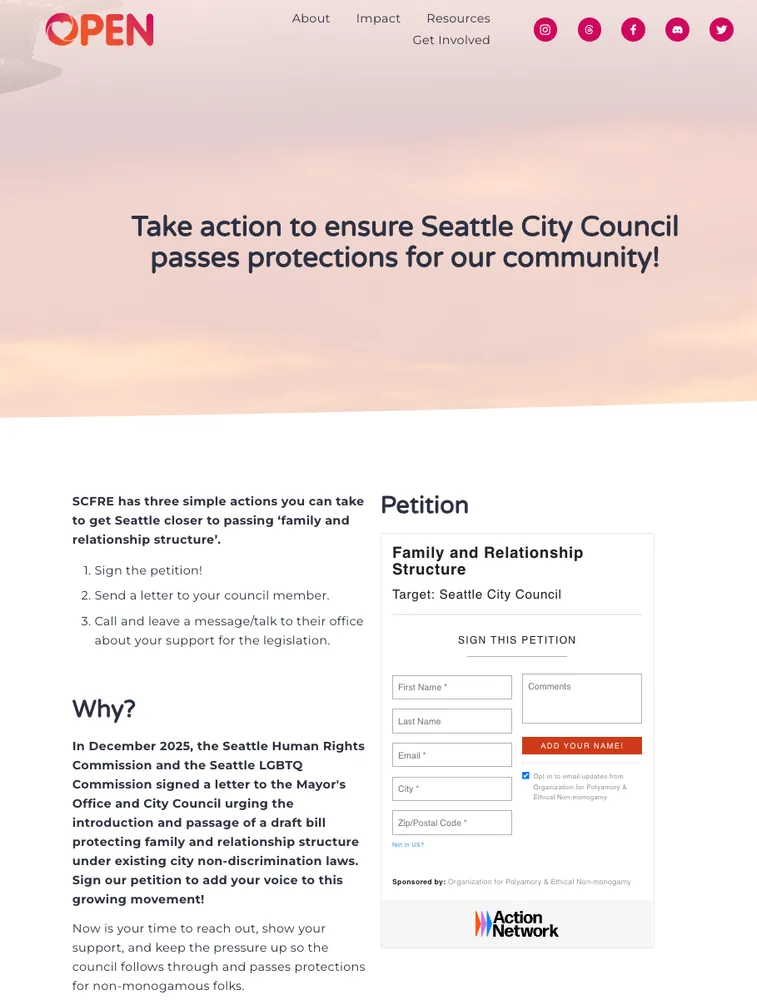
As a Seattle resident with partners and children, Davis is keen on now bringing the fight for antidiscrimination protections to Seattle City Hall. Back in December, the Seattle LGBTQ Commission cosigned a recommendation forwarded by the Seattle Human Rights Commission to the Mayor’s Office and City Council, urging that they introduce “family and relationship structure” terminology to existing city nondiscrimination codes. Davis said that SFCRE will now start reaching out to all Seattle’s city councilmembers with letters of recommendation from the HRC and Harvard Medical Center, a legal review from PLAC, and fact sheets about Olympia’s bill.
Davis explained that the reason why SCFRE had waited to pursue this up until now was in part because of November’s election, in case politicians less likely to support the bill were going to be voted out. Now that Seattle has elected a new progressive mayor and several new progressive city councilmembers, she reported feeling a lot more optimistic. But unlike Olympia, she said that if a vote in the Seattle City Council were to happen, it probably wouldn’t be unanimously supported.
For Seattle, the changes would require an addendum to already existing city policies around family and parental rights. Davis’s proposed legislation would also coincidentally include adding protective language for Asexual and Aromatic people.
Back in 1986, Seattle was the sixth US city to recognize gender identity as a legally protected status. Davis pointed out that if Seattle were to do the same now for polyamorous people after Olympia, the city would again become the sixth in the US to do so.
Long-term goals
Davis seemed positive overall about the prospect of a nondiscrimination ordinance in Seattle, and that her long-term goal with SCFRE would be to take the fight to other cities and eventually the state. She cited that the biggest struggle of getting legislation passed was “not a question of political resources but [of] people [having] the time and will to pass it.”
Nearing the end of the conversation, she again drew attention to the risks nonmonogamous people face in everyday life. “Imagine you call SPD about a domestic violence situation, and you have to describe what a polycule is,” she offered as a potential scenario where polyamorous Seattleites might not have protection under the law.
“A soccer mom in Bellevue shouldn’t be kicked off the PTA for being in an open marriage,” she stated, pointing out the absurdity of people who could lose their jobs, homes, services, and positions solely on the basis of their private romantic practices.
“People shouldn’t have to live their lives in fear,” Davis affirmed.
Another reason Davis felt strongly about organizing for local legislation was that, to her, the federal government under President Trump could no longer be trusted to protect people, and that Washington state law had an obligation to fill in the gaps. “I lived in red states before moving to Seattle. They are regulating the shit out of our private lives,” she said, reflecting on the anti-Trans and anti-Queer legislation that has become all too common in states like Florida and Texas.
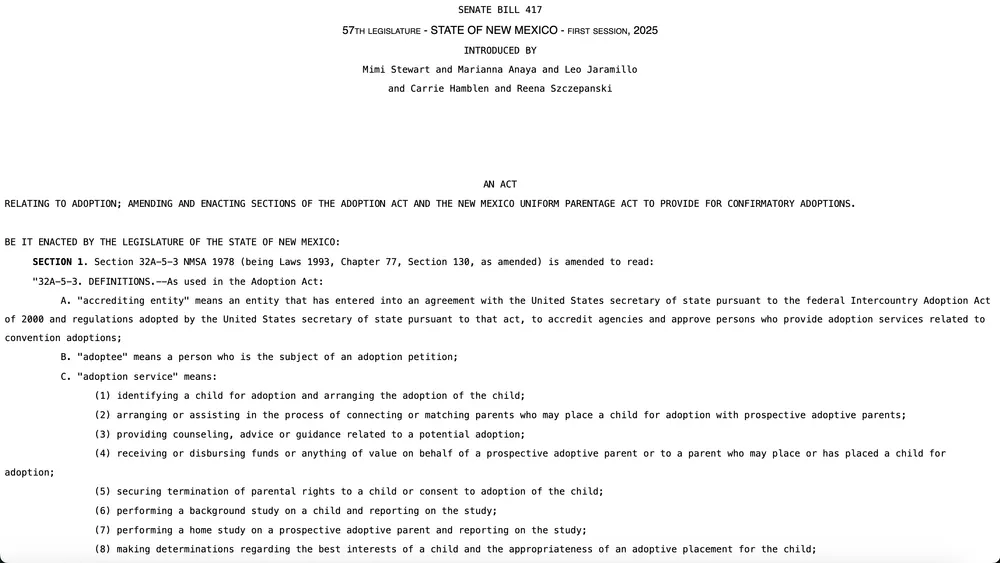
There were also a few other tangential issues Davis said SCFRE would also be fighting for in the future. Confirmatory adoption is a legal process that allows another parent, whose partner already is the legal adoptive parent of their child, to also become that child’s legal guardian. She pointed out that secondary adoptions can cost tens of thousands of dollars and gunk up the court system. This adoption process, if enacted in Washington state, would significantly benefit both unmarried LGBTQIA+ and polyamorous couples, while also streamlining things. She noted that New Mexico passed it in 2025.
Another potential focus for SCFRE, according to Davis, would be Indigo’s Law, drafted after the death of Trans woman Alice “Indigo” Greene, to address the lack of legal rights in Washington state for unmarried romantic partners after their partner passes away.
One thing SCFRE does not seek to work on right away, though, is amending marriage laws. “We are currently not pushing for plural marriage. Some in the community want this, and see it in the same terms of Obergefell v. Hodges,” Davis explained, referencing the landmark Supreme Court decision in 2015 to legalize marriage equality nationwide.
But in the meantime, she feels excited about her work, and that of other nonmonogamous people across the country.
Information about SCFRE can be founded on its Linktree at https://linktr.ee/seattlecoalition#536639792; it is also collecting signatures for a petition to Seattle City Council for the antidiscrimination ordinance, which can be found at www.open-love.org/legislativeadvocacy/washington/seattle/scripts.
Support the Seattle Gay News: Celebrate 52 Years with Us!
As the third-oldest LGBTQIA+ newspaper in the United States, the Seattle Gay News (SGN) has been a vital independent source of news and entertainment for Seattle and the Pacific Northwest since 1974.
As we soon enter into our 52nd year, we need your support to continue our mission.
A monthly contribution will ensure that SGN remains a beacon of truth and a virtual gathering place for community dialogue.
Help us keep printing and providing a platform for LGBTQIA+ voices.
How you can donate!
Using this link: givebutter.com/6lZnDB
Text “SGN” to 53-555
Or Scan the QR code below!