

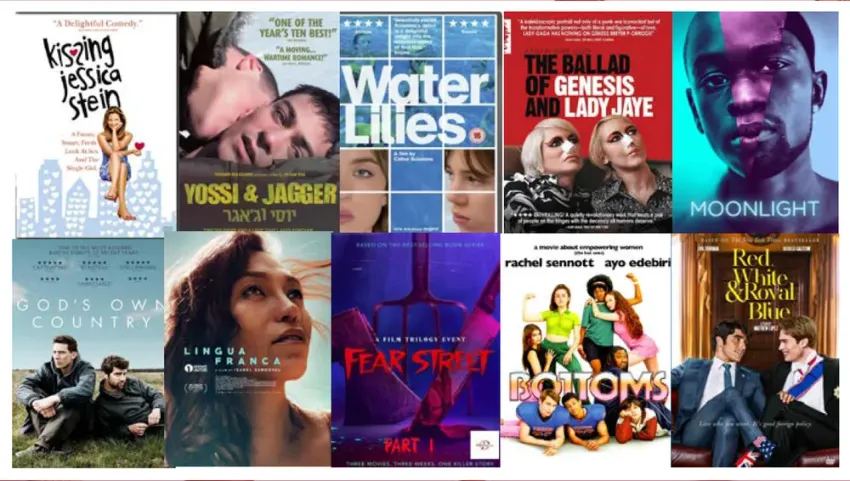
Last Valentine’s Day, I had a bit of fun writing about ten LGBTQIA+ “romances” that I enjoy watching — not just in February but pretty much whenever the opportunity arises. This was a fun, eclectic, and wildly divisive list filled with idiosyncratic choices ranging from 1936’s Dracula’s Daughter to 1992’s Orlando to 2019’s Bit, none of which exactly fit the definition of your traditional love story.
This year, I’m offering up ten Queer cinematic romances that are far more conventional (at least in their central relationships), with each one receiving a release (either in theaters or via streaming) during the 21st century. These are delectable delights that bring a smile to my face. Some are bona fide modern classics, while others most assuredly are not. But each makes me happy, and that’s honestly what I feel matters most this time of year.
A few simple ground rules: First, any film I mentioned last year will not appear this time. Sorry, Weekend, Love Is Strange, and Boy Meets Girl (but you should still watch them). Additionally, I’m going to try to stay away from the romantic tragedies (emphasis on “try”). Yes, Ang Lee’s Brokeback Mountain, Todd Haynes’s Carol, and Luca Guadagnino’s Call Me by Your Name are borderline masterpieces, but, as magical as they may be, they can be something of an emotional downer.
I’m also limiting myself to one film per filmmaker. That means some noteworthy titles, like Céline Sciamma’s earth-shattering Portrait of a Lady on Fire, do not appear, as I tried to spotlight lesser-known works whenever possible. (There’s one notable exception, but more on that later.)
Finally, a few honorable mentions didn’t make the cut, not because they aren’t awesome (they are), but more due to their Queer elements not being central to the overall story. Chief among these is Christopher Guest’s remarkable 2000 mockumentary Best in Show. While no one would ever peg this canine-loving feature as being your customary Gay romance, you can’t tell me that the relationship between Michael McKean and John Michael Higgins isn’t one of the great depictions of male love ever put to film. It’s magnificent.
I also want to spotlight the dynamic duo of John Cameron Mitchell’s groundbreaking 2001 punk rock, Transgender musical Hedwig and the Angry Inch and his sex-positive 2006 follow-up, Shortbus. This is an outstanding double-whammy, and both remain revolutionary stories of Queer romance, longing, lust, and sex that are as timeless as they are necessary. Watch them at once.
A few other pictures that I considered but failed to make the cut: Thomas Bezucha’s Big Eden, Harry Dodge and Silas Howard’s By Hook or by Crook, Angela Robinson’s D.E.B.S., Pawel Pawlikowski’s My Summer of Love, Ian Iqbal Rashid’s Touch of Pink, Ol Parker’s Imagine Me & You, Yann Gonzalez’s Knife+Heart, Greg Berlanti’s Love, Simon, Jessica Swale’s Summerland, Halina Reijn’s Bodies Bodies Bodies, Jimmy Chin and Elizabeth Chai Vasarhelyi’s Nyad, Rose Glass’s Love Lies Bleeding, and a pair of Andrew Ahn favorites, Fire Island and The Wedding Banquet. All are outrageously different from one another. Give each a look.
Without further ado, and presented in the order of their initial year of release, here are ten 21st-century LGBTQIA+ romances I think are perfect for Valentine’s Day.
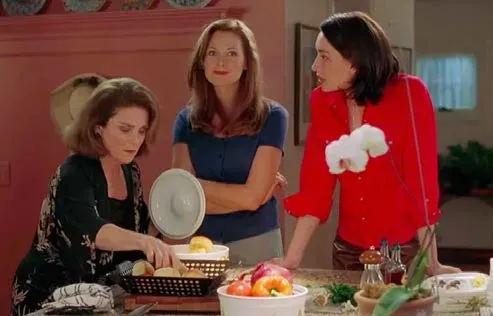
Kissing Jessica Stein (2001) (Charles Herman-Wurmfeld)
Written by and starring the supremely talented Heather Juergensen and Jennifer Westfeldt, Kissing Jessica Stein is your typical girl-goes-looking-for-the-perfect-man-but-finds-the-perfect-girl-instead romantic comedy, and, even though it’s the first entry, it’s still possibly the most vital example of that particular trope. Funny, full of life, and overflowing in joy, this sublime slice of instantaneous attraction and its almost otherworldly magic remains every bit as divine today as it was when first released a full quarter century ago.
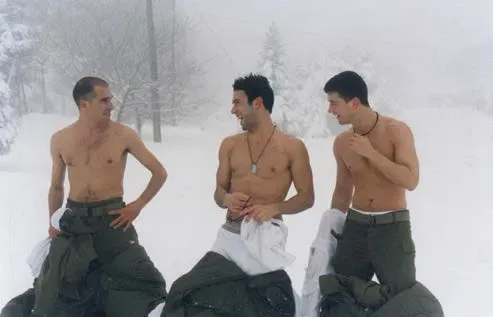
Yossi & Jagger (2002) (Eytan Fox)
Based on a true story, this powerful drama from the acclaimed filmmaker is one of the few tragedies to make this list. But it does so for a reason, as this penetrating, exquisitely intimate romance between two Israeli soldiers on the Lebanese border achieves a level of introspective truthfulness that’s strangely hopeful. Even though events ominously move to their foregone conclusion, the idea that intimate bliss is still achievable even in the most extreme and impossible of circumstances is not to be devalued. A titanic, if criminally underseen, work of poetical genius.
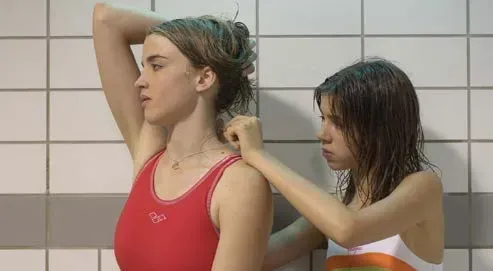
Water Lilies (2007) (Céline Sciamma)
Before knocking the world’s socks off with the quadruple whammy of Tomboy, Girlhood, Portrait of a Lady on Fire, and Petite Maman, esteemed filmmaker Sciamma made her impressive feature-length debut with this beguiling and poignant Lesbian coming-of-age love story. Though it’s shockingly quiet and movingly meditative, Pauline Acquart and Adèle Haenel still achieve an electrifying synchronicity that jumps off the screen. An early insight into a director who would quickly go on to make a bona fide modern masterpiece a dozen years later.
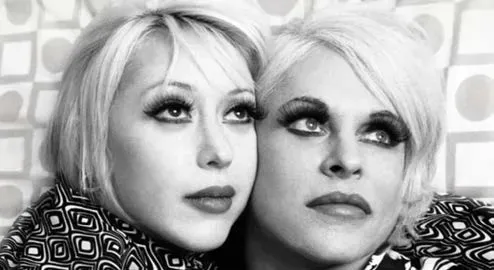
The Ballad of Genesis and Lady Jaye (2011) (Marie Losier)
While it’s hardly a great documentary, and undeniably the most problematic entry on this list (for some, if not so much for me), there is still an ebullient grace to this examination of two performance artists purposefully transforming into one another that I find magnificent. Seeing Genesis P-Orridge and Lady Jaye go to such extreme lengths to make a fantastical conceptual idea into a plastic surgery–aided reality is rather haunting (and semi-disturbing), while their deep, overwhelming love for one another breaks every barrier (gender, sexuality, morality — you name it).
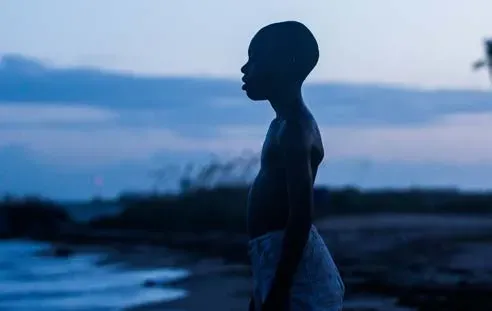
Moonlight (2016) (Barry Jenkins)
For all of the caterwauling about which nominees were “most deserving” of the Academy Award for Best Picture, there are far more outstanding films that have won than subpar ones, and Jenkins’s tremendous Moonlight is one of the all-time greatest of those. This decade-spanning look at a child’s evolution into manhood — facing hardships and roadblocks unfathomable to most but a living nightmare for far too many — remains a resilient triumph of found father figures, broken families, internalized traumas, and lost (and subsequently rediscovered) loves that boggles the mind. Unforgettable.
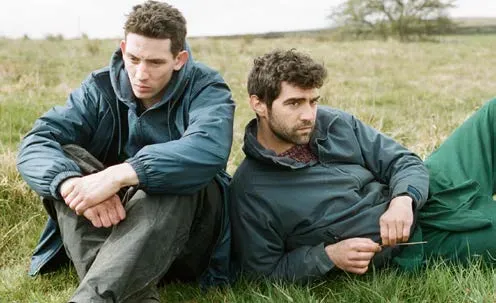
God’s Own Country (2017) (Francis Lee)
This stunning, breathlessly intoxicating drama of sexual longing and emotional catharsis between a young Yorkshire farmer and a Romanian migrant worker is one of the most explosive, captivating, and downright mesmerizing debuts of any filmmaker in the 21st century. Writer-director Lee creates an invigorating landscape of catharsis, need, and understanding that smashes through cultural barriers to become something universally affecting, going well beyond stereotypical gender and romantic clichés in the process. A cinematic miracle deserving of greater recognition.
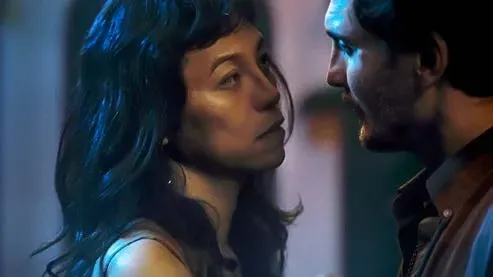
Lingua Franca (2019) (Isabel Sandoval)
Writer, director, and star Sandoval’s elegant, melancholically tender drama of an undocumented Filipina Brooklynite falling in and out of love (and maybe back in again) with the prickly grandson (Eamon Farren) of the elderly Olga (Lynn Cohen), who is suffering from dementia, is simply marvelous. Each step is authentic. Every movement is an organic extension of the one that came before. Equal parts heartbreaking and therapeutically optimistic, this drama is a purifying balm to a weary soul for all viewers, Trans and cis alike.
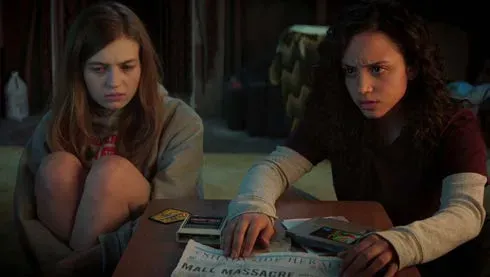
Fear Street: Part One – 1994; Fear Street: Part Two – 1978; Fear Street: Part Three – 1666 (2021) (Leigh Janiak)
Here is when I break my own rule of one film per director. But when the trilogy is this awesome and this intimately connected, rules get thrown out the window (or, in this case, maybe shoved head-first through the bread slicer). Janiak’s foray into author R.L. Stine’s terrified town of Shadyside is nothing short of miraculous. Not only does the filmmaker craft a cohesive, overarching tale of generational subjugation, misogyny, sexism, and economic duress, she also craftily slips in one of the great young-adult romantic hero’s journeys I’ve ever seen. The love blossoming between Deena Johnson (Kiana Madeira) and Sam Fraser (Olivia Scott Welch) while under the threat of impossible, centuries-spanning circumstances is the stuff of legends, making their eventual triumph over patriarchal terror all the more spectacular. Better, it makes it essential.
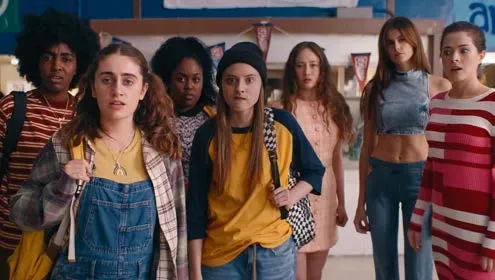
Bottoms (2023) (Emma Seligman)
Bottoms is the funniest film of the past decade, maybe the entire 21st century. It slyly conceals rapturous kernels of teenage truth among all of its absurdist, vulgar, and goofily hyperviolent layers. A cagey sex comedy of two high school Lesbians starting an all-girl fight club in the hopes of eventually getting laid, the film quickly ascends to a level of Heathers-meets-Mean Girls-meets-Superbad bedlam that must be seen to be believed. Yet, at its heart, this is a story of Queer resilience, survival, and self-acceptance that goes far beyond the fisticuffs, four-letter-word putdowns, and fiery explosions, with stars Rachel Sennott and Ayo Edebiri fearlessly going for broke as they give their characters unexpected complexity and depth.

Red, White & Royal Blue (2023) (Matthew López)
A candy-coated Gay romance that purposefully traffics in several romantic comedy conventions — only to devilishly subvert them as it moves along to its heartwarming conclusion — this adaptation of Casey McQuiston’s best-selling book is the textbook definition of a “crowd pleaser.” Though not particularly deep and hardly groundbreaking, the movie is so gosh darn entertaining that none of that remotely matters. No wonder Amazon MGM Studios is moving forward with a sequel, set for release in 2027. Here’s hoping that opens in theaters, and not only on a streaming service.
Support the Seattle Gay News: Celebrate 52 Years with Us!
As the third-oldest LGBTQIA+ newspaper in the United States, the Seattle Gay News (SGN) has been a vital independent source of news and entertainment for Seattle and the Pacific Northwest since 1974.
As we soon enter into our 52nd year, we need your support to continue our mission.
A monthly contribution will ensure that SGN remains a beacon of truth and a virtual gathering place for community dialogue.
Help us keep printing and providing a platform for LGBTQIA+ voices.
How you can donate!
Using this link: givebutter.com/6lZnDB
Text “SGN” to 53-555
Or Scan the QR code below!