

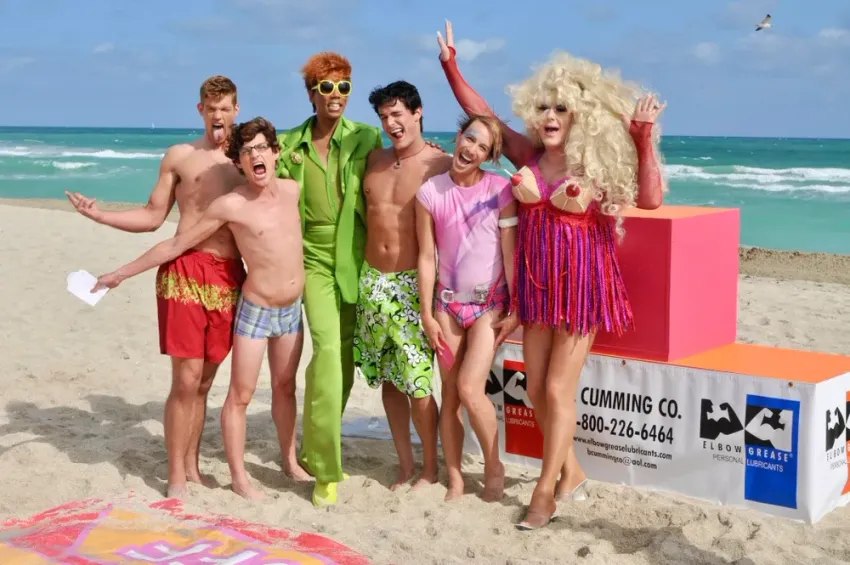
On March 3, Breaking Glass Pictures is set to re-release the Queer comedy Another Gay Sequel: Gays Gone Wild! This campy, outrageous sequel from 2008 has cemented its place in LGBTQIA+ pop culture, celebrated for its fearless humor, star-studded cameos, and vibrant portrayal of the late 2000s.
Rich Wolf, founder of Breaking Glass Pictures and an executive producer on the film, reflected on its enduring appeal. “The Gay community has come so far in the last two decades,” he said. “This film is a joyful time capsule of a pre-Grindr, pre-influencer era — when spring break was all about freedom, friendship, and living in the moment.”
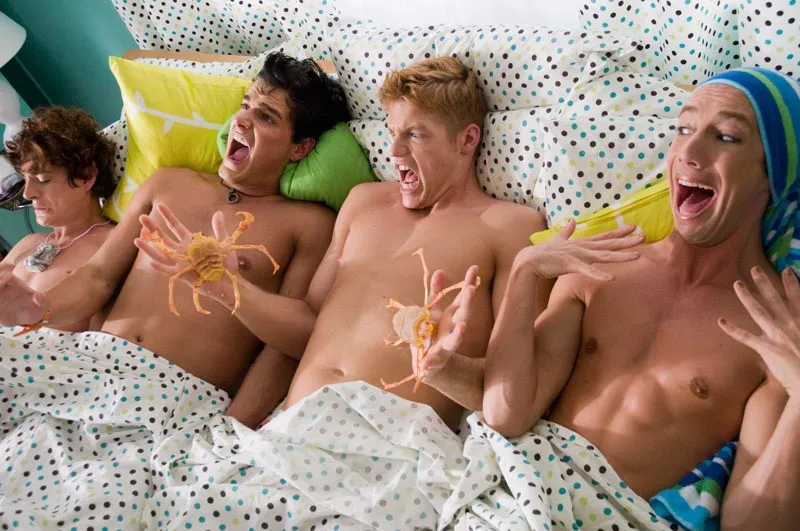
Written and directed by Todd Stephens, Another Gay Sequel picks up where the 2006 cult hit Another Gay Movie left off, following the beloved quartet of Andy, Nico, Jarod, and Griff. This time, the gang trades their college antics for a wild spring break in Fort Lauderdale, diving headfirst into a chaotic competition called “Gays Gone Wild!” The goal? Hook up with as many guys as possible to win the absurdly coveted title of “Miss Gay Gone Wild.”
The film doubles down on its campy, comedic roots, delivering a sun-soaked spectacle of love, lust, and hilarity. Andy (Jake Mosser), no longer the awkward underdog, finds himself the center of attention — until he meets Luis (Euriamis Losada), a charming virgin who challenges his views on love and intimacy. Meanwhile, Nico (Jonah Blechman) faces his own crisis of confidence, escaping into a fantasy involving a shirtless merman played by adult film star Brent Corrigan.
Jarod (Jimmy Clabots) and Griff (Aaron Michael Davies), now a committed couple, grapple with whether competing together will strain their relationship. Adding to the chaos is a scheming trio of competitors — all named Jasper — played by Will Wikle, Brand Lim, and Isaac Webster, who are determined to rig the contest in their favor.
The film’s over-the-top celebrity cameos remain a highlight, featuring appearances by RuPaul, Scott Thompson, Willam Belli, and adult entertainment icons Michael Lucas and the late Colton Ford. One particularly memorable subplot involves gossip blogger Perez Hilton, who plays himself in a surreal storyline in which a head injury transforms him into a fire-and-brimstone zealot — only for another blow to the head to revert him to his old self.
Upon its initial release, Another Gay Sequel was embraced by audiences for its raunchy humor, unapologetic queerness, and refusal to tone down Gay sexuality for mainstream comfort. Over the years, it has achieved cult status, celebrated as a snapshot of a moment in Queer media when camp, controversy, and sex positivity collided without restraint.
To explore the film’s legacy and impact, I spoke with Todd Stephens, the creative force behind this beloved franchise.
Frank Gaimari: Looking back, why do you think Another Gay Sequel has maintained its cult status and remained relevant nearly two decades later?
Todd Stephens: The reason it achieved cult status and stayed relevant is pretty simple: it’s the kind of outrageous, over-the-top comedy that just doesn’t get made anymore. The film wasn’t afraid to push boundaries or even cross the line, all in the name of making people laugh. These days, comedies like that are rare, because so many filmmakers and comedians are worried about backlash or getting canceled. It’s a reminder of a time when people were bold — or maybe just wild enough — to be unapologetically themselves.
Another big reason is the film’s sense of Queer joy and shamelessness. It wasn’t about the struggle of coming out or questioning your identity. The characters weren’t ashamed of who they were — they were just like any other teens in a comedy, trying to have fun and get laid. That kind of carefree, unapologetic portrayal of Queer life still feels refreshing today.
And honestly, the film’s charm comes from its ability to laugh at itself and the community it represents, while still celebrating it. It doesn’t take itself too seriously, but it’s full of joy and authenticity. That mix of fearless humor and shameless celebration is what’s kept Another Gay Sequel alive as a cult classic all these years later.
FG: How do you feel the landscape of Queer cinema has changed since the film’s original release in 2008, and where do you see it heading?
TS: The landscape has changed in fascinating ways since the release of Another Gay Sequel. Back then, when Queer content was being made, the hope was always that it could cross over and reach audiences beyond the LGBTQ+ community. That was the goal: to create something that resonated universally while still being rooted in Queer experiences.
Now, we’re seeing a shift in which Queer stories are not only crossing over but also becoming mainstream cultural phenomena. A great example is Heated Rivalry, a TV series that features graphic sex scenes and has become the talk of the nation. The fact that something so unapologetically Queer can spark such widespread attention and conversation is a huge step forward. It shows that audiences are ready for more bold, authentic Queer content.
Looking ahead, this kind of success opens the door to more Queer stories being told, hopefully with larger budgets and greater resources. It’s an exciting time, and the future of LGBTQ+ cinema looks brighter than ever.
FG: What was it like for you to revisit this film for the re-release? Did it bring back any specific memories or emotions from when you first made it?
TS: Revisiting Another Gay Sequel for the re-release was both surprising and emotional. I hadn’t watched it in a long time, and when I did, I was shocked — I really liked it! It brought back a lot of memories, some tough ones included. The shoot was challenging, because we lost three of our lead actors right before filming started.
But once we got into it, it became so much fun. Watching it now, I see the sense of freedom we had while making it. I’ve never had more fun making a film. Creating this magical, Queer, crazy world and living in it for three or four weeks was an absolute joy. That’s the main memory it brings back — just how much fun it was. When I watch it now, I can’t help but smile.
FG: What message do you hope a new generation of viewers will take away from Another Gay Sequel?
TS: The message I hope they take away is the importance of community and of real, in-person connection. When I watched the credits recently, I realized that all the Queer resorts we filmed at are now gone. It hit me how much has changed since we made the movie. Back then, the iPhone had just come out, and now we’re so glued to our phones and the digital world that we’ve lost some of that sense of community.
I want people to step away from their screens and go support Queer spaces — whether it’s a local resort, bar, or any place where the community gathers. There’s something so special about meeting people face-to-face and connecting in real life.
I know younger people crave that too. My students talk about wanting those kinds of experiences, even if it’s hard to break the habit of being online all the time. There’s nothing like being with your community in person, and I hope this film reminds people of how important that is.
FG: The film is unapologetically campy and raunchy. What inspired you to lean so heavily into those elements, and how did you balance humor with meaningful storytelling?
TS: The films were heavily inspired by one of my filmmaking idols, John Waters, who had a big influence on me with his campy and raunchy style. I also drew inspiration from the movies I loved growing up, especially the raunchy teen comedies like Porky’s and parts of Fast Times at Ridgemont High. Those kinds of films were a big part of my coming-of-age, but they never represented us. I always thought, if straight people can have raunchy sex comedies, why can’t Gay people? That idea really drove me. I wanted to make movies for the younger generation — films I would’ve loved to sneak into or discover when I was a kid.
As for balancing humor with meaningful storytelling, I think it comes down to this: underneath all the laughs and outrageousness, there’s always a deeper layer. The characters in these films aren’t struggling with their sexuality — they know they’re Queer — but they’re trying to figure out what that means for their relationships. Are they monogamous? Promiscuous? Where do they go from here? Those were questions I was grappling with myself at the time, and some of that realness naturally found its way into the stories. So, while the films are campy and raunchy on the surface, they also explore identity and relationships, giving them depth.
FG: The characters in the film each have distinct, memorable arcs. Were any of their storylines inspired by personal experiences or people you’ve known?
TS: As the writer, I’d say there’s a part of me in all the main characters. I’ve been in a relationship for 40 years, and at the time, I was trying to figure out what that meant — working through questions about the rules of our relationship and how to navigate it. Those were things I was personally dealing with, and as writers often do, I used my work to process those conflicts. So yes, many of the film's themes and storylines were influenced by my own experiences.
FG: Final question: How would you describe the film, and what makes it a must-watch for audiences today?
TS: I’d describe Another Gay Sequel as a joyful, unapologetically ridiculous escape. The film was made during the conservative Bush era, making it feel like a bold act of resistance against that political climate. Looking back, that time seems almost tame compared to what we’re dealing with now, but the message still resonates. In this world of darkness we live in, I’d invite people to take an hour and a half to just laugh, have fun, and embrace silliness.
The film is a reminder that we, as a community, can be crazy, dramatic, and ridiculous and still find joy in it all. Laughter is healing, and there’s not enough of it in the world right now. That’s what makes this film a must-watch today — it’s an escape, a celebration, and a reminder of the power of humor.
As for the future, people have been asking for years about a third installment. Interestingly, I recently had dinner with three of the original cast members, and we started brainstorming. Maybe now, in this dark Trump era, is the perfect time to bring it back. I’ve got my thinking cap on, and I’m working on some ideas. Who knows? Maybe there will be Part 3 someday.
Mark your calendars: Another Gay Sequel: Gays Gone Wild! will be available on all major streaming platforms starting March 3. Whether you’re revisiting the chaos or experiencing it for the first time, this cult classic promises a wild ride you won’t forget.
Frank Gaimari is an author and film reviewer in Seattle, where he lives with his husband and their two golden retrievers. You can learn more about his work at www.FrankGaimari.com.
Support the Seattle Gay News: Celebrate 52 Years with Us!
As the third-oldest LGBTQIA+ newspaper in the United States, the Seattle Gay News (SGN) has been a vital independent source of news and entertainment for Seattle and the Pacific Northwest since 1974.
As we soon enter into our 52nd year, we need your support to continue our mission.
A monthly contribution will ensure that SGN remains a beacon of truth and a virtual gathering place for community dialogue.
Help us keep printing and providing a platform for LGBTQIA+ voices.
How you can donate!
Using this link: givebutter.com/6lZnDB
Text “SGN” to 53-555
Or Scan the QR code below!