

Indian films have long avoided discussions of sexuality and sex. Unlike Western movies, early works never portrayed intimacy or nudity on camera, instead treating the subject as taboo. However, recent ones have begun to embrace the open depiction of these issues.
Cactus Pears is the latest out of India to proudly center around a Queer romance. The result is a melancholy and tender love story between two men, intertwined with themes of loss and silent grief. It is an important and refreshing representation of Indian romance, which also recently gained recognition for being the first Marathi film to premiere at Sundance, before going on to win the Grand Jury Prize in 2025.
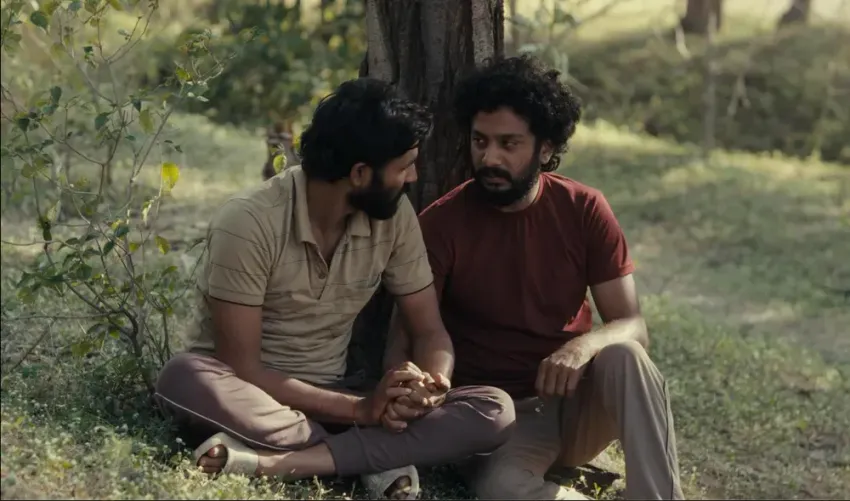
Directed by Rohan Kanawade, the film follows Anand (Bushaan Manoj), a young man returning to his hometown after the death of his father. While there, he romantically reconnects with his childhood friend Balya (Suraaj Suman). From the first frame, the tone and pacing are immediately established, with slow shots, minimal dialogue, and no soundtrack, letting the viewer sink deeply into the subtle sounds and details of each scene. The composition and blocking of each second is sublime, cleverly using depth to pull the audience into intimate moments and send them back for others. Wind rustling, water splashing, and birds singing are all main elements of the film’s sound design, and they give a real sense of stillness, allowing for the interaction of the actors to shine through.
Manoj commands the screen, transmitting a deep grief to the audience despite minimal dialogue. Suman shares great chemistry with him, and together they’re the beating heart of the film. In particular, their moments of rare intimacy feel deeply emotional, and are some of the most radical and refreshing scenes of Queer love to come out of Indian cinema. Stolen glances, thousand-yard stares, and small movements tell the story of Anand’s longing and pain in the wake of his father’s death.
The film does a fantastic job of weaving three elements together: the societal pressures of marriage in India, grief due to the death of a loved one, and the experience of being a closeted Gay man. These elements build incredibly slowly, however, which was one of the few drawbacks of the film.
A major section is also dedicated to portraying the ritualistic process in which Anand has to grieve for his father. As the son, tradition dictates that there are certain customs he must follow, such as not washing his hair and not wearing shoes, among many more. The depiction here offers a fascinating insight into an extremely old tradition.
In the canon of Indian cinema, a film with this attention to detail and care for its Queer subject matter is extremely special. Radical not only in its storytelling but also in its cultural message, Cactus Pears is a brilliant movie worthy of its Sundance prize, and a must-watch for anyone interested in Queerness in the context of Indian culture.
Support the Seattle Gay News: Celebrate 52 Years with Us!
As the third-oldest LGBTQIA+ newspaper in the United States, the Seattle Gay News (SGN) has been a vital independent source of news and entertainment for Seattle and the Pacific Northwest since 1974.
As we soon enter into our 52nd year, we need your support to continue our mission.
A monthly contribution will ensure that SGN remains a beacon of truth and a virtual gathering place for community dialogue.
Help us keep printing and providing a platform for LGBTQIA+ voices.
How you can donate!
Using this link: givebutter.com/6lZnDB
Text “SGN” to 53-555
Or Scan the QR code below!