

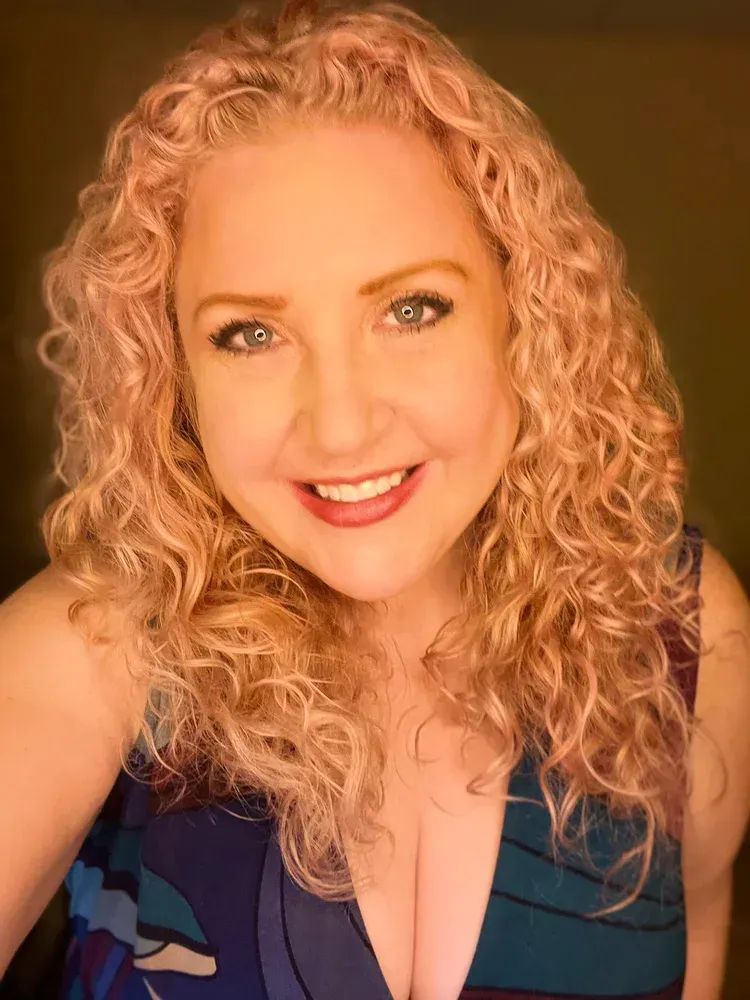
Editor's note: Marie Loeb goes by any pronouns, so we have chosen to use they/them for consistency and clarity.
As a parent, Marie Loeb (they/them) quickly learned that many institutions are not equipped to work with neurodivergent children, often due to the fact that they are run by neurotypical people who cannot understand their specific needs. Loeb is the parent of two autistic children, and through seeking diagnoses for them, they also discovered that they are on the spectrum as well. “My son was delayed in speech and had a lot of eloping behaviors,” Loeb said. “My other child is AFAB [assigned female at birth], and I had been trying to get them assessed as autistic since they were two years old, and they were not able to actually get an assessment and diagnosis until about nine months ago, at the age of 17.”
Loeb experienced several disappointing encounters, from preschool teachers who brushed off the son’s elopement (leaving facility without permission or authorization) as typical “boy things” to family members who referred to the Nonbinary child as “it.” Loeb saw the hesitation their child felt when asking people to use their pronouns, and ultimately, Loeb had to learn how to become the fierce advocate their children needed, cutting out toxic family members unwilling to treat the children with love and respect.
After years advocating for their children, Loeb founded Holistic Child and Family to support neurodivergent, Transgender, polyamorous, and kink community members. "I started with neurodivergent children and families because of the great need. Adults soon reached out for support, too," Loeb said.
HCF offers clients a variety of therapy services, support groups, and parent coaching to help anyone who may want to advocate better — whether for themselves, a partner, a child, or a sibling. The organization also works with patients to set up Individualized Education Plans and 504 plans (which helps ensure that students with disabilities have equal access to educational opportunities), provide emotional support animals, and write letters of recommendation for gender-affirming care.
“We deserve to have therapists that can do more than sympathize with our pain,” Loeb said. “We deserve therapists who understand.”

Approach
The professionals at HCF take a “practice-based evidence” approach to therapy and avoid placing moral value on behaviors. “We take a holistic, systems approach to care, so while therapy sessions form the foundation of the work we do with clients, we take into account the whole picture of their experiences,” said HCF administrator Emily East.
HCF takes into account that for most therapists, traditional education primarily uses studies and evidence gathered by majority–white male patients.
“With autism, for example, you have years of research and cultural understanding… that centers around the presentation of autism in young white boys with externalizing behaviors,” East explained. “That’s why you hear about so many girls and non-men going undiagnosed and missed by the system.”
One of the biggest gaps HCF aims to fill is between therapists and Queer clients. Too often, young people seek out counseling to understand their gender and sexual identities but struggle when matched with a cis-het therapist who lacks the lived experience and may not have studied how to properly treat LGBTQIA+ clients. But they can feel at ease with the HCF team, knowing that the professionals they are working with have experienced what they are facing.
“We’re trying to fill in these gaps as a community of practitioners,” East explained. “To start with, our entire team holds some of the identities of the populations we serve — we are all neurodivergent and diverse in gender and sexuality. Our lived experience doesn’t just inform our work with clients either — it is a big part of how our team works and changes as a community, like a living organism.
“We are radically Queer and try to make it known. Clients will find a team that already understands Queer identities and Queer culture. They won’t be subject to well-meaning microaggressions. Their identities will never be doubted; they won’t have to prove anything.”
“We live in a society where people follow traditions based on heteronormativity,” Loeb added, “and often imagine Queer relationships are just like straight relationships but with slightly different changes — when in fact there is a different, robust, and beautiful culture. Therapists should be able to see us without making assumptions of how we feel and behave in our communities — we are the experts of our own experiences.”
Access
For many LGBTQIA+ and neurodivergent people, cost can be the biggest barrier to seeking professional mental healthcare. For that reason, HCF works hard to ensure that its services remain affordable, and when clients are unable to pay their bills, it works with them to find a solution that benefits everyone.
Access to mental health providers is essential for many LGBTQIA+ people. While the Diagnostic and Statistical Manual of Mental Disorders no longer classifies homosexuality as a mental disorder, many important legal and medical decisions are withheld from Transgender people until they can provide documentation from a medical or mental health professional.
“My child was able to have their name changed in the courts and on their birth certificate without permission from anyone but the appropriate offices,” Loeb said, “but to change their gender marker, they needed a sign-off from a mental health provider.” Luckily, she was able to make the proper arrangements, but for too many, this barrier becomes insurmountable.
Loeb hopes that marginalized Seattleites will take advantage of the opportunities HCF offers. “Come to our free community consult group to better understand how to support us, and do your work,” she said. “We cannot just try to be not racist, ableist, etc., because we exist in these systems and cannot help but absorb the systemic oppression that can cause us to inadvertently perpetuate harm on others as well as ourselves through internalized oppression.”
Loeb also advises those in search of a therapist to “be picky” and understand that not all therapists who say they can work with LGBTQ+ and neurodivergent clients should work with them. “Meeting with a therapist is just like a first date, and not a marriage,” Loeb said. “Sometimes we choose therapists because they have all of the same intersecting identities and find that we are still not a good match. Don’t waste your time — just try someone new, and you do not have to give them an explanation.”
“What you are asking for in a therapist is not ‘too much,’” East added. “You deserve to receive quality, affirming care from providers who understand your identity or are actively working to understand it. Your identities are a critical part of your mental health.”
More information is available at https://www.holisticchildandfamily.org.
Support the Seattle Gay News: Celebrate 52 Years with Us!
As the third-oldest LGBTQIA+ newspaper in the United States, the Seattle Gay News (SGN) has been a vital independent source of news and entertainment for Seattle and the Pacific Northwest since 1974.
As we soon enter into our 52nd year, we need your support to continue our mission.
A monthly contribution will ensure that SGN remains a beacon of truth and a virtual gathering place for community dialogue.
Help us keep printing and providing a platform for LGBTQIA+ voices.
How you can donate!
Using this link: givebutter.com/6lZnDB
Text “SGN” to 53-555
Or Scan the QR code below!