

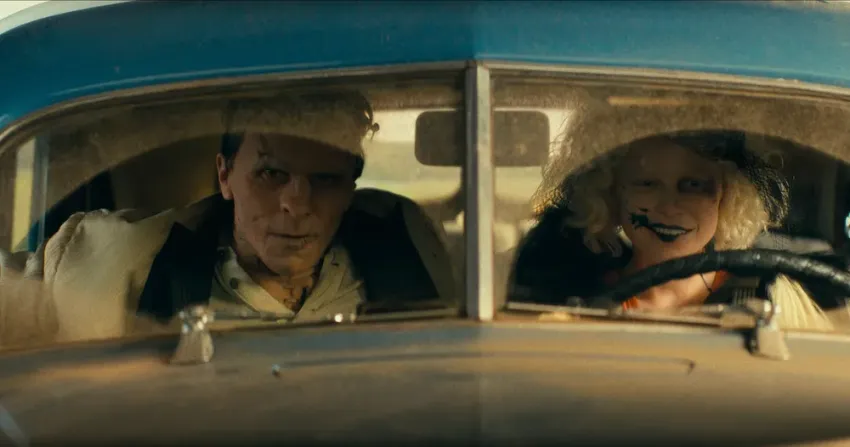
With The Bride!, an angry, triumphant scream to the heavens and a forceful rebuke to the status quo, writer-director Maggie Gyllenhaal finds inspiration in Mary Shelley the person and the artist — and not just in her seminal work, Frankenstein. This is a fiery feminist explosion of self-determination, body autonomy, and gender politics. It is a film of wild, unrestrained extremes that bounces from one end of the emotional continuum to the other, all with the coquettish flutter of a mascara-stained false eyelash. Stones don’t just get overturned; they get tossed through the screen and into the audience with vicious, almost flippant fury. Calling this invigorating cinematic caterwaul magnificent would be an injustice. It’s so much better than that.
Gyllenhaal immediately announces that this isn’t going to be some straightforward Bride of Frankenstein reinterpretation brought forward into the 1930s Prohibition era and set in a world of gangsters, molls, and crooked cops. This isn’t Boris Karloff. There is no Elsa Lanchester. Gyllenhaal isn’t interested in regurgitating a gothic tragedy of hubris, masculinity, loneliness, and creation. James Whale and company already did that (perfectly) in 1935.
Instead, Gyllenhaal gives The Bride a voice and agency. She allows her to be heard and, most importantly, insists everyone listen (even when those in power loathe what they’re hearing). Gyllenhaal achieves this by bringing Shelley to the forefront, opening on an almost obscene black-and-white, IMAX-sized closeup of sinisterly ethereal Jessie Buckley staring directly at the audience and malevolently breaking the fourth wall. This is only the first of several boundaries that will be broken. There’s nothing subtle about any of this.
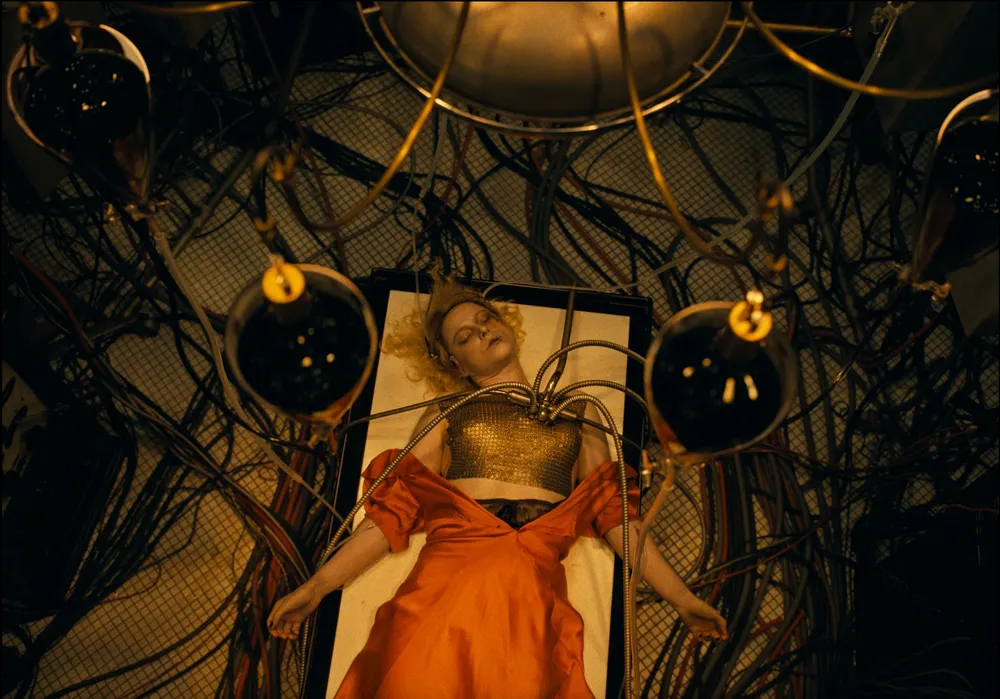
The primary story begins with Ida (Jessie Buckley), a drunken escort who is messing around with gangsters at a lavish, smoke-filled party. In a moment of psychological imbalance — some might even call it supernatural possession — she begins to proclaim that a powerful gangster is responsible for all sorts of grotesque malfeasance, including murder. When told to stop, she coldly, calmly, and authoritatively proclaims, “I would prefer not to.” This will not be the last time she says this when a man orders her around.
One thing leads to another. At the top of a massive staircase outside the speakeasy, Ida falls, breaking her neck on the bottom step.
Not long afterward, a gigantic brute of a “man” stumbles into the lab of Dr. Euphronius (Annette Bening). He is the Frankenstein monster (Christian Bale) — Frank for short — and he knows of the scientist’s recent successes involving revivification. Frank convinces the good doctor to help him find a mate, and their search for an untainted female cadaver leads them to a certain freshly dug grave. Ida is then reborn, only with no memory of who she once was or how she died. She doesn’t even remember her own name. Frank renames her Penelope.
Things go increasingly haywire from there. The pair head into the world to experience life together afresh. But this young woman is restless. It is as if two voices are battling it out for supremacy in her head, one of which urges the other to become dominant and to give themselves a name of their choosing and no one else’s — not Dr. Euphronius, not Frank, not a pair of determined Chicago police detectives (Peter Sarsgaard, Penélope Cruz), and certainly not the gangster who played a role in ending her life the first time around. This must be a name she chooses all on her own. By doing so, it might help jump-start a societal revolution that upends the patriarchal status quo forever.
Buckley, almost certain to win an Academy Award later this month for her work in Hamnet, is extraordinary. This performance is unabashedly showy, filled with shouts, ticks, quirks, accent changes, and show-stopping, verbally dexterous obscenities that purposefully call attention to themselves. It is a physically demanding exercise in herky-jerky movements that an Olympic gymnast or professional contortionist would have trouble duplicating with as much confidence or skill.
But there is also haunting depth to Buckley’s achievements, lovely bits of quiet and calm that beautifully showcase the internal battles her character is valiantly struggling to overcome. The actor’s emotional connection to Bale, who also gives a haunting, masterfully nuanced performance, is instantaneous, and her link with the audience goes even deeper than that. Buckley creates a visceral, often breathlessly cathartic connection with the viewer. This allowed Ida/Penelope/The Bride’s travails to worm their way into my heart with insidious fortitude, their aftereffects lingering deep inside my soul long after her actual journey had reached its volcanic howl of a conclusion.
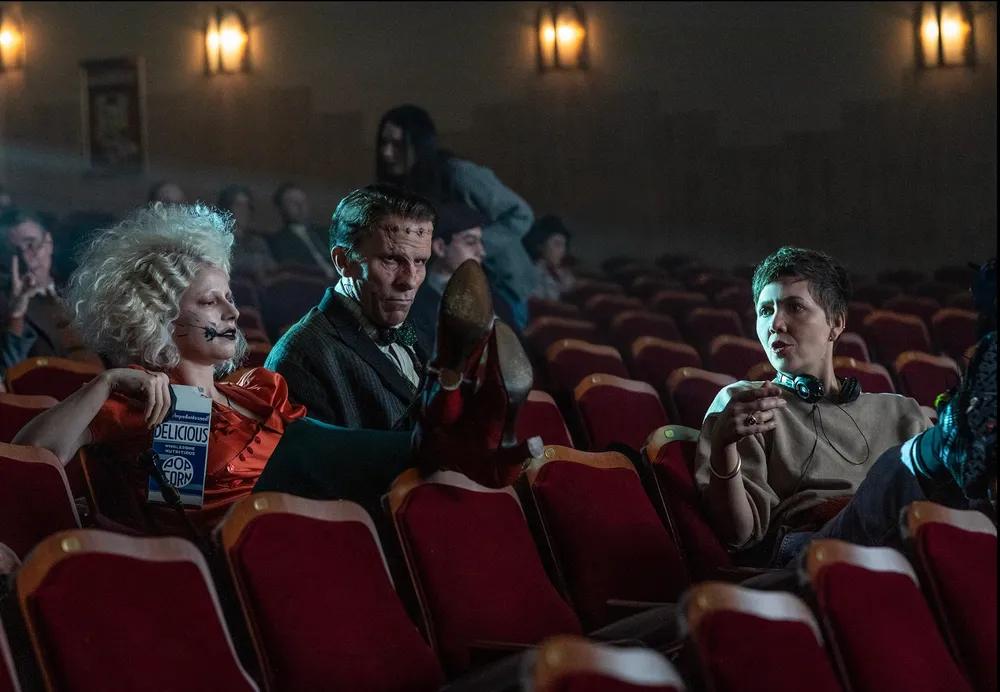
Gyllenhaal takes big swings throughout. She pays homage to Whale’s classic, as well as golden-age Hollywood musicals, gritty film noirs, Italian neorealism, Bonnie and Clyde, Mel Brooks, 1970s cinematic counterculture (especially Barbara Loden, Robert Altman and Terrence Malick), and 1980s pop (most notably Michael Jackson’s Thriller) — and that’s only a scant handful of the influences littered throughout this gargantuan production. But while there is plenty of artifice, nothing Gyllenhaal does is artificial. There is rhyme to every reason, and a shrewdly keen purpose behind every creative decision.
There will be those who will be turned off by Gyllenhaal’s thoughts on sex, gender, politics, conformity, art, and even humanity. Some of what she’s doing may be construed as overbearing, indulgent, and belligerently didactic. But I would hope most viewers will take the time to see the filmmaker’s naked city for what it is: raw, undisciplined, carnal, and always ready to explode. This is the story of a woman who refuses to be defined by others and, in her pugnacious quest for liberating self-discovery, shines a light back onto the rest of us, one we’d be ill-advised to ignore.
Unfortunately, some will choose to keep their eyes closed. They will treat the film in the same way Ida is victimized during the opening act. They would rather see a woman like Gyllenhaal stay in her lane and not try to upend the medium with such brazen, outspoken tenacity. Some will choose to remain inside their little conformist bubble and toss The Bride! into the refuse bin, all the while hoping no one notices.
For my part, however, I would prefer not to.
Support the Seattle Gay News: Celebrate 52 Years with Us!
As the third-oldest LGBTQIA+ newspaper in the United States, the Seattle Gay News (SGN) has been a vital independent source of news and entertainment for Seattle and the Pacific Northwest since 1974.
As we soon enter into our 52nd year, we need your support to continue our mission.
A monthly contribution will ensure that SGN remains a beacon of truth and a virtual gathering place for community dialogue.
Help us keep printing and providing a platform for LGBTQIA+ voices.
How you can donate!
Using this link: givebutter.com/6lZnDB
Text “SGN” to 53-555
Or Scan the QR code below!