

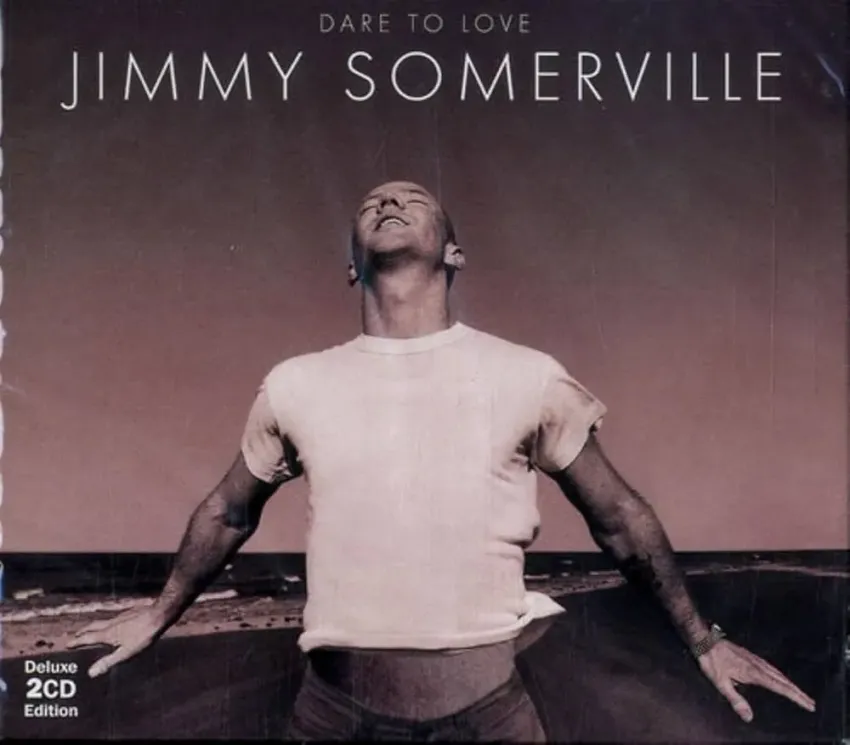
As LGBTQIA+ rights face renewed threats worldwide, now is the perfect time to revisit Jimmy Somerville's music. His soaring falsetto and fearless activism were more than just the soundtrack of a generation; they became a rallying cry for equality, love, and resilience.
As we navigate these turbulent times, Somerville’s work feels as urgent and relevant as ever. His songs are a testament to the power of music to inspire change and build community. Whether you’re discovering his music for the first time or revisiting it with fresh ears, turn up the volume and let his voice remind you of the strength in standing proud, the joy in being unapologetically yourself, and the hope that comes from knowing you’re not alone.
A voice that reshaped pop
If you’ve ever heard that high, crystalline voice cutting through a synth-heavy beat, you know there’s no mistaking Jimmy Somerville. But what you might not realize, especially if you weren’t there the first time, is that Somerville wasn’t just singing pop. He was actively redefining its boundaries. He poured personal pain, political outrage, and the pure need to move into tracks that made you think.
Somerville’s journey began in Glasgow, where he spent his early years trying to fit into a world that rarely made room for someone like him. Tired of trying to shrink himself to meet the expectations of others, he headed to London in search of a community where he could truly belong. It took immense courage: London in the early 1980s was not a welcoming place for a young, openly Gay man.
Yet, in the city’s underground clubs and backroom bars, he found his people. He met Steve Bronski and Larry Steinbachek, and together they founded Bronski Beat in 1983. These three musicians had zero interest in hiding who they were, and that unwavering honesty instantly set them apart. In an era when most pop stars played it safe for the sake of album sales, Bronski Beat let their identity — and activism — take center stage.
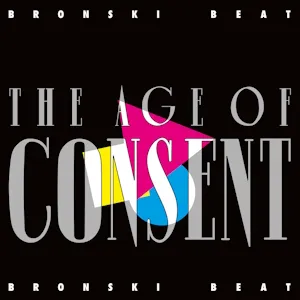
In 1984, Bronski Beat released their debut album, The Age of Consent. The title was a deliberate political statement. On the inside of the album cover, the band listed the legal age of consent for Gay men across Europe, which served as a stark reminder that equality was still a distant dream for many. Back home in the UK, for example, it was illegal for men under 21 to have sex with other men, while the age of consent for heterosexual couples was 16.
The group sang openly about the realities they lived every day and illuminated issues most people would prefer to keep hidden. Nowhere is this clearer than on “Smalltown Boy,” an unforgettable track capable of breaking your heart and making you move at the exact same time. Pure ’80s synth lines wrap around a moving story of alienation and courage.
The song tells the tale of a young Gay man forced to leave his home because he simply couldn’t be himself there. A profound sadness pulses beneath the driving beat, but you also hear absolute freedom. You hear a feeling of flight in Somerville’s voice that refuses to apologize for who he is. For anyone who has ever felt pushed aside or had to pack up and search for somewhere to belong, this song cuts deep.
Bronski Beat didn’t stop there. Their follow-up single, “Why?,” pressed the issue even further. It boldly affirmed their place in society, sending a clear message: we are here, and we are not going anywhere.
Dominating the dance floor
After leaving Bronski Beat, Somerville kept moving. He never stood still long enough to let the industry box him in. Teaming up with Richard Coles, he formed The Communards and immediately scored massive commercial hits. Their electrifying version of “Don’t Leave Me This Way” became an absolute phenomenon, completely dominating the UK charts in 1986.
As a solo artist, Somerville truly came into his own. He covered songs by icons such as Sylvester, bringing a joyful energy to tracks like “You Make Me Feel (Mighty Real)” while maintaining the sharp edge that made his earlier work so resonant.
Through massive pop success and incredibly tough times — including the devastating height of the AIDS crisis, the implementation of Section 28 (a UK law enacted in 1988 that prohibited the "promotion" of homosexuality by local authorities and in schools), and widespread government efforts to silence Queer voices — Somerville never lost sight of the bigger picture. He stayed loud and proud precisely when it mattered most. He proved that standing your ground could happen right on the dance floor.
A timeless legacy of radical joy
For younger listeners — Gen Z and beyond — it might seem normal that today’s pop stars can openly sing about who they love. But Somerville and his peers fought brutal battles to make that reality possible long before it became mainstream. They kicked open heavy doors so that Queer love and existence could be sung about in broad daylight, rather than tucked away in coded lyrics or subtle hints.
When you spin one of Somerville’s songs today, you are hearing the early anthems of a pop revolution. You are hearing the echoes that still ring out in the work of modern artists who carry that radical spirit forward.
For longtime fans, those stacks of 12-inch singles and vinyl remixes are not just relics of a bygone era. They are cultural treasures waiting to be rediscovered. The recent wave of remixes and reissues proves that Somerville’s voice is remarkably timeless. Putting on “Smalltown Boy” today delivers the exact same jolt of energy it did to packed dance floors decades ago.
Jimmy Somerville is living proof that music can be brave, joyful, and truly life-changing. His records are bold, unfiltered stories that span decades, uniting people on the dance floor and beyond. Put on one of his tracks and let yourself be swept up in that soaring falsetto. There is simply nothing quite like it.
This isn’t just a nostalgia trip. It is a necessary reminder that through music, community, and unyielding pride, we can keep pushing for a world that is more open, loving, and just.
Somerville’s website is www.jimmysomerville.co.uk.
Frank Gaimari is an author and film reviewer in Seattle, where he lives with his husband and their two golden retrievers. You can learn more about his work at www.FrankGaimari.com.
Support the Seattle Gay News: Celebrate 52 Years with Us!
As the third-oldest LGBTQIA+ newspaper in the United States, the Seattle Gay News (SGN) has been a vital independent source of news and entertainment for Seattle and the Pacific Northwest since 1974.
As we celebrate our 52nd year, we need your support to continue our mission.
A monthly contribution will ensure that SGN remains a beacon of truth and a virtual gathering place for community dialogue.
Help us keep printing and providing a platform for LGBTQIA+ voices.
How you can donate!
Using this link: givebutter.com/6lZnDB
Text “SGN” to 53-555
Or Scan the QR code below!