

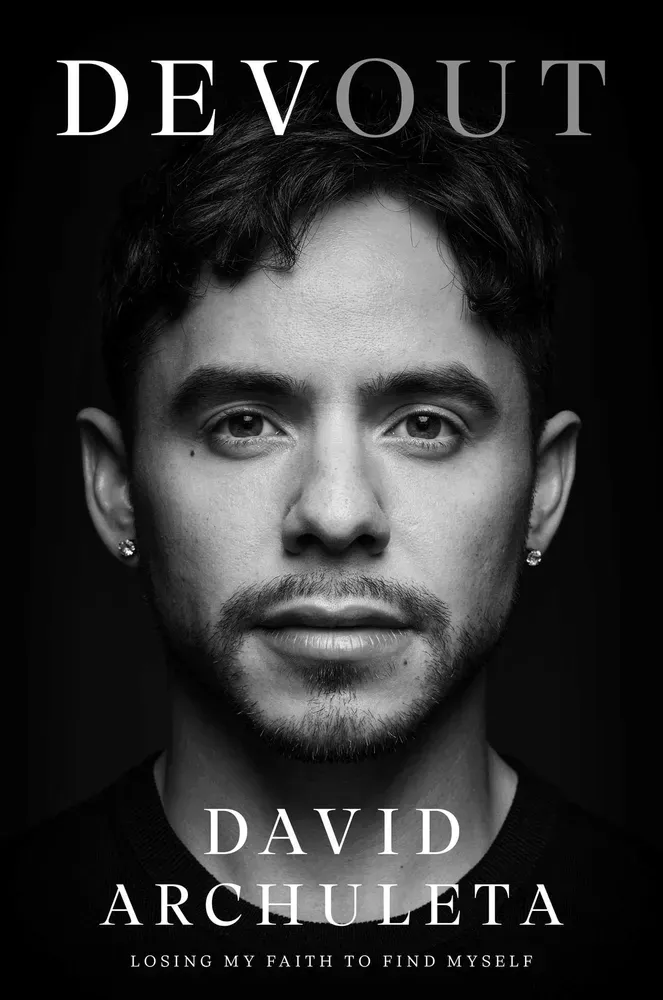
Born to parents who both had musical careers before they wed, David Archuleta remembers an early childhood, growing up in a Hispanic Mormon community in Florida, where kin were always nearby. He was six when his parents moved the immediate family to Utah; the first thing he remembers about that is the snow — and how it was so cold, it burned.
Because music was in his blood, Archuleta grew up singing and dancing, often with his mother, whom he calls “my rock.” It was his father, however, who encouraged him to perform: first, with a gentle push, then a shove toward a career Archuleta didn’t really want.
But he did want to make his father happy, so he went along with the contests, embarrassing meet-and-greets with stars, and uncomfortable introductions. Slowly, though, performing became more fun, and Archuleta made friends.
Meanwhile, back home, everything was breaking apart. A “family friend” whom Archuleta refuses to name accused his father of abuse. He was exonerated, but it affected the family’s closeness, and they stopped being affectionate.
That was a painful backdrop to Archuleta’s soaring career, his appearances on Star Search, friendships with other rising stars, his runner-up spot on American Idol, tours, and recording contracts. His father kept pushing him.
But there was one thing missing.
Since he was a boy, Archuleta had known that he was attracted to men, but his Mormon faith taught him that that was unacceptable. Kissing, his abuelita said, was wrong. He tried hard to date girls, in the most chaste way. Anything past that was against God — and anything at all with a man was unthinkable…
Though it dwells on his personal life a bit too much, the new autobiography Devout strikes an otherwise nice balance between that, Archuleta’s career, his sexuality, and his faith. The latter two are loaded with controversy.
You don’t need to be Mormon to fully understand the faith part; Archuleta offers non-Mormons a brief education, so readers can see the importance of the church’s teachings in his life and why he felt the need to abandon it as his understanding of his bisexuality grew. It’s emotionally raw and honest, but also so respectful that it almost bears rereading. Such candor and the heart-on-his-sleeve tone are features of the book, in which he relates family struggles and learning to strike out alone.
It’s harmonious in more ways than one, and fans will be happy. So, too, will anyone who wants a unique memoir with a dose of faith, or someone who’s an American Idol watcher.
Support the Seattle Gay News: Celebrate 52 Years with Us!
As the third-oldest LGBTQIA+ newspaper in the United States, the Seattle Gay News (SGN) has been a vital independent source of news and entertainment for Seattle and the Pacific Northwest since 1974.
As we celebrate our 52nd year, we need your support to continue our mission.
A monthly contribution will ensure that SGN remains a beacon of truth and a virtual gathering place for community dialogue.
Help us keep printing and providing a platform for LGBTQIA+ voices.
How you can donate!
Using this link: givebutter.com/6lZnDB
Text “SGN” to 53-555
Or Scan the QR code below!