

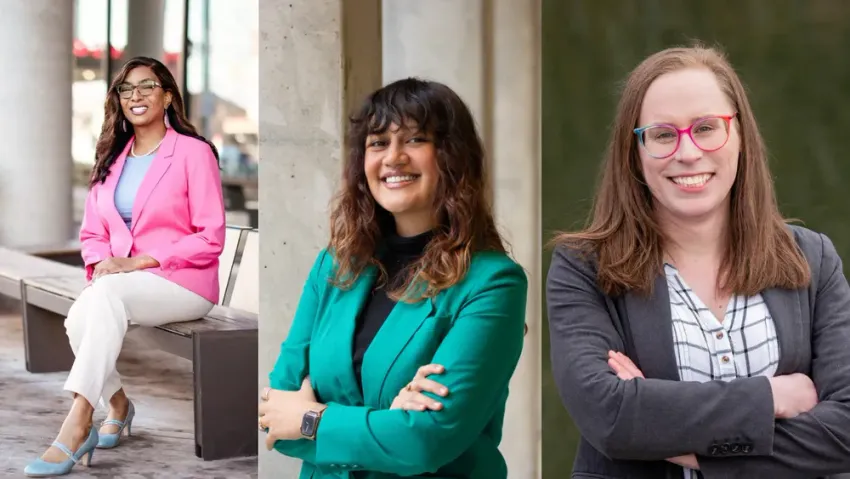
With attacks on LGBTQIA+ rights across the US escalating under President Trump — exacerbated by an affordability crisis, cuts to social services, and a sluggish economy — multiple Queer and Transgender candidates have been stepping up in Washington to combat the current climate. With their own progressive policy platforms, they hope to win seats in the state legislature come November.
Although Jaelynn Scott, Hannah Sabio Howell, and Erin Chapman Smith hail from varying backgrounds and life experiences, collectively they share a similar resolve in service to the Queer and other marginalized communities, which motivated each of them to now seek public office.
Each talked with the SGN about what inspired them to run, and how the campaign trail has treated them so far.
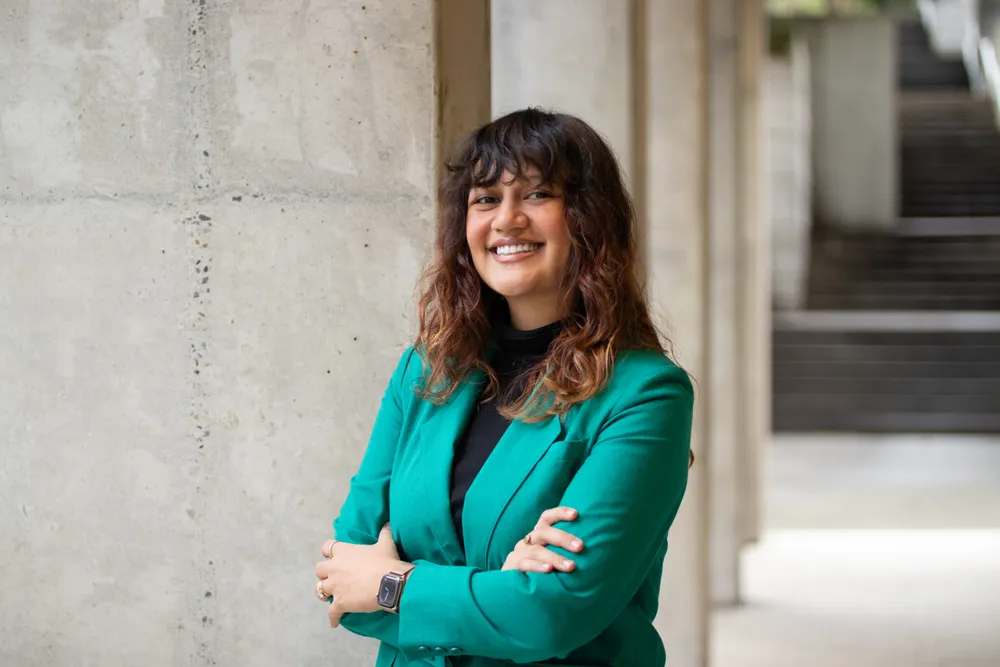
Hannah Sabio Howell (Senate, 43rd District candidate)
Howell has spent her career fighting for the rights of Washington’s marginalized and working-class residents. As communications director of Working Washington, a nonprofit that tackles workers’ rights issues across the state, she has fought for wage increases and workplace protections. She is looking to challenge Gay incumbent Sen. Jamie Pedersen, who has held his seat since 2013.
On the first day of her campaign, March 9, she claimed to have raised over $40,000 in individual grassroots donations, and reported reaching $52,000 by the end of March. She has since amassed a sizable social media following of several thousand on both Instagram and TikTok. She has also been collecting signatures to waive the $700 state legislative race filing fee to get on the ballot; 900 were collected over the first four weekends of her campaign.
For Howell, the support she has elicited from young people who have canvassed and collected signatures for her has been heartening. “To me, that’s been really remarkable and moving, honestly, to have young people who are 21, 22, 23 years old [being] galvanized by our message” she said.
As for what inspired her to pursue a career in public service, Howell cited her working-class, Eastern Washington upbringing as informing her values. As a Queer woman of a Filipina immigrant mother and a father whose family has lived in Walla Walla for generations, Howell explained, “my family raised me with the unshakable value of fighting for one another, and for uplifting and championing working people’s needs: immigrants, teachers, farmers, and farm workers.”
After she received her bachelor’s degree in political science from Whitworth University in Spokane, she served multiple years as a legislative assistant in both chambers in Olympia. She told the SGN that while there, she was a part of an organizing effort to win collective bargaining for legislative staff, who had been prevented from forming a union.
“That was an experience that taught me the value of one-on-ones, stress tests, building solidarity across a work group, and bringing other people in through our shared values around economic fairness,” Howell said.
However, it was during her tenure as communications director of Working Washington that she notched her greatest accomplishments in advocating for workers’ rights. One key moment was in 2024, when the Seattle City Council under then council president Sara Nelson sought to undo protections for food delivery gig workers.
“By the end of this lobbying effort, over $1,000,000 was spent by DoorDash alone. And we won, because workers showed up every day to tell the Seattle City Council that this is the home of the ‘fight for 15.’ We don’t roll back workers’ minimum wage rights here,” she asserted.
Another accomplishment Howell noted was the statewide domestic workers’ bill of rights that passed in March. “Something really appalling about our labor laws is that many of them were founded on the labor standards that came out of the New Deal, which at the time very deliberately excluded predominantly Black industries [like] domestic work and agriculture,” she said, adding that “Working Washington led a ton of the work in the coalition to correct that shameful legacy. We [alongside workers] won the right to a minimum wage, written contracts, and protections from discrimination.”
Challenging an incumbent
Asked what she hoped to bring to the table for voters that will be new or different from Sen. Pedersen if elected, Howell responded that the 43rd District is the most progressive in the state, and that voters have time and again proven their support for politicians with strongly progressive policy stances.
“I think what our district is hungry for is someone who’s going to fight for us. A new generation of leadership that is going to fight for us and stand up to corporations rather than work to give them carve-outs, or roll back taxes on the ultrawealthy,” she said.
She also shared her own experience of moving to Capitol Hill as a young Queer woman in 2018. “I’m very proud of being queer,” she said. “It’s actually the reason why I moved to Capitol Hill in the first place. I was dating a woman who lived on Melrose Avenue, right next to the Pine Box. And I felt the most seen [and] safe, and a sense of belonging that was unlike any place I had ever lived.”
Howell, now out for over 10 years, additionally showed appreciation for what her opponent has done for the LGBTQIA+ community while in office, saying, “I am so grateful for the work that Sen. Pedersen has done to win marriage equality, and make it possible for Gay and Queer families to build their lives.”
But she drew a distinction between them: “I think there are new things that we need fighters to defend in advance... I’m excited about presenting a new chance we haven’t had in 20 years to choose our fighter.”
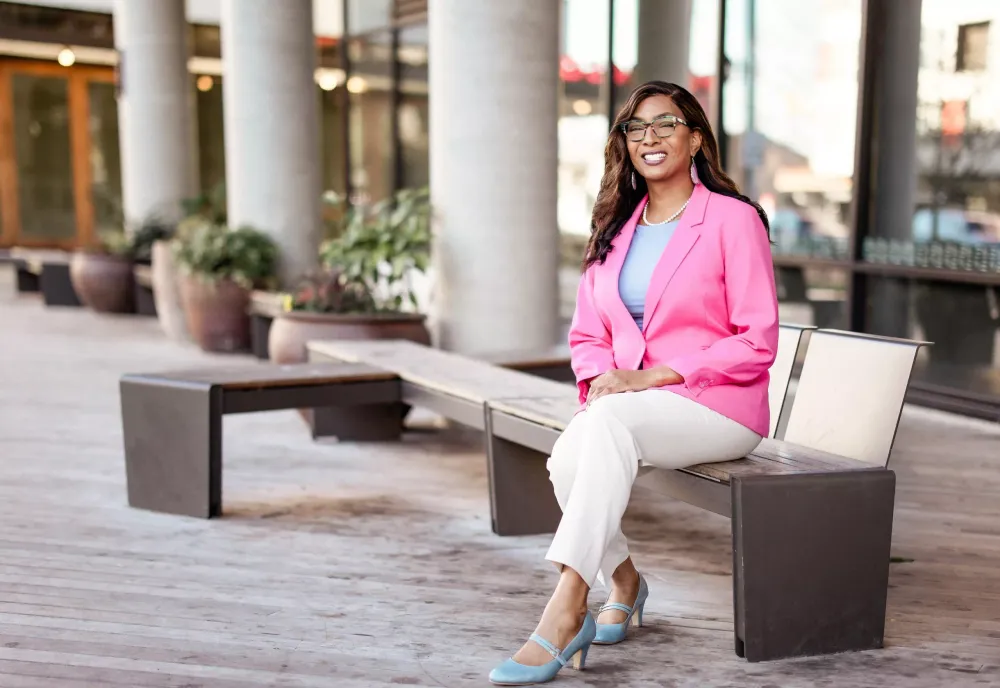
Jaelynn Scott (House of Representatives, 37th District Pos. 2 candidate)
Scott announced her run for the state legislature at the beginning of March. As executive director of the Lavender Rights Project, she has spearheaded numerous projects to tackle issues that disproportionately impact both local BIPOC and LGBTQIA+ communities — from surveillance to public safety to providing culturally sensitive and informed social services.
Asked how the campaign had been going so far, she said, “You never know when you decide to lean in and to step up if people are actually going to show up for you. But there seems to be a lot of energy in the 37th and across Seattle and really across the country for our campaign. We’re receiving phone calls, donations, endorsements, lots of care. It’s going very good, and it’s [still] really early.”
To Scott, the Trump administration’s policies are not just relevant to certain marginalized groups but impact everybody. “…The federal government is coming after so many of our communities…,” she said. “We’re seeing cuts and restrictions that are either happening now — not just cuts in funding but pending and threatened cuts to gender-affirming care access, access to abortion, a number of pieces. So this is an issue for all of us... So the question for us here in Washington is: what do we do now?”
Scott’s response to the problem is for the state to step up more to provide these essential services to residents. One core tenet of her platform is universal healthcare and childcare. Asked what she thought of Whole Washington (an organization looking to pass universal healthcare), she said it “has a fantastic approach, and we’re in conversations as we work through whether we have a federal funding stream or not.”
Safety and surveillance was another topic of concern, especially in terms of ICE activity and federal government incursions. “I did a lot of advocacy around surveillance,” Scott said, “and I think it’s really important for us to be extra careful, and hold extra scrutiny to surveillance systems that are in play right now, considering the federal threats.” She stated that although the new automatic license plate reader bill signed into law on March 30 added some regulations, it was still not nearly enough protection compared to the risks communities now face.
“And this is why we need representation from our community,” Scott said, “because we need legislators who are in the thick of it, who can tell you that the threat to our community is at a crisis point, and that we cannot take any risks right now.”
Scott shared with the SGN the importance of having a strong social safety net, and used her own life as an example. She explained that when “it was 9/11, and I was a flight attendant at the time, I was laid off… [and] the airline I was working for was bailed out by the government… but there was not a whole lot of care for our … union employees.”
She went on to describe how losing her first real job with the airline led her to face houselessness as she struggled to recuperate. “I lost, really, inspiration to continue” she admitted.
But in that moment of difficulty, a social worker that was the catalyst that helped her turn things around. “I could have easily fallen into the criminal justice system,” she acknowledged, “but it was a social worker that saved my life.”
Scott admitted that since then, it has taken years to gain the confidence to be who she has become today and that it was her conviction that others deserve the same support she received during those hard times.
“I want that for all Washingtonians. I want that for everyone in the 37th,” she said.
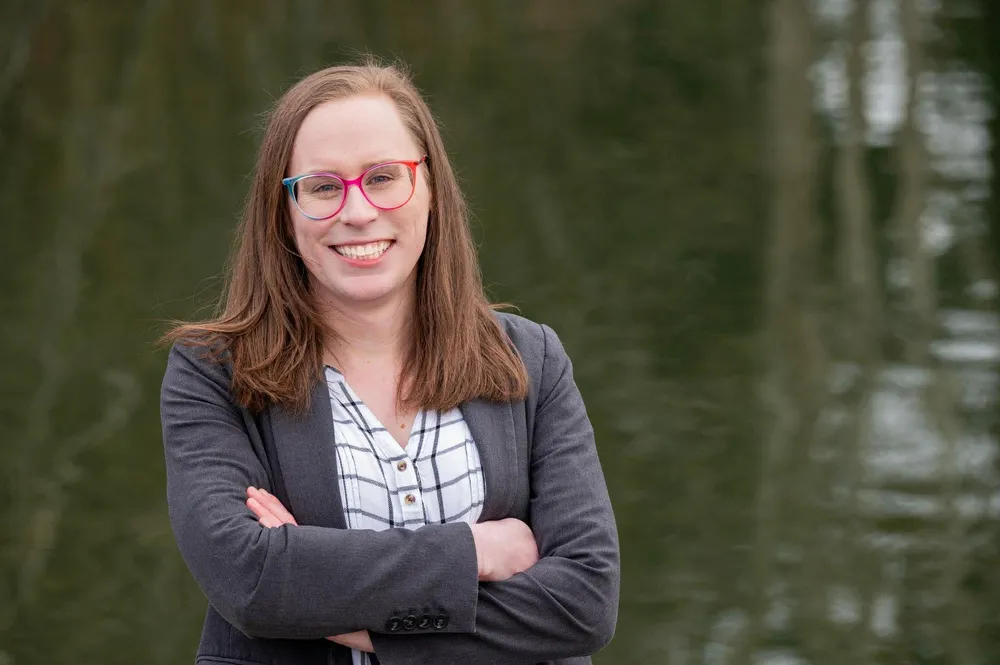
Erin Chapman Smith (House of Representatives, 29th District Pos. 2 candidate)
For Smith, who is looking to represent a district that encompasses the southern part of Tacoma and its suburbs, watching her fellow residents face increasing costs for housing and daily necessities has been the primary motivator for seeking public office.
“The affordability crisis and housing crisis are just as real down here as they are in Seattle,” she opined. “Since 2025, we’ve had about a 78% increase in overall rent costs, but in the same time frame, only about a 25-30% increase in wages.”
Smith spent over nine years working with homeless youth and in housing advocacy at YouthCare Seattle before becoming executive director of the ROOTS Young Adult Shelter in 2024. She explained that “it’s actually cheaper for the community to support programs like rental assistance or rapid rehousing than it is for someone to be staying in a shelter, accessing the emergency room consistently” and that “not only is it equitable and morally aligned with me and my campaign but also fiscally sound.”
Smith has also noticed in that time how the number of Trans people who face houselessness continues to increase. “I absolutely see that every day,” she said. “We see that at shelters. We see that across the system… There’s a huge disproportionality of Trans folks that [has been] increasing over the last few years.”
In addition, Smith said that the situation for Trans people in general has been dire politically. “The Trump administration has made it very clear their priorities [are geared toward] limiting access for Queer folks across all of their needs,” she said, “not just housing, healthcare, military access — like everything, right?”
Smith shared her own transition journey with the SGN. She noted that she came out while studying at Central Washington University in Ellensburg in the late 2000s and early 2010s. Since the campus was in a small, conservative town, she had to overcome obstacles to accessing gender-affirming care.
“I was doing the fun thing of driving across [Snoqualmie Pass] multiple times a week to meet with a therapist that specialized in gender identity,” Smith recalled, “so I could get my hormone letter and bring that back to the [on-campus] health clinic,” and remembered being one of the first Trans people at the university to access HRT from the campus clinic.
But housing and Queer rights are not the only issues Smith has concerns about. As for other struggles her constituents face that she plans to address if elected, she explained how the 29th District is a unique combination of families, military servicemembers, and healthcare workers, among others, and that she hoped to change the narrative that state government can build more sustainable and accessible systems for regular people, not corporations.
As examples, she mentioned a national grocery chain that recently had left a food desert in her district, as well as the lack of wage increases for frontline healthcare workers.
The cost of healthcare also came up, and she shared what the expenses for her nine-year-old-son diagnosed with autism had been like. “The amount of money we pay in healthcare is astronomical,” she admitted, adding that “people are literally making choices between taking care of family members’ health and food.”
She also complimented the incumbent (running for senate, not seeking reelection): “Sharlett Mena has introduced many state bills that are really focused on workers’ rights, and I hope to continue that work.”
At the end of the conversation, Smith said, “My hope with this campaign is that if we can move from crisis response to actually preventing things upstream, it’s [going to be] more affordable for the community [overall].”
Support the Seattle Gay News: Celebrate 52 Years with Us!
As the third-oldest LGBTQIA+ newspaper in the United States, the Seattle Gay News (SGN) has been a vital independent source of news and entertainment for Seattle and the Pacific Northwest since 1974.
As we celebrate our 52nd year, we need your support to continue our mission.
A monthly contribution will ensure that SGN remains a beacon of truth and a virtual gathering place for community dialogue.
Help us keep printing and providing a platform for LGBTQIA+ voices.
How you can donate!
Using this link: givebutter.com/6lZnDB
Text “SGN” to 53-555
Or Scan the QR code below!