

The 52nd annual Seattle International Film Festival kicks things off on May 7 with a gala screening of Boots Riley’s anarchic I Love Boosters at downtown’s Paramount Theatre and concludes on May 17 at SIFF Downtown with a special presentation of Olivia Wilde’s breakout Sundance hit The Invite. In between, there will be just over 200 features, documentaries, and shorts from 71 countries, screening at locations in Queen Anne, Seattle Center, and Downtown, with multiple actors, filmmakers, and other assorted cinematic technicians scheduled to attend.
Once again, I had the pleasure to sit down with SIFF Artistic Director Beth Barrett to discuss this year’s festival, why she keeps coming back year after, and other issues affecting SIFF at this moment. Here are the edited transcripts of our wide-ranging conversation:
Sara Michelle Fetters: As has been widely reported, SIFF has been having to make some tough decisions regarding staffing, theaters, year-round programming, etc. I know it hasn't been easy. But I do imagine this has made programming the festival under these constraints a bit more difficult. How that has been for you, your team, and your programmers?
Beth Barrett: Thank you for asking. The days when we had 400 films [at the festival], there were very few arguments, because we could find space for almost everything. And while it was great to not have to worry really about some of those constraints, other departments, like marketing, would often say, “You could have worried a little more and tightened [the festival lineup] in a little bit.” [laughs]
But working within a much smaller basic footprint, we only have 203 films this year. This has really allowed the various committees to have amazing, in-depth discussions about their films and about how they want their genre or region or section presented, and it's all consensus. The committee has to all agree.
There's still lots of individual voices, but there's also this collective voice of programmers who are watching and talking about films in ways that we didn't necessarily have before. Previously everyone was could be like, “We'll have 14 films from France, and then just leave things there.” That couldn’t be the case now...
And Justine [Barda]'s like, "This was not the best year for French films." So, we've got these couple that are really, truly representative of what's happening and [have] allowed us to [home] in a little bit on the stories that we're telling… and allowed us to really have fascinating discussions.
So, I think, [the restraints] are kind of forcing us to do our jobs better, I suppose. We needed to strike a balance. We have a balance of female and Nonbinary-identifying directors with male directors. We have this balance across the world. We have a balance of storytelling.
SMF: Festival attendance has been solid and has even been starting to grow — not necessarily to pre-pandemic levels but still to levels that have to make you happy. Is it hard to have to be hamstrung by the other aspects of the marketplace — like attendance being down during other parts of the year, not being able to keep the lease on the Egyptian because of budget constraints, SIFF Downtown not necessarily doing as well as the projections before reopening?
BB: Yeah. It's a really interesting thing, because for me, it's almost impossible to compare pre-pandemic to now. Everything is so different. Seattle is different. The world is different. The cultural consumption of people is different. The [number] of films that are available is different. Everything is just so different.
Pre-pandemic, we were working on the assumption that this was the standard model. This is what we do. The festival is this long. It has 400 films. We have venues all across the city. While it was not rinse and repeat… the basic structure still hadn't changed in 30 years… Some years, great, it was gangbusters; other years, no, it really didn't. None of that really mattered.
These last six years, we've been able to take a step back and look at the service that we provide as a nonprofit arts organization in combination with the city that we live in, and we’ve discovered this is a particularly digital city. Especially in the last six years. But it's also a city also that has a lot of competition for eyeballs, for money, and for your attention. There are also a lot of people that are just like, I'd rather just be home, thank you very much.
Looking at the landscape of who we are as a city and the ways that we interact with our arts and cultural institutions — including the Rep and the ballet and the opera and SAM, learning how we as Seattleites consume art — that has changed 180 degrees in the last six years. We’re just now refiguring out how the thing that we do works within the puzzle pieces of how to make Seattle an incredible place to live.
SMF: As part of that puzzle, you do get to program one of the coolest film festivals anywhere, so that has to be nice.
BB: I think so. Yes.
SMF: Is that why you keep coming back to do it every year? Even with all of these hardships? What has this period been like for you? You've seen so much change. Why are you so determined and excited to come back each year and captain this ship?
BB: Because there is nothing like watching people discover a film. There is no feeling that is as powerful as watching people engage with storytelling. I think it's that combination of understanding why, as an audience member, people would choose to come see and engage with stories in film form on so many different levels. It's the dark room, it's the community, it's the immersive nature of it. It's a way to understand the films I've watched to get here. I've learned… about things that I did not know existed and people that now I'm fascinated with. I’ve discovered ways of telling stories that are just unlike anything else. That’s always exciting.
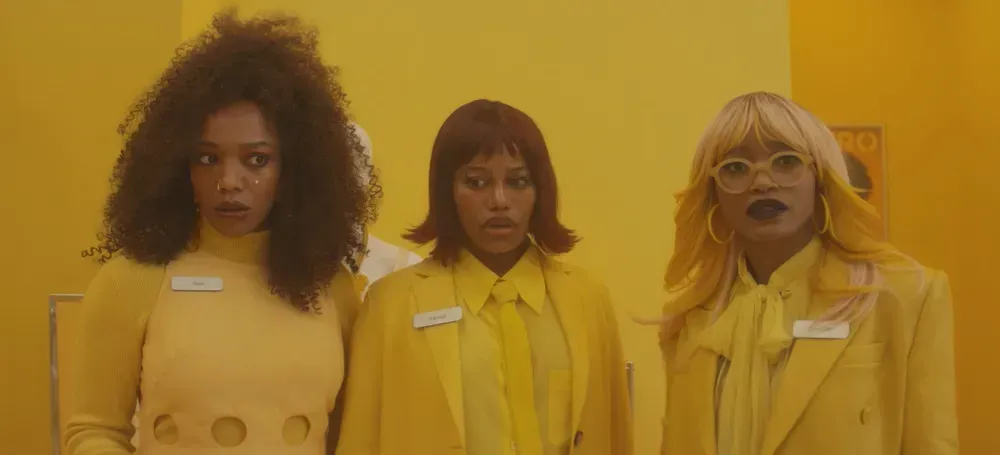
SMF: Let's talk about the opener. You somehow managed to snag the knockout film from Sundance and are bringing Boots Riley back to Seattle for I Love Boosters.
BB: I think that one of the things that is most exciting to me about opening night is that [Riley] is using the language of film to really say important things about the world we live in, yet also making us laugh and making us ask, “What is happening?” all through it at the same time. It’s a terrific and timely film.
Sometimes, when people think about film festivals, they think about French comedy and hard Romanian dramas. I love French comedies and hard Romanian dramas. Nobody loves a Scandinavian family drama like I do. However, you also need to be pushing that envelope, and you need to be watching these directors from all over the world that are saying things important for right this second [and] films that are challenging us through the way they put things on screen, through their screenplays and through their storytelling. The more that they're challenging us, the way that they're making us look inside of ourselves and really see what's there, the better I think it is.
What are we afraid of? What do we really want? What's happening? Nobody asks those questions quite like Boots does in that kinetic, frenetic sense. and I Love Boosters is definitely kinetic and frenetic. It’s perfect for opening night.
SMF: It's not going to be the only film that is timely, that is about what is happening in the world right now. What is it about social upheaval that triggers the best in these filmmakers, who examine the human condition in so many interesting ways? How can film help us have broader discussion that hopefully puts what's going on in perspective?
BB: I think… film reflects the change that is going on in a culture around filmmakers who are telling those stories. I think with the tools that are now at hand, filmmakers are able to push things out much, much quicker, than they could previously. One of our films is called The Seoul Guardians, and it’s about the democratic upheaval in Korea in December of 2024. This was a year and a half ago! And now it is on film, and it is out in the world for all to see.
Another great, great film that we have came out of Sundance: The Friend's House Is Here, a terrific Iranian film about the underground art scene in Tehran. It’s about some of the struggles that [the Iranians] go through to do their art and to challenge the culture, the status quo, and the religious government — all of those things. And as we fight fascism around the world, and as we fight governments that don't necessarily have the people's best interest at mind, we do it through art, and art is one of the most successful ways of challenging the status quo.
SMF: Talk to me more about the journey through the world that we're going to take this year. How many countries are represented?
BB: We're really looking at the broader spectrum. So, 71 countries and regions are presented in 59 languages.
Some films have multiple languages, and some of our sections, like African Pictures or Ibero-American, [and] especially our cINeDIGENOUS program this year, are incredibly strong. We really tried — and again, this goes back to the programming-by-committee concept — to present films from across regions, especially within those world cinema parts that represent stories that are being told in every way imaginable — on a very small drama level or on a high-intensity level of a Hong Kong action films, like with Sons of the Neon Night or The Furious. These are the stories that are being told in Hong Kong, and this is how Hong Kong is expressing itself [to] the world. We want to showcase that.
SMF: cINeDIGENOUS is, I think, one of the more popular subsections that you present. What can you tell us about this year's lineup?
BB: Once again programmed by Tracy Rector, cINeDIGENOUS has six different features, including a free-to-the-public screening at Seattle Public Library on May 9 of Reservation Redemption with a panel discussion.
But they're all really interesting films. One of them, Mārama, from New Zealand, is a gothic, bloody horror, anticolonialism, Māori explosion. That's balanced with Powwow People, Sky Hopinka's documentary about the powwow at Daybreak Star last year, which is really vérité, very thoughtful, very quiet, very community-based, and a way for non-Indigenous people to have that one-of-a-kind cultural experience. So the program is all over the board, all over the world, with some really terrific offerings.
SMF: We have to talk about the Pacific Northwest films. What's happening this year with those selections?
BB: We have six features, four documentaries, two narratives, and a short film program. The documentaries are incredibly strong. Two premiered at South by Southwest: JJ Gerber's The Life We Leave, about green death, making our funerals and end of life a little bit nicer to the planet; and then there’s Phoenix Jones: The Rise and Fall of a Real Life Superhero, about everyone's favorite superhero. We also have a world premiere of a documentary called Under a Million Stars that is looking at the homeless crisis in Seattle and the South Sound/North Tacoma area.
There’s RADIOHEART: The Drive and Times of DJ Kevin Cole, a true legend here in Seattle. This will premiere in Minneapolis in late April, which makes sense, since that's where he got his start. But it’s a really well-made look at his work and the things that he's been able to accomplish.
We also have two different narratives, Zach Weintraub's Assets & Liabilities, which is a terrific story of a middle-aged skater man, and then Mia Moore's world premiere of a film called Again Again. Mia is from Aberdeen. It's set there and is about a Trans woman who experiences the same day over and over and over again for 10 years, only to have to deal with what happens when it's actually finally the next day and they have to go forth in their life. This is also a world premiere.
SMF: This leads me to this year's LGBTQ+/Queer films. What can we expect? What are you excited about?
BB: Our Queer films this year, they're from all over the world. They're in all different sections. There's a lot of naked people in our Queer films this year. Don't know how that happened, because everybody is doing something completely different from [everyone] else. [laughs] …
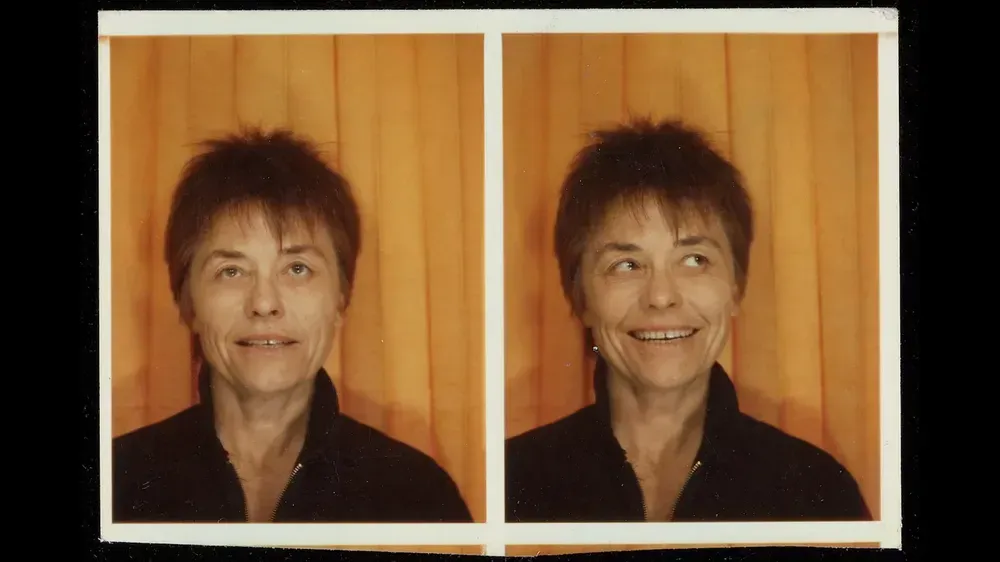
In the documentaries we have Barbara Forever, a great look at the legendary director, cinematographer, editor, etc. Barbara Hammer. In the New American Cinema section, there’s Drunken Noodles, Lucio Castro's Gay erotic — very, very erotic — drama. There’s Camp from Avalon Fast, which is very witchy and very Queer. From Australia we have Body Blow, which is an erotic thriller. Think of it is like it’s a throwback to the Brian De Palma era of erotic thrillers. This one about a Sydney-based Gay man on the down-low running around and getting into all sorts of trouble.
SMF: How do you want audiences to SIFF? What do you hope they take away from their SIFF experience?
BB: I want them to challenge themselves to see something new. One of the great advantages to being at the PACCAR Theater and Pacific Science Center is that all of our venues are within walking distance, or at least easy transit of each other. This makes it very easy to go see something at the SIFF Uptown then maybe wander over to the Pacific Science Center and see something next there. Maybe you walk the SIFF Film Center right next to Climate Pledge Arena.
But it's really easy to just hop from one venue to another. SIFF Downtown. Pacific Place. All of the venues.
I was talking earlier to folks about missing that experience [of going] between the Egyptian, the Broadway Performance Hall, and the Harvard Exit. You would often see the same people walking up and down Broadway, going from one theater to the other. That was great. It had a campus feeling.
With the way the venues are located this year, I think we get to re-create that feeling. I've met lots of friends over the years where it was just like, “I saw you at that last film, and now we're walking at the same time to this other venue! I’ll see you there!” Those are the short conversations that then allow people to have that deeper experience. To make a connection. Maybe even make a lasting friendship. Anytime that happens, that’s a great SIFF experience, because it can last a lifetime.
Find more information at https://www.siff.net/festival.
Support the Seattle Gay News: Celebrate 52 Years with Us!
As the third-oldest LGBTQIA+ newspaper in the United States, the Seattle Gay News (SGN) has been a vital independent source of news and entertainment for Seattle and the Pacific Northwest since 1974.
As we celebrate our 52nd year, we need your support to continue our mission.
A monthly contribution will ensure that SGN remains a beacon of truth and a virtual gathering place for community dialogue.
Help us keep printing and providing a platform for LGBTQIA+ voices.
How you can donate!
Using this link: givebutter.com/6lZnDB
Text “SGN” to 53-555
Or Scan the QR code below!