
How much power do our dreams have? For one young woman living in the American South, dreams had the power to take her far away, into the new life she’d longed for. After a year of manifesting new possibilities, Madeline Clere found that maybe dreams can have as much power as we’re willing to give them.
One year ago, Clere was living right on the border of Indiana and Kentucky, sandwiched between “Don’t Say Gay” bills and bans on gender-affirming care. She knew she needed a change in her life, especially as she began to seriously consider transitioning. Friends had sent her pictures of Seattle, and the city lingered like a flashing buoy in the deepest parts of her mind.
“I didn’t know anything about Seattle, other than it’s in the corner of the country,” she admitted with a laugh. “I googled ‘Seattle,’ and a big picture popped up, and it was of this market, and it was nighttime, and you could see the neon sign. I thought, ‘Wow, that’s really cute.’”
Clere saved the photo on her phone and set it as the cover image for a “Seattle playlist,” tracks she felt encapsulated her growing dream of one day making it to this far-off place. When she was having a bad day or felt like she might never get out of the South, she’d sit in her car and listen to her Seattle playlist to feel better. “There were some moments where I was feeling discouraged, and I was like, ‘We’re dreaming too big. This is not going to happen,” she remembered.
Not knowing much about Seattle, Clere’s playlist didn’t include any of the city’s local artists: no Macklemore, no Nirvana, no Pearl Jam. She did, however, include “Roslyn” by Bon Iver and St. Vincent, because even in the South, everyone knows Twilight.
Helping Trans people find their voice
As she got more interested in what life is like for Queer people in Seattle, Clere discovered Seattle Voice Lab.
“The first step of transition for me was actually meeting them,” she told the SGN. “I did that a week before I met with the doctor.”
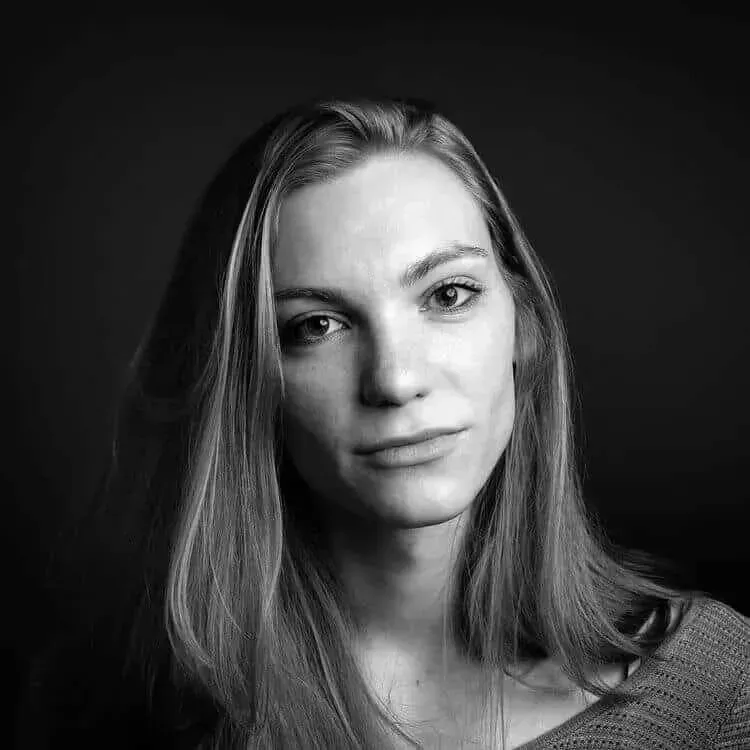
SVL is dedicated to helping Trans people find the voice they’ve always wanted. “People come to Seattle Voice Lab for all sorts of reasons,” CEO and founder Claire Burgess said. “We are known for being patient, kind, and empathetic, and provide a safe, nonjudgmental place where students can process deep-seated fears in their transition while working on their voices.”
The lab strives to make its services as accessible as possible. It offers sliding-scale payment options, because the staff understand that the financial cost of transitioning can often prevent people from seeking services such as voice training. “We provide a high quality of instruction at a variety of price points,” Burgess added, “because we know exactly what transition is like. We've been there ourselves, and we want to make it as accessible as possible.”
Burgess understands the struggles Trans people can face. It was through her own journey that she found the inspiration to open SVL back in 2014. “My transition was rough: I spent the first year struggling with housing and immense food insecurity,” Burgess recalled. “I had come from Michigan, where I was studying vocal performance and education, [so] when I moved to Seattle, I took it upon myself to teach others how to find their own voice.”
Originally from the Midwest, Burgess knew that making the company accessible to Trans people around the country would be an essential part of her business model. Today, Seattle Voice Lab offers online classes and free lessons on Discord, which has helped it connect with Trans people across the US, including Clere.
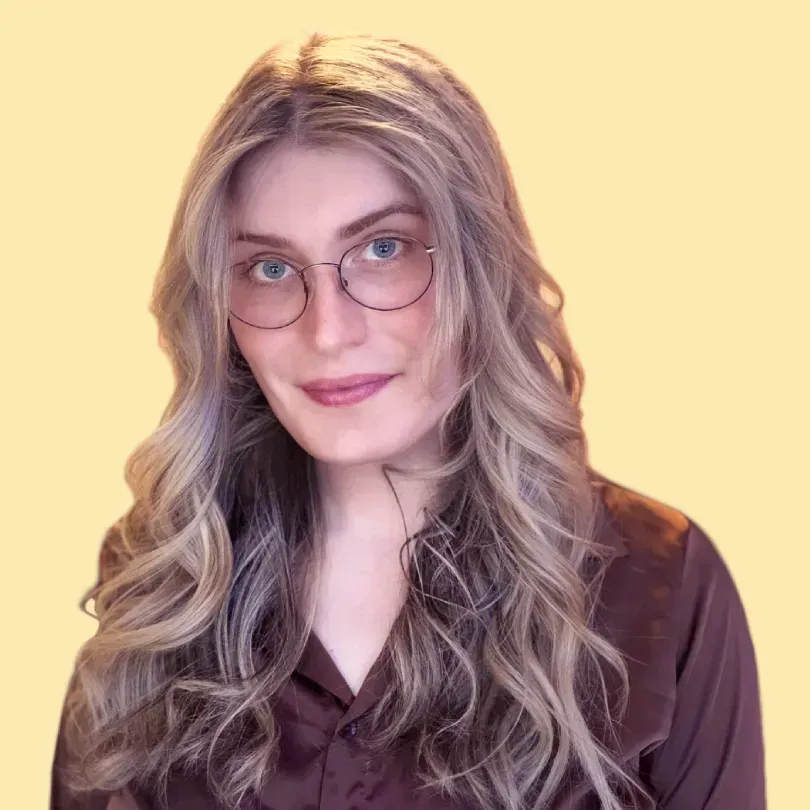
“I used to talk very differently,” Clere admitted, though it's hard to tell. SVL helped her settle into a voice she enjoys, but it did much more than that. It helped Clere connect with a community of other Trans people who had once been in her shoes, gain confidence, and embrace her identity. “It was eye-opening that the voice was like an instrument you could play, that you could enjoy that, and that it could be fun,” Clere said. “It’s not some abstract thing — it’s something you can actually modulate and change. Immediately, I fell in love with that.”
Learning to teach
While voice lessons were helping Clere start to feel more like herself, the weight of anti-Trans sentiment growing around the world continued to pile onto her shoulders. Though starting her transition helped her learn how to breathe, the Bible Belt still felt like a suffocating cloud of smoke lingering in the air around her.
“One day, I had a really hard day, and I said out loud in the car on my way home, ‘I need a big change,’” she recalled. When she got home, Clere saw a newsletter in her inbox. It was from Seattle Voice Lab. The email was simple: a general call for speech pathologists looking for work. Though Clere had worked enough odd jobs to fill an encyclopedia, she had no experience in voice pathology. The more she stared at the email, however, the more Clere could feel that change she’d beckoned the universe to send her.
“I was instantly like, ‘I want to do that so much. That sounds amazing.’ So, I reached out to them,” Clere said. “I was like, ‘Hey, I’m not qualified, but I really enjoyed the other side of that, and if you show me how to do it, I’d really love to do it.’” The email was a long shot, and she didn’t expect anything to come of it.
On the other end, Burgess was frantically trying to grow SVL to meet the community's needs. Over the last ten years, the company has grown immensely, thanks to Burgess’ determination and a dedicated team. “During my own transition, I worked out what needed to happen on my own, and I quickly realized that voice training is as much mental as it is physical,” Burgess explained. “Because open-source voice training resources weren’t available like they are today with social media, I was left to figure out the techniques on my own. Once I began putting the puzzle together, I began to transform these techniques into digestible curricula that cater to beginner vocalists.”
SVL revolutionized voice therapy for Transgender people. Thanks to Trans voice researcher Zheanna Erose and the cultural shift toward online classes after the COVID-19 pandemic, Burgess suddenly had hundreds of clients signing up for services, seemingly overnight. Hundreds turned to a waitlist of 800, and though SVL had a qualified roster of professional speech pathologists, it wasn’t enough to meet demand.
“They were debating, ‘Can we teach people how to teach this? Is this a transferable skill?” Clere recalled. “They were thinking about starting a mentorship program, and then I came along and was like, ‘Can you show me how to do this?’” The team at SVL agreed to teach Clere vocal training but made no promises about hiring her after it was complete.
Clere trained with SVL for eight months, at which point it was suggested that she find a student and put her new teaching skills to the test. She would record her lessons, then send them to the SVL team, which evaluated her teaching as well as her students’ work.
Clere really bonded with the team at SVL. “We got to the point sometimes we would just video call, me and my mentors, just to chat,” she said. After a while, it was clear that Clere had learned everything she needed to start freelance voice training her own students.
New job, new city
“Then in September, I randomly got an email from [my mentor], and it cc’ed the founder of the company,” Clere recalled. “They said, ‘Hey, I’ve been talking about you, Claire really wants to meet you,’ so they set up this [Zoom call].”
The meeting was only titled “Madeline Chat,” so when Clere got on the line with Burgess, she had no idea she had just sat down to interview for her dream job. At the end of the call, she was shocked when Burgess offered her a position with the company. There was one catch, though. If Clere was going to work with Seattle Voice Lab, she’d have to leave the South and move to Seattle.
In November, she scheduled a trip out to Seattle for the first time in her life, just to get an idea of the city she’d soon be moving to. She decided to take a walk down to Pike Place Market and look for a snack.
As she perused the market, she saw a woman handing out free samples of fresh Pacific salmon. After just one bite, Clere was giddy with the realization that she could now eat it every day if she wanted to. Her head was still buzzing about the salmon when she walked out the door to get some fresh air. “I was out in front of City Fish, and I turned around, and there was the picture,” she said: the image of a neon sign at Pike Place Market that she had stared at every time she cued up her Seattle playlist, every time her dream of making it out of Kentucky felt just too out of reach.
“I was standing in the picture. And I just started crying on the street,” Clere said.
“It was this big dream, and it didn’t feel real. It felt like a pretty picture that didn’t exist. Then I found myself standing in the picture, and I was like, ‘This is the best day.’ I will remember that for a long time. As I get old and my memories fall out, one by one, I really do think that's the last one I'll hold on to.”
Hope and courage
Looking back, Clere realizes that the optimism she held onto, that she could create a better life for herself, is what got her out of Kentucky. “Manifesting was so important to me that I used to think it was silly,” she said. “It’s crazy to dream that you can do a 180 with your career, go do a job that not only do you not yet know how to do but is on the exact opposite side of the country, with people you’ve never really met, and you know, who are wildly qualified.”
Now, Clere has been working with Seattle Voice Lab for two months. She’s still new on the team and getting used to her place in a new city, but she already feels like Seattle — and SVL — is where she’s always meant to be.
“I get to help Trans people every day, and that is even more fulfilling than I thought it would be,” Clere said. “Helping people love the part of themselves that they haven’t gotten to before, or just helping people be safe — sometimes blending in, not turning heads at the coffee shop — is a big deal... The work itself is remarkable.”
Seattle Voice Lab’s ASHA-accredited program can help clients achieve a passing voice within 6-8 weeks, but for Burgess, the program is more about helping people find the hope they need to believe in themselves.
“The thing that holds most people back, though, isn't actually the voice; it's overcoming the shame or 'cringe' that voice training brings,” Burgess explained. “Voice training is incredibly vulnerable, and it takes a lot of courage to overcome the fear of communicating with a new voice. People treat you differently, and there are risks involved when it comes to family and work, but once a student can overcome those [obstacles], the fog lifts and your voice becomes truly, authentically you.”
“As my team has grown, I'm grateful to have chosen people who recognize that the work we do is far greater than ourselves,” she added.
It takes a lot of hope to envision a different life: to stare at a picture and know you can get yourself there, or build a company from the ground up with the goal of making life easier for those in your community who come after you. For Burgess and Clere — and the many other dedicated coaches at Seattle Voice Lab — this level of hope is what unites them to the work they do.
“There's a lot of hope in this city. It's a really special place,” Clere said.
Support the Seattle Gay News: Celebrate 52 Years with Us!
As the third-oldest LGBTQIA+ newspaper in the United States, the Seattle Gay News (SGN) has been a vital independent source of news and entertainment for Seattle and the Pacific Northwest since 1974.
As we celebrate our 52nd year, we need your support to continue our mission.
A monthly contribution will ensure that SGN remains a beacon of truth and a virtual gathering place for community dialogue.
Help us keep printing and providing a platform for LGBTQIA+ voices.
How you can donate!
Using this link: givebutter.com/6lZnDB
Text “SGN” to 53-555
Or Scan the QR code below!