
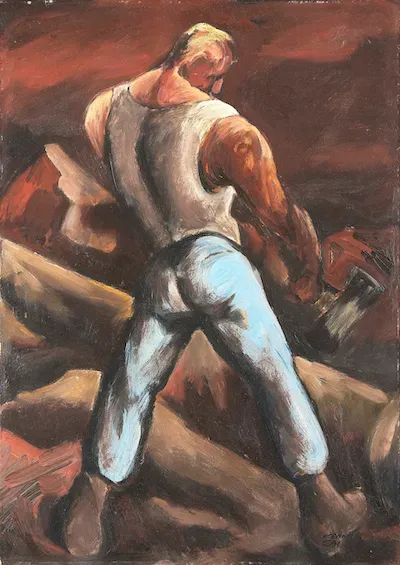
The Seattle Art Museum is a 93-year-old institution with a history as varied — and as complicated — as the artists whose works have graced its exhibition halls throughout the years. But hidden underneath the museum’s public façade lies a Queer history that remains unknown.
After Lucía Yvette Moliné-Gonzalez’s op-ed in the SGN in March about the Gay artists that were featured in SAM’s “Beyond Mysticism: The Modern Northwest” exhibit, the SGN contacted multiple parties, including Seattle art critic Matthew Kangas and the museum itself, about the true Queer history of the artists in question and why SAM has been reluctant to acknowledge it for so long.
SAM’s response
The SGN first asked SAM if the curator and other staff had known any information about the sexual orientation of the artists in question while creating the exhibit. SAM’s director of public relations and strategic partnerships, Emily Haight, told the SGN that although the curator examined many facets of the artists’ lives, “the interpretive approach for this exhibition centers primarily on the shared artistic philosophies and the development of modernism in the Pacific Northwest, rather than presenting comprehensive biographical narratives for each artist. That approach shaped what was included in gallery texts.”
Haight also wrote, “At the same time, we recognize that an artist’s identity, including their sexual orientation, can be deeply meaningful to how audiences connect with their work. Because we are unable to surface every story in gallery labels (which are quite short), we also host programs around exhibitions that invite more dialogue and community voices.”
Asked if the museum would be open to integrating more information about the LGBTQIA+ influences and personal lives of the artists in this exhibit as well as future ones, Haight wrote that “SAM is committed to ongoing learning and to evolving how we present art in ways that are inclusive and responsive to our communities. Feedback like this plays an important role in that process and will help us shape how we think about interpretive balance.”
SAM did not made any explicit commitment to the SGN to change its current or future practices around displaying information about work created by Queer artists in its exhibits.
Response to donor
A donor and member of SAM, inspired by Moliné-Gonzalez’s op-ed, told the SGN they had contacted the museum as well about the exhibit’s lack of biographical information for Queer artists.
“I was inspired to write them to share my displeasure as a member of and donor to the museum and got wholly inadequate response back,” they said.
The donor shared with the SGN the email response they received on March 27 from SAM’s PR team. The museum wrote: “You are correct that several artists included in the exhibition were part of queer communities, and that this aspect of their lives can provide important context for interpreting themes, relationships, and imagery in their work. We also understand your concern about inconsistency in how artists’ personal lives were presented…
“The exhibition was developed with the primary focus on the artistic philosophies that shaped modernism in the Pacific Northwest, rather than presenting comprehensive biographical narratives for each artist. That curatorial framework shaped what was emphasized in the exhibition. While it was not our intention to diminish or overlook important aspects of these artists’ lives, we recognize that this absence can feel significant, particularly given the broader history of queer artists being underrepresented in museum interpretation.”
SAM also did not make any explicit commitment about its practices regarding Queer artists’ works to the donor.
Gay in plain sight
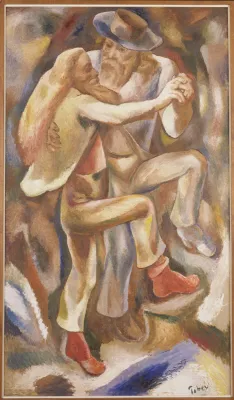
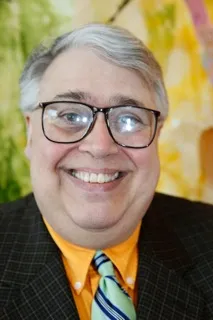
Matthew Kangas is a local Gay art critic and scholar, whose name has been near-synonymous with Seattle’s art scene for almost five decades. A prolific writer featured in the Seattle Times, Seattle Sun, ARGUS, and Seattle Weekly, Kangas has built a career around studying how the Gay artists, like those featured in SAM’s current exhibit, concealed their identities, including their homoerotic intentions, from both the museum and public.
Born and raised in Seattle, Kangas moved from Portland, Oregon, to Oxford, in the UK, then to NYC as a young man to study English literature. As a teenager, he said he began to understand the homoerotic dimensions of the artworks and explore the narratives that concealed the artists’ motives at the time.
“Why were they covering all of this up?” he said to himself back then. “It was very taboo.”
He described how, during that time, people were complicit in ignoring the truth of the art and the artists’ sexuality. “They were aware of it but suppressed it, a part of the whole establishment view that hid it in the first place,” Kangas said. “It really was a big glaring hole.”
Kangas told the SGN that once he moved back to Seattle from NYC in 1976, he began to examine the homoerotic motivations underlying the artwork in question in his writing.
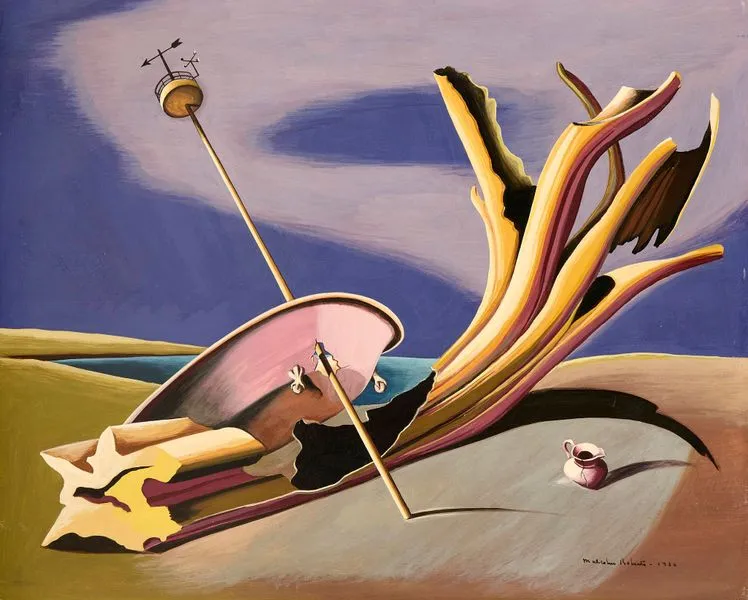
“[Mark] Tobey died in 1976 — he’s the only one I never met,” he said. “But I knew the rest of them, including Malcolm Roberts.”
Regarding Guy Anderson, Kangas said, “The links to Asian art were genuine. But that was a shield, a closet door to conceal the male figuration.”
According to Kangas, Anderson had an affair with artist Morris Graves in the 1930s, and his painting titled “Morning” (1933), which depicts a male figure naked, face down on a bed, was actually a morning portrait of Anderson. Kangas explained that when collectors Marshall and Helen Hatch were looking to donate the painting in the 1970s to Vicky Halper (a SAM curator), they didn’t want Anderson’s sexuality to be revealed, so they hid the romantic, homoerotic inspiration from Halper. Kangas protested the fudged title, “Mourning” — which the Hatches changed to lie to Halper — and the museum eventually changed it back to the original.
“It really should have been titled ‘The Morning After,’” Kangas commented in jest. “I saw through it all.”
But they weren’t the only closeted artists among SAM’s current exhibit, Kangas said. “Kenneth Callahan was probably Bisexual; the rest were homosexual. They had long-term relationships.”
Kangas also talked about Tobey’s late 1930s paintings, explaining how they were all about homeless men in Pike Place Market. But once Tobey started drawing his “white calligraphy” style in 1941 and saw success in NYC, he “dropped the male figure like a hot potato,” Kangas said.
Anderson was the only one (according to Kangas) who kept painting the male figure. The artist moved to La Conner, WA, where he lived a very private life, Kangas said, adding that his sexual preferences were very well known in the town. Kangas explained how Anderson had a studio across from the local bar, and was known to ask men to come over, take off their clothes, and let him draw them for his paintings.
Even the founder of SAM, Dr. Richard Eugene Fuller, was probably a Gay man, Kangas said: “He lived with his mother his whole life, and didn’t marry until 50.”
Kangas explained how Dr. Fuller hired Callahan as a curator at SAM; Callahan’s wife Margaret (who was 15 years older than him) was an art critic for Town Crier.
“It was a largely chaste marriage,” he said.
Callahan was a merchant marine for 15 years before moving to Seattle. And later in life, he moved to Long Beach, WA, where wind currents and waves replaced his artistic interests in drawing male figures, Kangas said. Kangas was also convinced that Margaret was the one writing his reviews for him.
“At the time, Seattle’s art scene was small, dominated by 5-10, all connected to SAM. They were also all protégés of Dr. Fuller,” he said.
SAM’s other overlooked artists
Another group of artists who were ignored by SAM, said Kangas, were at the University of Washington between the 1920 and 1960s. “Before the Northwest School, the University Moderns were the top dogs,” he said.
Kangas explained how these modern artists had ties to Paris, listing Ambrose Patterson and Walter Isaacs (who exhibited with Picasso) and their students, Wendell Brazeau and Spencer Moseley, who studied with Fernand Léger.
“Abstraction” by Brazeau dealt with optical perception and, according to Kangas, was very overlooked. His and the others’ works are not in the “Modern Northwest” exhibit, because SAM never collected them. Kangas described how Tom Robbins at the time attacked University Modern artists in the Seattle Times as passé and boring. What SAM owns is ultimately what we collectively constitute as “art history.”
Conversely, artist Jay Steensma did parodies of the Northwest School and would draw satirical versions of the pseudo-philosophical imagery the artists of that school were known for and that SAM coveted.
Other local Gay artists Kangas mentioned were Michael Ehle (who died of AIDS-related complications), Galen Garwood (who drew silhouetted male nudes), Donald Foster of Foster/White Gallery, and Gordon Woodside of Woodside Gallery, whom he said opened the door for Gay artists in Seattle. However, all of these explicitly Gay artists went completely ignored by SAM.
For Kangas, it was important to acknowledge that there were many other Gay artists’ whose stories ended up being overlooked and left out by the museum.
A life and love of Seattle art
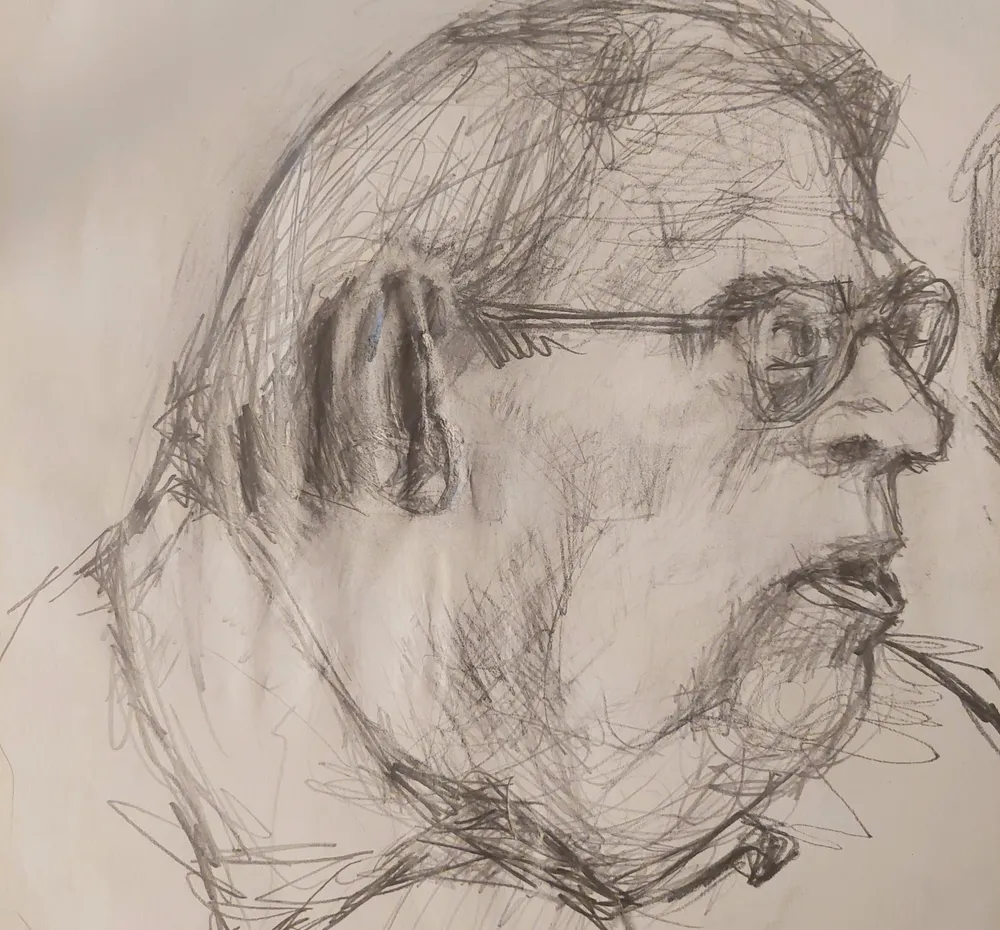
Kangas ended by reflecting on his experiences of being a Gay Seattle art critic and scholar over the years.
“I wasn’t aware of it as a teenager, but in my twenties as an art critic I realized how so many artists my generation who moved here were Gay,” he said. “They welcomed me into their studios, and their parties. Once they realized I was a writer, they recruited me to write about them.”
He chalked up his career partially due to the luck of finding a niche that hadn’t yet been filled.
“There was a huge void of art reviewing, so when I asked other artists about it, they said go for it,” he said. “I was in the right place at the right time.”
HELP SAVE GAY MEDIA
As the third-oldest LGBTQIA+ newspaper in the United States, the Seattle Gay News (SGN) has been a vital independent source of news and entertainment for Seattle and the Pacific Northwest since 1974.
We have begun an S.O.S campaign in order to raise $50k to overcome rising printing costs, and remain continuing to provide critical news reporting for the local Queer and Trans community going into 2027 and beyond.
Help us keep printing and providing a platform for LGBTQIA+ voices!
How you can donate!
Using this link: givebutter.com/savegaymedia
Text “SGN” to 53-555
Or Scan the QR code below!