

Nathan Benedict and husband Steve Nyman have been part of Seattle’s LGBTQIA+ community for over four decades. They are both owners of Union on Capitol Hill, founded in 2018; before that, they owned Thumpers from 1985 to 2006.
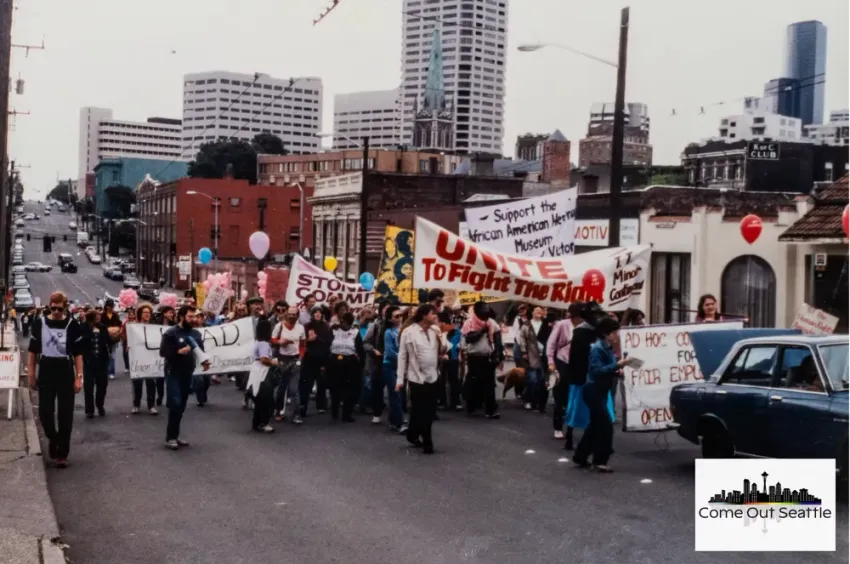
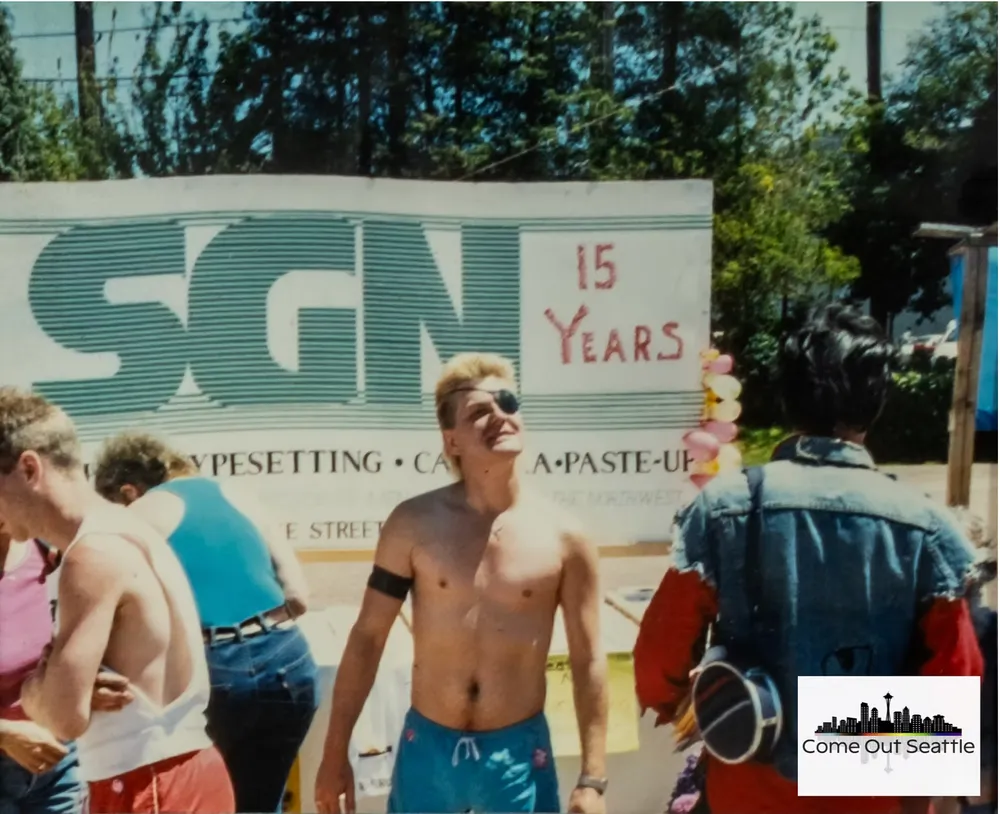
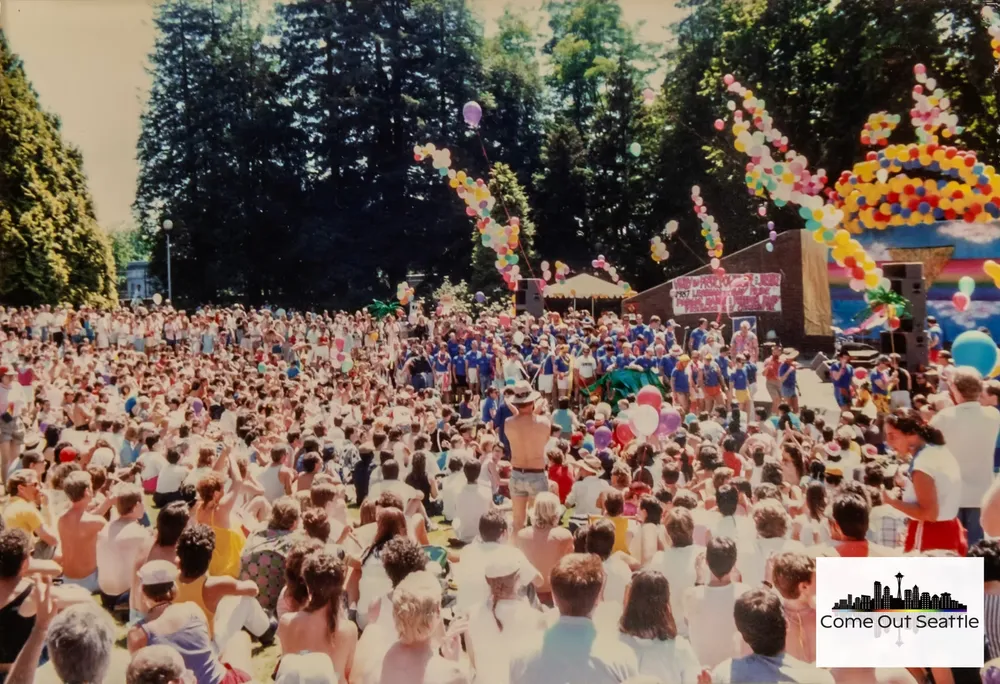
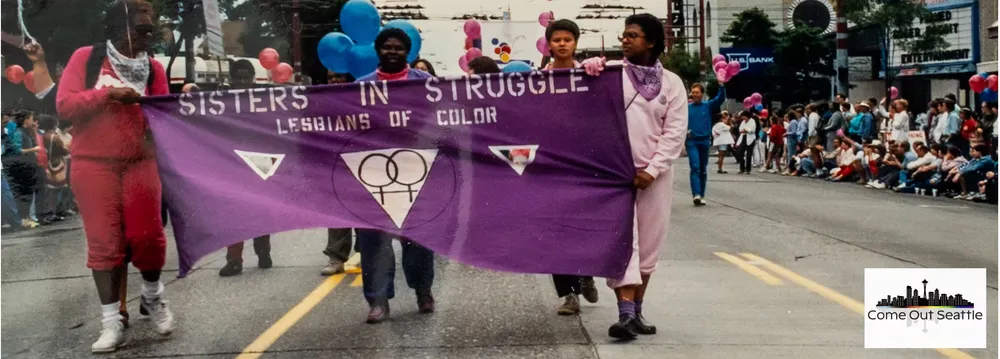
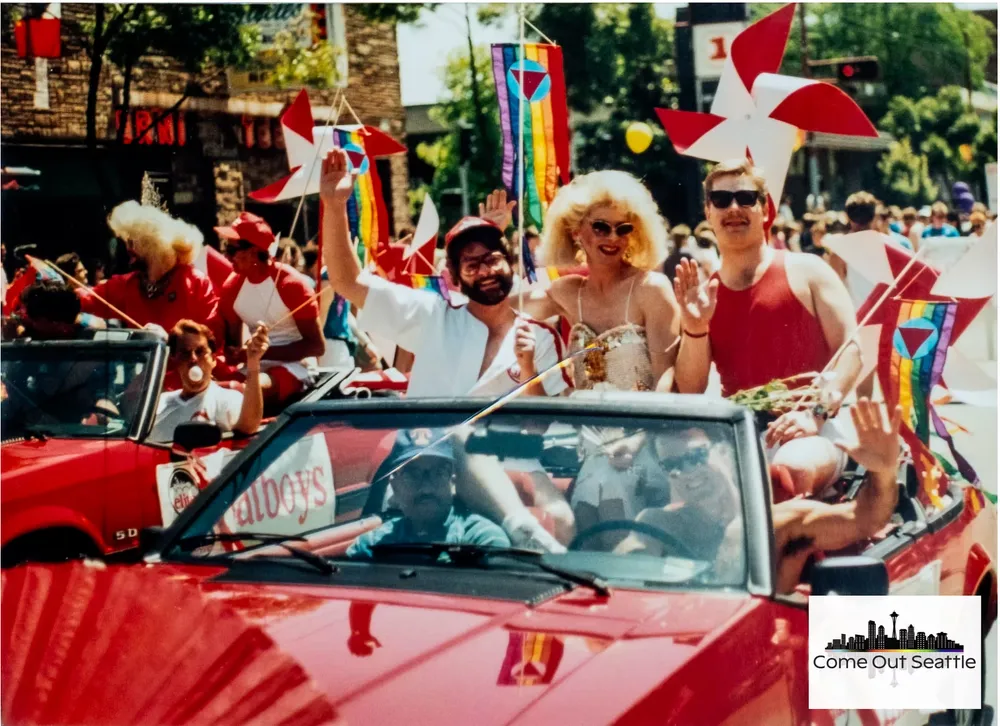
The two men started Come Out Seattle as a historical preservation project to collect photographs and information on local Queer history. Its Pride Archive is a digitized collection of photographs taken during Seattle’s Pride marches and rallies from 1986 to 1992.
Benedict spoke to the SGN about the project, as well as what Pride was like during that time.
Coming to Seattle
Benedict came out as Gay in 1981 but didn’t move to Seattle until around 1983–84. Before the early 1980s, Benedict said, Occidental Park was the center of the Queer community, as everything was based in the Pioneer Square area.
Crescent Lounge was the first Gay bar on Capitol Hill, he said, opened by Shirley Maser in 1974. By 1986, there were 13 Gay-identified bars on the Hill and 29 total in Seattle.
That is the first year in the Pride Archive, but Benedict said the year marks a significant milestone for the community” “It was the first time the march took over all of Broadway Avenue.”
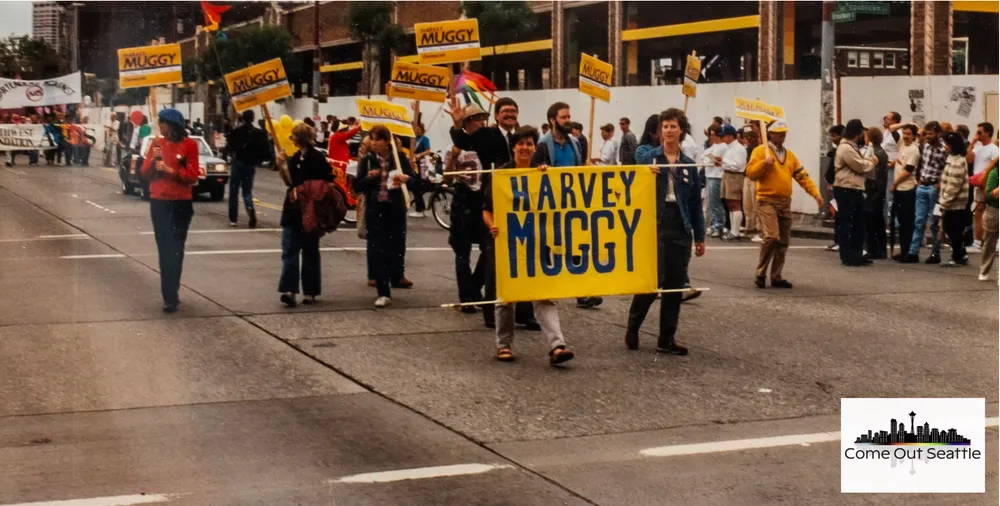
In the first photo in the collection, people can be seen lining up near on Union Street, where Benedict’s and Nyman’s Union bar currently is. Several photos also show people campaigning for Harvey Muggy, who was one of the first openly Gay men to run for state office in Washington.
“He really created the Gay branch of the Democratic Party in Seattle,” Benedict said.
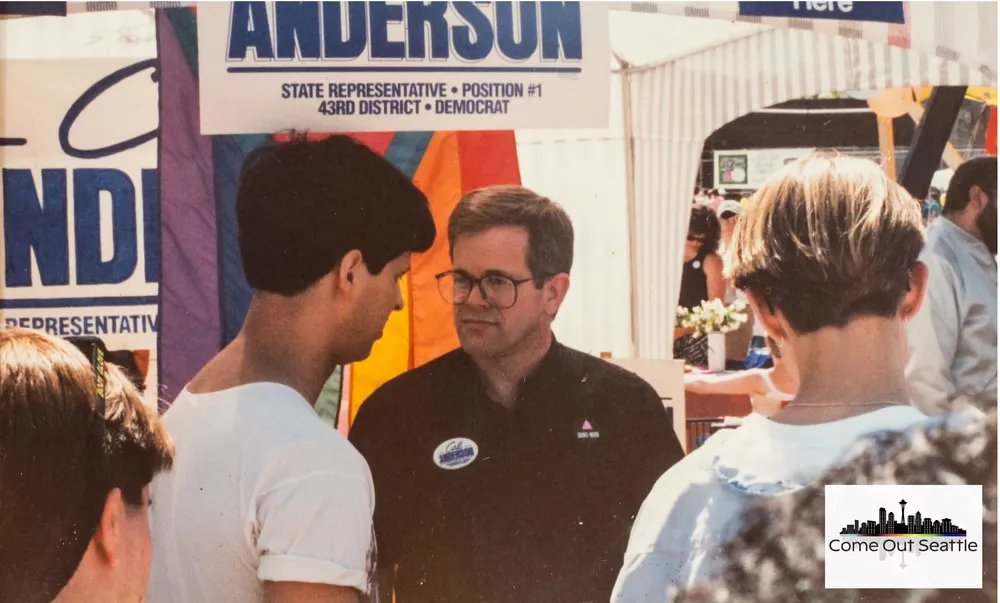
Although he lost his race in 1986, Muggy worked behind the scenes to help get Cal Anderson elected to statewide office years later. (Photos of Anderson and his campaigners can also be found in the collection.) Benedict said that Muggy and his partner went on to own Crescent Lounge. Muggy died in 1992 from AIDS, and when Lothian died in 2004, they gave $1.3 million to Lifelong AIDS Alliance, the largest gift up to that time.
Pride and AIDS
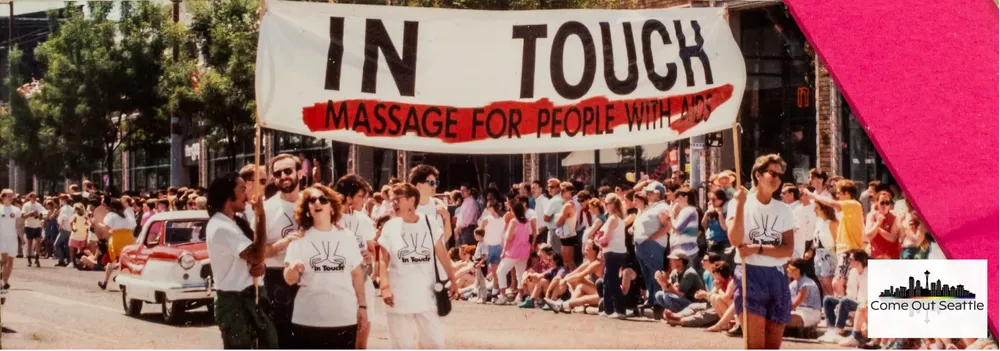
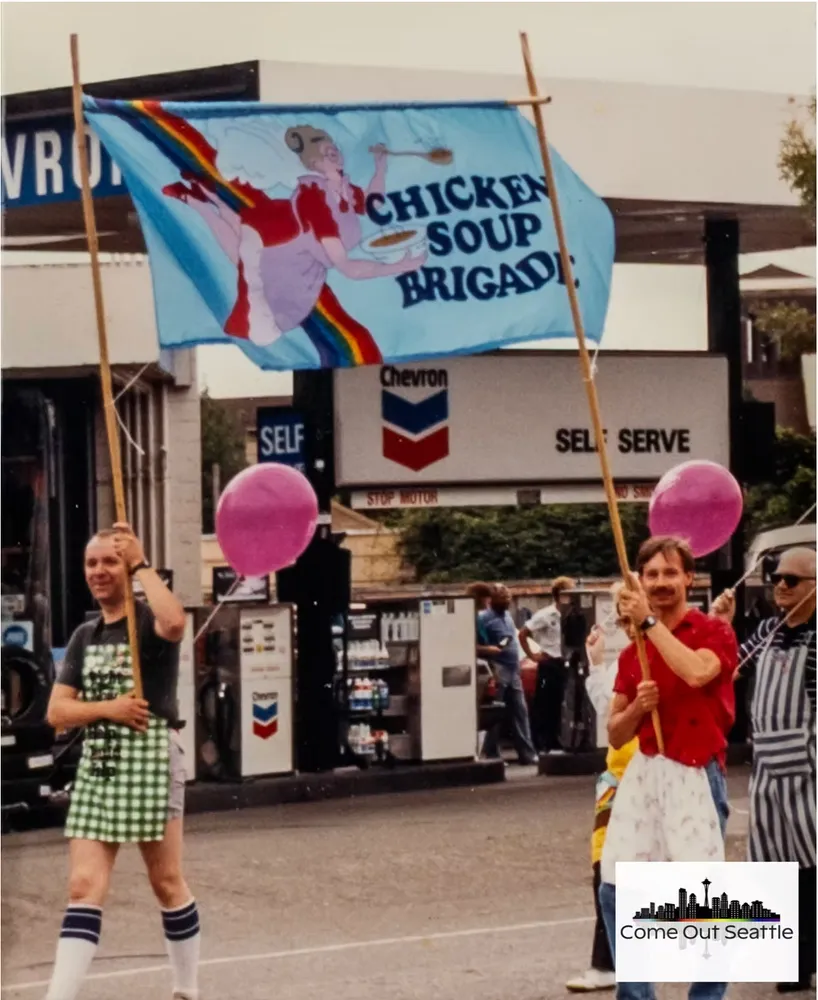
Benedict described how in 1986 and 1987 new groups started to emerge in response to the growing AIDS epidemic, such as the Chicken Soup Brigade. One group he pointed out was In Touch.
“In Touch started because nobody would touch people with AIDS. So they would go around and give people massages,” he said.
Benedict added that, by 1986, he knew a few bar owners that were already dying of the illness.
“Personally, AIDS had a massively profound effect on people,” he added. “It was an unbelievably weird, scary, and sad time.”
The stigma of the disease, and a general lack of knowledge about its spread, meant that the broader population treated those they regarded as Gay with open hostility. Benedict told a story of working at Thumpers one day, when he met a man that clearly seemed sick and ended up throwing up on the table. He cleaned up the mess and offered the man water and a towel. Then, “a couple days later, the person came back, and he said it was amazing to be treated with dignity as someone who was profoundly sick.”
Another example Benedict gave was of Smiles. the first Gay dentistry practice in Seattle, started by Fred Rowe DDS (he also regularly advertised in the SGN). Benedict said AIDS had “a profound effect on his business. Nobody wanted to share a space where people with AIDS were.”
During his recollection, Benedict began to tear up while sharing these difficult memories.
“It was really hard to visually experience it. When your friends got sick, all of the people we knew, gorgeous men, would go back home to die,” he said.
Pride’s evolution
Benedict said that throughout all the years he’s been a part of Pride, there was always an argument about where to hold it and what to call it. In the 1980s it was called the “Gay and Lesbian Parade and Rally” until 1992, when the Freedom Day Committee voted to add “Bisexual” and “Transgender.” The change initially evoked a strong negative reaction among white Gay men and non-butch Lesbians, worried about respectability politics and the movement not being perceived as “normal” by the public.
One of the struggles for Queer and Trans people in the 1980s and 1990s was finding spaces that would accept them, Benedict said. Ingersoll Gender Center members would come in to Thumpers to have their weekly meetings, because it was one of the only places that allowed them entry. He recalled that the leader of the group once told him, “Thank you so much for letting us in. You can’t believe how many places won’t let us have dinner.”
As Gay business owners, Nyman and Benedict had also advocated keeping Pride in the neighborhood when discussions about moving it downtown began in the mid-1990s. He said the earnings of Gay businesses on the Hill benefited greatly from Pride; the move downtown hurt them.
His thought was: “Go ahead and cut out the most important day of the year for us.”
He said he was glad when PrideFest started on Capitol Hill in 2007.
Thumpers closed in 2006, because the world had changed, Benedict said. It had gotten to a point in Seattle where Gay, Lesbian, or Transgender events could be held in most places, and the attitude at the time, according to him, had become: “We don’t need gay bars anymore.”
Preserving Gay history
Benedict shared with the SGN some of the unique challenges of trying to preserve LGBTQIA+ history. He talked about how most Queer people, until very recently, did not have immediate biological families.
“By the time most LGBT people die, they usually don’t have any people to inherit the stories,” he said. “For Gay people, when you came out, your whole life changed.”
He noted that this phenomenon has started to change over recent decades as Queer people and couples have been able to have children, either through adoption or IVF procedures.
Another element that has defined how people record their life stories is the internet. Benedict said although he feels that it changed the way LGBTQIA+ people connected with one another, and that it was “absolutely profound,” it still is not able to provide Queer and Trans people with a sense of community.
“If there is not a way to have a continuity with history, you don’t have a sense of belonging. The internet is not where you can find that,” he explained. “The lack of a feeling of belonging in a community is a real problem in the United States.”
Lastly, he shared that the community response to the Pride Archive and Come Out Seattle’s launch so far has been very positive: “With the [Pride photo] display last year, we’re so surprised how many people, including young people, were interested in the photos.”
Benedict said that he and Nyman plan to have the display again this year, from now to Sept 15, in the back hallway of Union Seattle, 1009 E. Union St., Monday to Friday 4 p.m. to 2 a.m, and weekends from noon to 2 a.m.

HELP SAVE GAY MEDIA
As the third-oldest LGBTQIA+ newspaper in the United States, the Seattle Gay News (SGN) has been a vital independent source of news and entertainment for Seattle and the Pacific Northwest since 1974.
We have begun an S.O.S campaign in order to raise $50k to overcome rising printing costs, and remain continuing to provide critical news reporting for the local Queer and Trans community going into 2027 and beyond.
Help us keep printing and providing a platform for LGBTQIA+ voices!
How you can donate!
Using this link: givebutter.com/savegaymedia
Text “SGN” to 53-555
Or Scan the QR code below!