

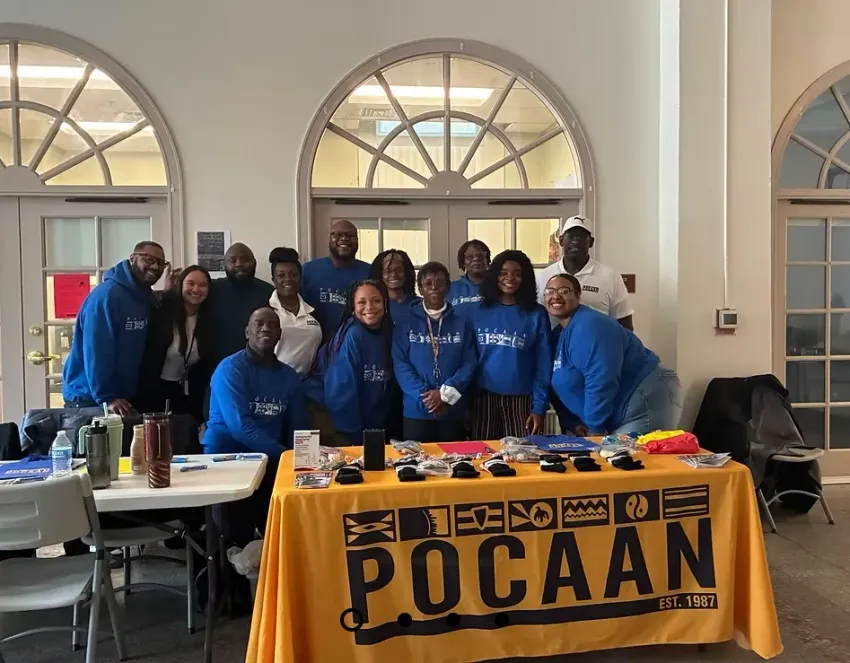
During the 1980s and 1990s, the AIDS crisis swept across the world, killing more than 44 million people as of today. Marginalized people, especially Black/Brown, LGBTQIA+, and impoverished people afflicted with the disease, were largely ignored by the government and society during this time, denying them the care that they required.
In 1987, the People of Color Against AIDS Network was founded in Seattle to bridge the gap by meeting people where they were. POCAAN began as an organization to provide marginalized communities with resources and contacts that could help them during the epidemic. But over the years, it has grown to encompass various other issues that these groups struggle with today.
Dr. Manaye Utaile has worked for POCAAN for the past four years as the medical director and as a provider. While POCAAN has been around since the 1980s, providing education around HIV/AIDS, counseling, and case management, it didn’t provide on-site care until four years ago.
POCAAN is now able to provide medical care, having built the Mocha PrEP Clinic in Federal Way, a safe space to treat people ignored for too long. Utaile is the on-site doctor offering a wide range of treatments: HIV/AIDS prevention care as well as treatment, substance abuse care, mental health services, immunization, etc.
“We provide wraparound services, medical as well as social services,” Utaile said. “We address the social determinants of illnesses, including insurance applications, enrollment, transportation assistance, housing, and nutrition.”
Currently, POCAAN works with pharmacies to obtain medications for its patients; however, it will soon construct an on-site pharmacy at the Mocha PrEP Clinic, which should open at the beginning of next year.
Chris Porter, the human resources director at POCAAN, explained how mental health is an important part of treatment. “One of the standout things in COVID was that there was a lot of talk about mental health,” he said.
“Yet, underneath that, finding providers of color as mental health experts and clinicians was very difficult. Even if you could find them, access was not guaranteed.”
POCAAN now has some strong affiliations with mental health providers and will offer more comprehensive mental health treatment sometime in the summer. Porter said they hope to continue addressing the stigma around Black people and mental health.
The Mocha PrEP Clinic accepts all insurance, and if someone doesn’t have insurance, POCAAN helps them obtain coverage.
The current executive Director, Ernest Walker, stated that POCAAN relies heavily on federal government grants. However, recent funding cuts have reduced its $5.4 million grant budget to $3.2 million, causing losses throughout the organization.
To bridge the funding gap, Walker said, “We're really looking … to become a part of programs to develop, equitable, easy, and affordable housing for folks.”
Despite the losses, POCAAN continues to expand its resources. It also partners with Thrive Seattle to address housing for those seeking help. Jason Simpson, a case manager with POCAAN and Thrive, helps connect people to community resources, including help with rent, connecting them with an attorney, and utility assistance. Simpson is currently working on the Urban League Project, which helps provide housing for people of color.
“[POCAAN is] always in the community, you're meeting people right where they are, and then you get to see them evolve,” Simpson said. “I can see you from being under the bridge, dealing with substance abuse issues, to getting you in here, to getting you into counseling, to getting you to see the doctor, and then I can house you. You see it from point A to point Z.”
Just a few weeks ago, a woman approached Simpson, telling him that she lives outside, behind a library. He described POCAAN’s mission and services, and seeing that she might need their help, invited her back to POCAAN’s office. With her essential documents in order and Simpson’s expertise, he helped her apply for housing.
After being homeless for seven years, POCAAN’s help completely changed her life, as her application was accepted and she finally had a home.
POCAAN has helped more than 5,000 people in the past couple of years through its various resources, according to Walker. Countless people with stories just like that woman’s pass through POCAAN’s doors every day, finally getting the essential treatments and housing that every human being deserves.


HELP SAVE GAY MEDIA
As the third-oldest LGBTQIA+ newspaper in the United States, the Seattle Gay News (SGN) has been a vital independent source of news and entertainment for Seattle and the Pacific Northwest since 1974.
We have begun an S.O.S campaign in order to raise $50k to overcome rising printing costs, and remain continuing to provide critical news reporting for the local Queer and Trans community going into 2027 and beyond.
Help us keep printing and providing a platform for LGBTQIA+ voices!
How you can donate!
Using this link: givebutter.com/savegaymedia
Text “SGN” to 53-555
Or Scan the QR code below!