

Before Wayne Turner became a public interest attorney for HIV issues and Medicaid advocacy in Washington, DC, and taught LGBTQ+ health law and policy at Georgetown Law School, he was hard at work as a Queer and AIDS rights activist in Seattle.
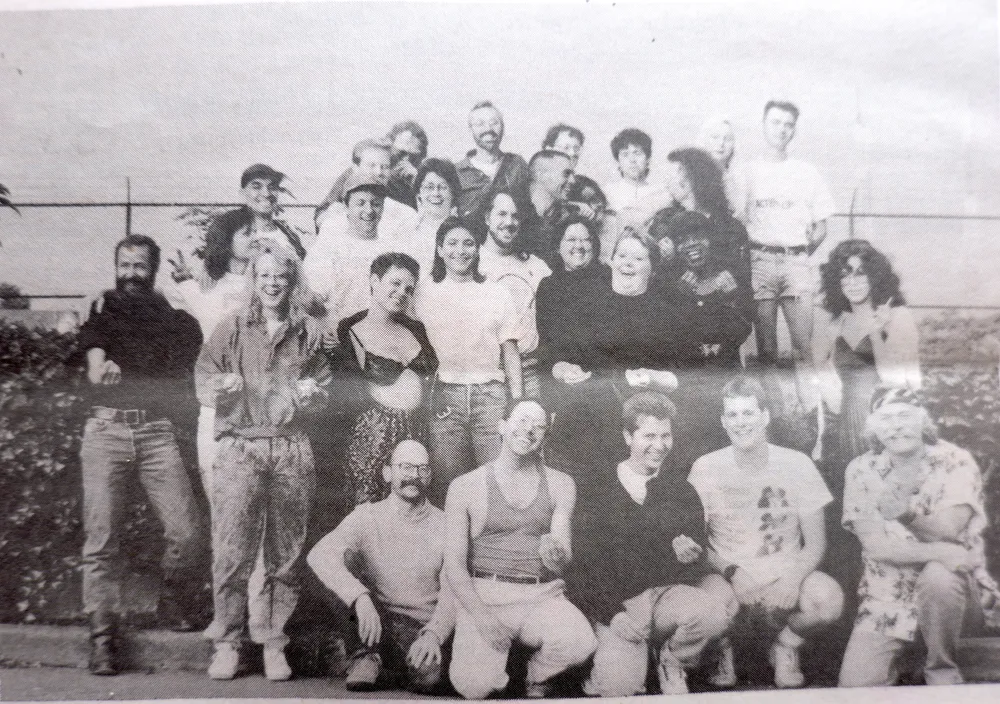
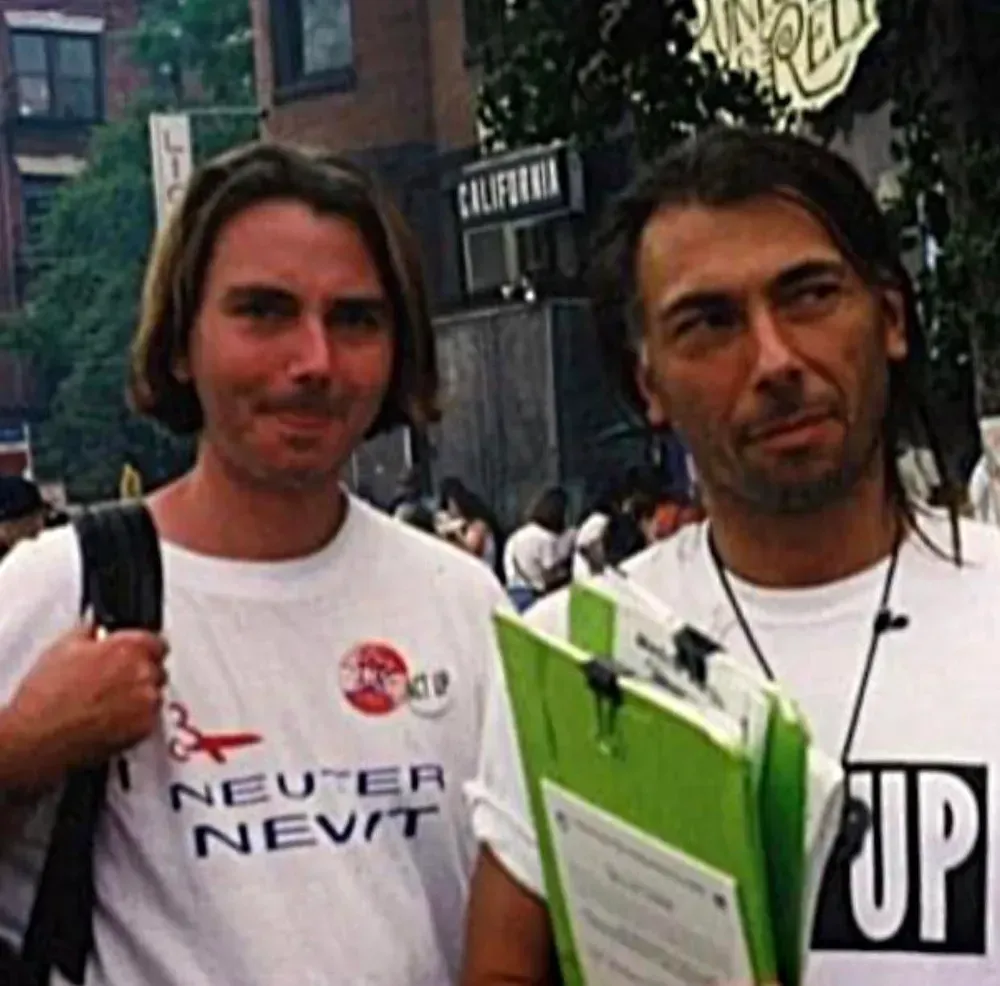
Turner was deeply involved in the Seattle chapter of ACT UP from 1989 to 1993. He also was part of the Freedom Day Committee, along with his partner Steve Michael; together they helped to put on the Lesbian/Gay/Bisexual/Transgender Freedom Day March and Rally in 1992.
Turner and Michael moved to Washington, DC, in 1993 to advocate more closely for AIDS awareness and policy, with Michael even founding the DC chapter of ACT UP (he later died of AIDS-related health complications in 1998).
The SGN contacted Turner to share his experiences during that time, and reflect on how they inform what the LGBTQIA+ community is dealing with today.
Coming to Seattle
Turner, who got involved with the Freedom Day Committee’s Pride organizing in 1992, reflected on the time he spent with the organization, and how it left a lasting impression.
“I just think it really stands out as an entity,” he said. “For people who aren’t familiar with it, it was a very community-based, kind of grassroots ‘everybody is welcome to be involved’ kind of organizing group.”
He said that former SGN publisher George Bakan, a cofounder of the FDC, was “certainly something of a mentor for me, and I just learned a lot and was really happy to be engaged.”
What stood out to him especially was the way in which Seattle’s Pride organizing at the time hadn’t been co-opted by corporations, like other US cities on the East Coast.
“My experience in Seattle was very different,” he said. “It was about organizing, and it was about participation in this democratic, you know, time-consuming and tedious but also such an important process.”
Turner said he felt that charging people for attending or to march in the parade was antithetical to the spirit of what Pride organizing was supposed to be. He also highlighted how Seattle was the first champion in including “Bisexual” and “Transgender” in its name and events despite community pushback.
“Seattle really was a pioneer, and just like a real champion, on the forefront of making Pride an inclusive event,” he said.
Asked if he saw parallels between the struggles LGBTQIA+ people faced then and face now, Turner said he felt there was a familiar scapegoating between how Gay men were stigmatized during the AIDS epidemic and how Transgender people are now being framed politically.
“The attacks on the Trans community.. are just like so egregious,” he said. “We are stronger together… That’s what the other side wants us to do [divide us] — that’s how they win, is when they pit us against each other or throw communities under the bus.”
AIDS activism
Turner told the SGN that as a twentysomething Gay man, HIV/AIDS was (and still is) the cause of his generation and lifetime. At the time, he was looking for the best way to support his community, so he gravitated toward ACT UP Seattle as a means to tackle the broader stigma and policy failures facing people living with the disease.
He explained how it was a complicated time: issues like clinical trials, broader political activism, treatment, and healthcare advocacy all impacted and intersected with each other. Women’s rights was another issue he cited, since “the definition of AIDS didn’t include cervical cancers at that time.”
Turner first met his partner Steve Michael during a 1991 trip Seattle ACT UP made to an AIDS conference and march in Washington, DC. He said they chatted on the plane, then dated for a little bit. They were also participants in the “Be a Star” program, in which Gay men would get tested for HIV every six months. According to Turner, that is when they found out that Michael had tested positive.
“It’s just like, holy fuck,” he said, remembering his reaction to the news. “All right, I guess it was hoping too much that two men can fall in love and live happily ever after in the ‘90s.”
Turner said that after that, they really began their roller coaster journey as AIDS activists. Michael’s test results coincided with the 1992 presidential election year, so the couple soon got involved with the ACT UP Presidential Project, “thanks to George [Bakan]. I was working in a restaurant downtown waiting tables, and I came home from my shift. Steve and I shared this tiny studio apartment in Belltown with a Murphy bed. And Steve had two plane tickets.”
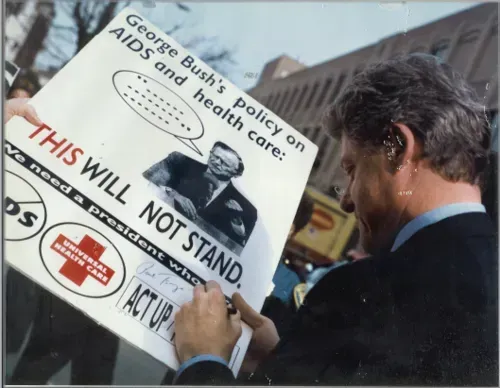
The two men went off to help organize an AIDS march in New Hampshire during its presidential primary, then in Sioux Falls, South Dakota. But it was during the primaries in Washington when former SGN reporter Tom Flint took a photograph of then-candidate Bill Clinton signing Michael’s AIDS sign.
“And Clinton knew who we were, because we were all over the news in South Dakota,” Turner said.
Turner and Michael were also organizers for the AIDS March on Washington during that time. As part of their outreach, Turner, Michael, Flint, and Bakan all went to support Spokane’s first pride March in 1992. Turner said their involvement was in part to hold Clinton accountable for supporting AIDS policy if elected.
“We all shared, like, a Motel Six room, and just, like, slept on the floor,” he said.
He described what the scene was like that day, as around a thousand people took to the streets and marched through the city: “People were blown away that so many people showed up.”
Afterward, he said, they all went to a Gay bar. “They had the TV on. We’re watching the news coverage, and it was the lead story,” he recalled.
Moving to DC
After the 1992 election, Turner and Michael moved to Washington, DC. The two decided to make the move to hold Clinton accountable for his campaign promise to establish a Manhattan Project for AIDS.
“Steve and I packed up and drove across the country in our 1969 Cadillac ambulance, and it broke down twice,” he said.
Turner explained what the couple’s plan were at that time: “We would be in DC for a couple years, and then move back to Seattle. Because once there was a cure for AIDS and healthcare for everybody, then we could just go on with the rest of our lives. But it didn’t work out that way.”
Michael founded the DC chapter of ACT UP. He also ran for president as the AIDS Cure Party’s candidate in 1996, alongside Ann Northrop. Turner and Michael were also arrested for demonstrating against the Defense of Marriage Act in front of the White House in September 1996, as part of the “DOMA Eight.”
“We carried our signs and chanted and denounced the president for signing the most anti-Gay federal legislation in history,” Turner said. “Following the customary three warnings, we were each arrested, handcuffed, placed in the police wagon, and taken to Park Police headquarters.”
In 1998, Michael’s health suddenly deteriorated. As Turner explained, “He was asymptomatic for much of that time, which was nice, and then kind of got sick like boom, boom, boom, one thing after another.”
Michael spent three weeks in the ICU of Washington Hospital Center before his health took a turn for the worse. That is when Turner decided to disconnect him from his life support. Michael died on May 25, 1998.
Turner wrote an article about his experiences during Michael’s passing under DOMA, and how when he received the death certificate and autopsy, it said his relationship to the deceased was “friend.”
“Friend. In our seven years together, it seemed like Steve and I lived three lifetimes,” Turner said. “I was with him when we found out he was HIV positive, and I held him as he took his last breath. Yet in the eyes of the law, I was just a friend. Fuck that.”
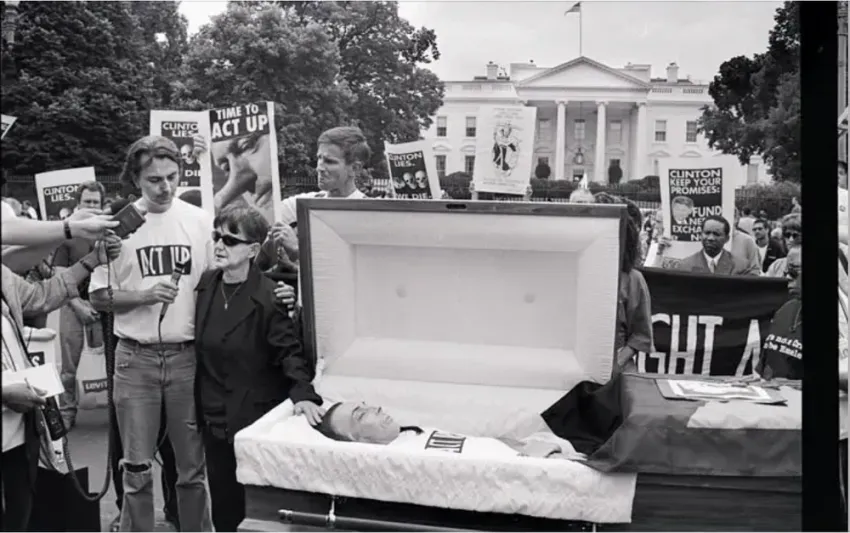
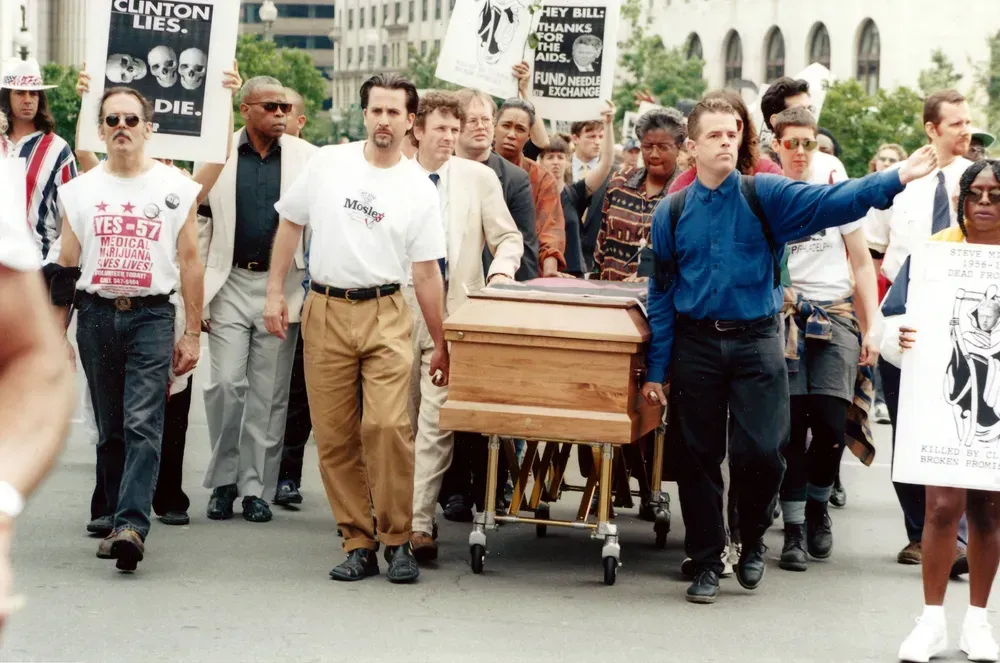
Part of Michael’s last wishes was to hold a political, open casket funeral, with his body in front of the White House on Pennsylvania Ave. Turner explained the process he went through to organize the event, and how he had to obtain permits from both the DC police and Secret Service.
“I said, well, either we can do this the nice way or the nasty way. Give Steve his one last photo op, so we can have our solemn ceremony, or I will throw his body over the White House fence. And you know I will.”
Law enforcement officials granted the permits. On the day of the ceremony, “they inspected the coffin to make sure there were no bombs.”
The ceremony was held on Thursday, June 4, 1998 at 12:30 p.m. Turner said they walked his casket through the streets of DC before making it to the White House.
Continuing the fight
Turner ended his conversation with the SGN discussing his thoughts on AIDS and Pride organizing of the past, and how the community is still dealing with similar issues now.
“My partner used to say, ‘assimilation is not liberation,’ which I think continues to be an apt phrase for today.”
One thing he was critical of was the corporatization of Pride, and how corporations have recently shown themselves to be “fair-weather friends” that will “show up when it’s time to market, and then disappear when you’re being pepper-sprayed or targeted or vilified.”
He also highlighted the difficulties — but also necessity — of actively organizing the community with event planning, flyers, and other methods over social media.
“But that is what Pride is for. For everyone to come together in a physical space, and see other people,” he said.
“They don’t just come from the neighborhood; they come from the Tri-Cities, and Idaho, and Montana. People are finding their way to, like, this little Emerald City to find their tribe and community.”

HELP SAVE GAY MEDIA
As the third-oldest LGBTQIA+ newspaper in the United States, the Seattle Gay News (SGN) has been a vital independent source of news and entertainment for Seattle and the Pacific Northwest since 1974.
We have begun an S.O.S campaign in order to raise $50k to overcome rising printing costs, and remain continuing to provide critical news reporting for the local Queer and Trans community going into 2027 and beyond.
Help us keep printing and providing a platform for LGBTQIA+ voices!
How you can donate!
Using this link: givebutter.com/savegaymedia
Text “SGN” to 53-555
Or Scan the QR code below!