


On the map of developing countries in South America, Brazil stands out among its neighbors in the field of Queer health. It has become a global leader in the treatment of people living with HIV/AIDS, pioneering various social initiatives that have established it as a successful model for responding to the disease. The collaboration between public policies and multiple sectors — including healthcare professionals, researchers, LGBT activists, civil society, and nongovernmental organizations — was essential to building an advanced healthcare network, especially for a developing country.
However, it wasn’t always this way. The first cases of AIDS in Brazil were observed between 1982 and 1984, when little was known about the disease. At the time, the young Brazilian infectious disease specialist Márcia Rachid treated the first cases in Rio de Janeiro, despite the lack of concrete information. Considered Brazil’s leading expert on HIV/AIDS, she became known for her compassionate care of patients at a time when the disease was a death sentence, and prejudice often led family members to abandon their loved ones in hospitals.
With the return to democracy in the second half of the 1980s, Brazil took a remarkable step forward with the creation of the Unified Health System (SUS), which provided the population with comprehensive and free access to healthcare. The SUS represented an important advance, even in the face of an epidemic that proved to be one of the greatest challenges of the time. Despite the various historical contexts and critical periods the country has experienced, Brazil’s Ministry of Health has developed targeted strategies to try to control the spread of the disease. Initiatives were carried out in collaboration with state and municipal governments.
Juliana Rebello, manager of the Sexually Transmitted Infections and AIDS Department at the Rio de Janeiro State Health Secretariat (SES-RJ), explained one of the main reasons Brazil has been seen as a success story in combating the epidemic.
“Brazil was a pioneer in promoting universal and free access to antiretroviral drugs, thanks to its stand against the pharmaceutical industry and the patent waivers the country secured at the time [1996],” Rebello said.
She also mentioned the effectiveness of the SUS, guided by the principles of equity and the guarantee of human rights, thereby ensuring access to healthcare for all.

HIV prevention strategies
Access to free antiretroviral drugs provided by the SUS has increased life expectancy and drastically reduced AIDS-related mortality, as well as the number of babies born with HIV.
“If it weren’t for the SUS, what would become of us? How many people would have already died? I myself wouldn’t be able to afford [the medication],” said Sabrina Luz, 43, a Transgender woman from the country’s northeast region who has been on antiretroviral treatment for 16 years.
“Actually, we’re privileged,” she added.

This international visibility helped spread the concept that health is not a commodity and that the right to life is non-negotiable. Educational initiatives were also crucial in raising awareness about the risk of HIV exposure and how to cope with a positive diagnosis.
“At no point did I think it would be the end of the road, because I already knew how the treatment worked,” recalled singer Leandro Buenno, 33, when he received his diagnosis during a routine screening in 2017.
“That same week, I started treatment and became undetectable in a short period of time.”

Despite the progress made and the wealth of information available, prejudice still exists, and it is not uncommon for some people to conceal their HIV status. Housewife Jéssica Mattar, 35, had this fear.
“People in Brazil still are afraid to disclose their diagnosis. I used to have that fear, but after losing someone to AIDS, I decided to speak openly about the issue,” Mattar said. She is the mother of four children and has been living with HIV for five years.
Although Brazil has made discrimination against people living with HIV/AIDS a crime since 2014, this has not prevented Mattar from experiencing serophobia on occasion; however, she described how she reacted to it: “I always ignore these people, because they are shallow and uninformed.” Regarding treatment, she said, “The SUS saves lives every day; having free access to medications, tests, and follow-up care makes all the difference, so that people can see me living in good health and with dignity.”
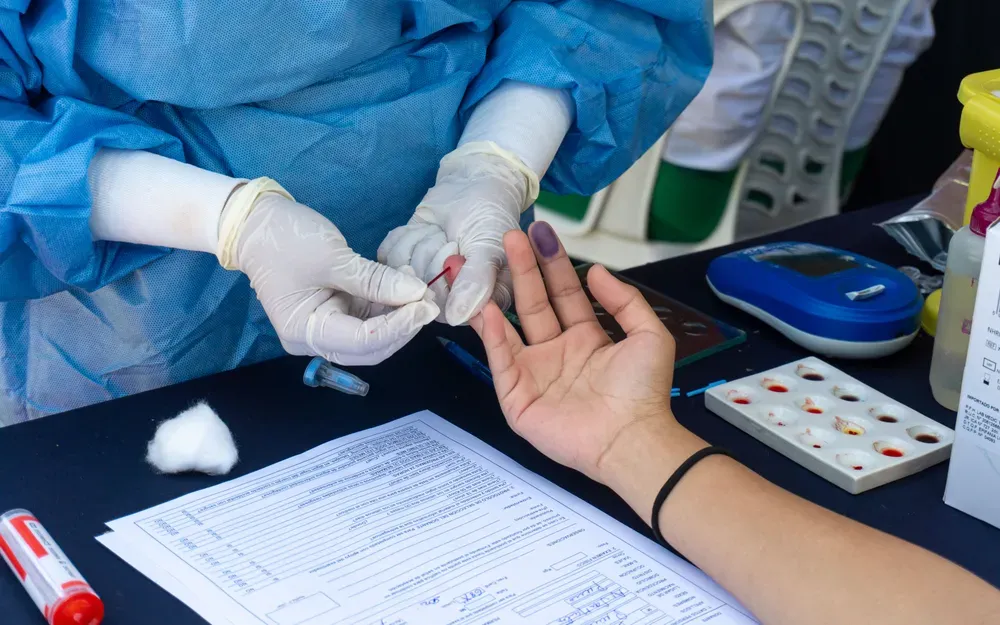
However, one of the most successful initiatives for preventing HIV infection was the implementation of pre-exposure prophylaxis (PrEP) in healthcare facilities in 2018, although postexposure prophylaxis (PEP) had already been available for several years. PrEP is recommended for people who do not have the virus but are at higher risk of exposure. Currently, more than 83,000 people in Brazil use PrEP under medical supervision, according to a survey by Agência Diadorim (2024). Regarding the user profile, it was observed that 82% are Gay men, 55% are white or Asian, and 41% are between the ages of 30 and 39. However, there are other groups that are vulnerable to HIV and often lack access to this resource, such as the homeless population or residents of remote and extremely impoverished areas.
When PrEP users seek services to obtain the prophylaxis, they undergo testing for sexually transmitted infections (STIS), which is why the Ministry of Health views them as more health-conscious. On the other hand, although it is recommended to use PrEP in conjunction with condoms, it is very common — especially on dating apps — for users to openly admit to having unsafe sex because they are using PrEP. These are generally young people who did not experience the peak of the global epidemic in the 1980s.

Other initiatives
Another innovative initiative took place in São Paulo, the country’s economic capital. Two years ago, the city installed automated machines at select subway stations that provide free PrEP, PEP, condoms, and HIV self-tests, making access even more convenient. However, to pick up the medication, users must first complete a telemedicine consultation via an app and scan a QR code.
In addition to these available prevention options, Doxy-PEP (doxycycline) — a postexposure prophylaxis for bacterial STIs — will likely become available in the second half of 2026. Doxy-PEP is part of the combined prevention strategy already in place in Brazil, which includes regular testing, condom use, antiretroviral treatment, PEP and PrEP prophylaxis, and specific care for pregnant women living with HIV.
Three years ago, the UN established the following global targets: to ensure that 95% of people living with HIV are diagnosed; to ensure that 95% of those people are on antiretroviral treatment; and, of those on treatment, to ensure that 95% have an untransmissible viral load. Brazil met two of these targets in 2024. This success is largely due to the expansion of PrEP availability, since testing is required to start using it; thus, more people living with HIV were identified and immediately began antiretroviral therapy. (Another of the UN’s main goals is to ensure that AIDS is no longer a threat to global health by 2030.)
In addition to prevention strategies, LGBT nongovernmental organizations (NGOs) have also played a key role through a variety of initiatives. Grupo Arco-Íris, based in Rio de Janeiro, is one of the oldest and most respected NGOs advocating for the rights of the LGBTQI+ community in Brazil. In addition to providing legal and social support and addressing various other needs, the organization also operates the Community Service for HIV/AIDS. The focus is on access to information, prevention, diagnosis, referral, and even treatment for certain specific STIs in a safe and inclusive setting, not limited solely to healthcare facilities.
According to Claudio Nascimento, the organization’s president, the typical users of this community service are young, white, middle-class Gay men; however, he seeks to broaden this demographic, as he explained: “We will always advocate for healthcare for all, but today, most LGBTI+ people living in the periphery — who are poor and Black — still lack information and access to these services.” Nascimento pointed out that the current challenge is to overcome this and reach more young Black people.
“We need to build pathways so that more people can have equal access to comprehensive healthcare,” he said.
Brazil sets an example
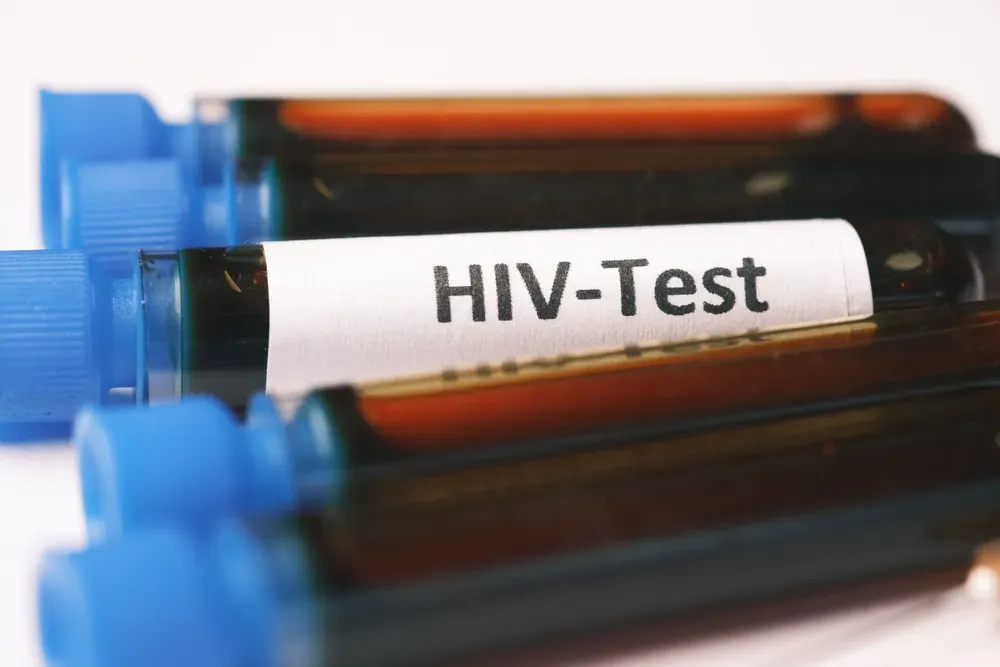
According to data from the epidemiological bulletin released by the Ministry of Health, the primary mode of transmission in Brazil remains sexual contact (75.3%). Recent information from that organization estimates that more than one million people are living with HIV/AIDS in Brazil, which has a population of approximately 213.4 million.
Rebello recalled that, in 2025, the country marked 40 years of its response to the virus. “A major achievement of these policies was Brazil’s certification by the Pan American Health Organization (PAHO) and the World Health Organization (WHO) for having eliminated vertical transmission of HIV (mother-to-child transmission) as a public health problem,” she said. This victory was only possible thanks to regular testing, prenatal care, and the continued provision of effective treatment for pregnant women.
Another milestone worth celebrating was the record in 2024 of the lowest number of HIV/AIDS-related deaths in the past 32 years, according to 2025 epidemiological data from the Brazilian Ministry of Health.
The only period during which the country experienced a setback was in 2019, during the administration of former President Jair Bolsonaro: the suspension of contracts with public laboratories for the manufacture of generic drugs, the elimination of certain aspects of social participation policies aimed at combating discrimination and promoting the rights of LGBT+ people, and the cancelation of the HIV harm reduction policy, which consisted of providing free syringe exchanges for people who inject drugs. The situation would not change until a new administration in 2023, when health policy was restructured.
In contrast, recent US funding cuts to South Africa have derailed HIV prevention programs, precisely at a crucial moment for supporting the new preventive medication, lenacapavir, causing a setback in South Africa, which has the highest number of people living with HIV/AIDS on the African continent. Lenacapavir is the newest antiretroviral drug for preventing HIV infection. It is also part of the PrEP strategy; however, while PrEP requires daily pill intake, lenacapavir can be administered via subcutaneous injection just twice a year. Although it has already been approved by the Brazilian Health Regulatory Agency (Anvisa), there are currently no plans to incorporate it into Brazil’s Unified Health System.
The World Health Organization recognized Brazil as a global model for controlling the disease in 2001. Even though there is still no cure or vaccine, scientific advances have shown that living with HIV has become a manageable chronic condition. This marks a new era focused on risk reduction in the nation famous around the world for soccer and Carnival.
Note: The 26th International AIDS Conference, organized by the International AIDS Society (IAS), will be held in Rio de Janeiro from July 26 to 31.

HELP SAVE GAY MEDIA
As the third-oldest LGBTQIA+ newspaper in the United States, the Seattle Gay News (SGN) has been a vital independent source of news and entertainment for Seattle and the Pacific Northwest since 1974.
We have begun an S.O.S campaign in order to raise $50k to overcome rising printing costs, and remain continuing to provide critical news reporting for the local Queer and Trans community going into 2027 and beyond.
Help us keep printing and providing a platform for LGBTQIA+ voices!
How you can donate!
Using this link: givebutter.com/savegaymedia
Text “SGN” to 53-555
Or Scan the QR code below!