


Among all the Hollywood biographies and histories I’ve read, this book truly stands out. I was genuinely impressed by the depth of research and the behind-the-scenes revelations I had never encountered. It’s a compelling and exciting read. Even the famous Bette Davis–Joan Crawford feud pales in comparison to the Norma Shearer–Joan Crawford rivalry that explodes off the pages.
That rivalry is just one of the treasures buried inside Jungle Red! The Making of MGM’s The Women, the new book by actress, writer, and TCM film historian Illeana Douglas. Coming out this September from Lyons Books, it’s a sharp, funny, and surprisingly tender deep dive into one of the most daring films Hollywood ever made: a 1939 picture with an all-star cast, a Gay director, and not a single man on screen.
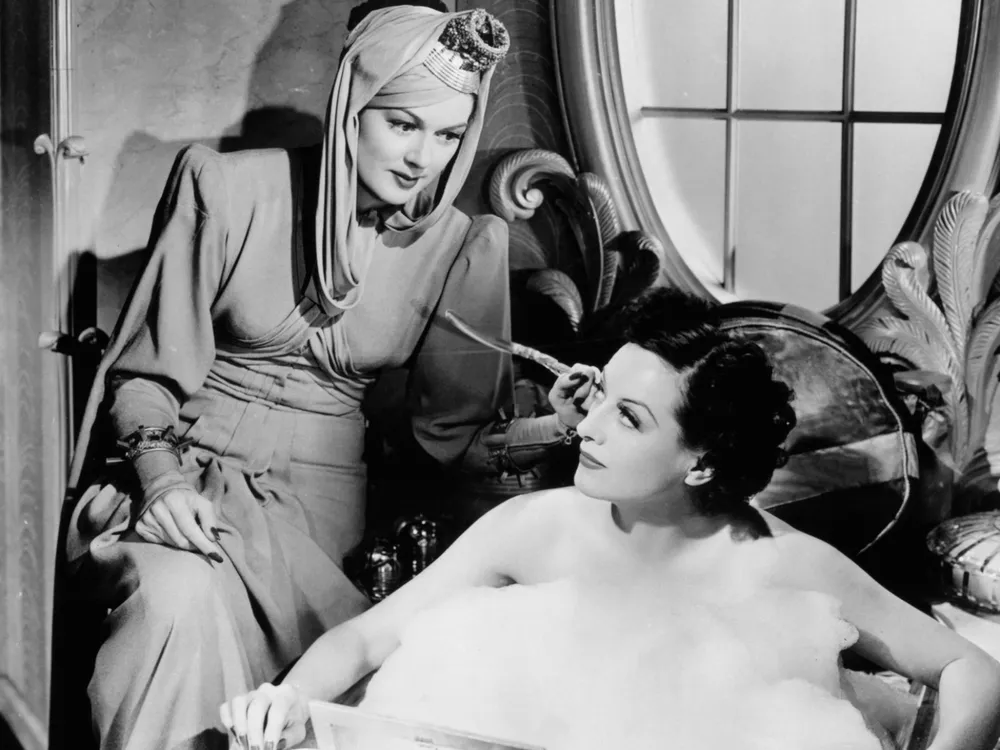
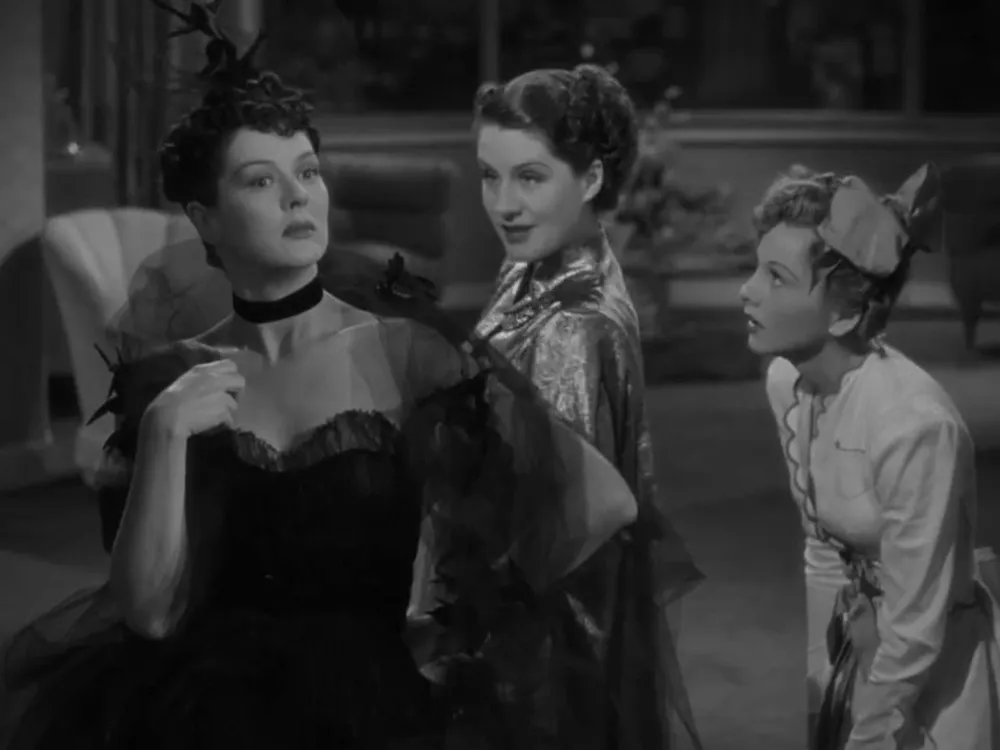
The Women starred Shearer, Crawford, Rosalind Russell, Paulette Goddard, and a young Joan Fontaine. These were the queens of the studio system, and they proved they could carry a box-office smash entirely on their own.
Douglas writes about these stars not as untouchable icons but as real women whose private lives often blurred with their on-screen roles. The result, as she puts it, was “fairly combustible.” Shearer, the widow of MGM’s “boy wonder” producer Irving Thalberg, held enormous power on the lot. Crawford, hungry and ambitious, wasn’t about to be outshone. Put them on the same set, and you get sparks that make modern celebrity drama look polite.
The director to whom MGM handed the keys was George Cukor. He’d just been fired from Gone with the Wind and badly needed a hit to steady his career. The Women became his comeback vehicle. But here’s the thing: no one else could have brought this film to life the right way. Cukor was a Gay man, and that mattered. He understood these women — their wit, their armor, their vulnerability — in a way few directors of the era ever could. He didn’t condescend to them or flatten them into stereotypes; he gave them room to be sharp, funny, and fully human. Douglas explores exactly how he managed those competing personalities while delivering a polished, sophisticated comedy.
The script itself had a wild journey. Adapted from Clare Boothe Luce’s hit 1936 play, the film passed through four screenwriters. A struggling F. Scott Fitzgerald took a crack at it, as did the rising talent Donald Ogden Stewart. Jane Murfin was finishing her draft when the great Anita Loos was brought in to rework it. Each writer fought for their own vision, and Douglas traces how those battles shaped the finished film.
Months before release, the gossip columns were on fire. Hedda Hopper — herself a columnist and a co-star in the film — famously called the set “a female kennel.” MGM didn’t shy away from the chaos. The studio leaned in, fueling stories of “catfights” to draw curious audiences, including men, into theaters. It worked. The Los Angeles Times crowned the picture “a vitriolic masterpiece.”
What makes Douglas’s account so fresh is her insider’s eye. As a working actress, she understands set politics from the inside. She knows the difference between manufactured publicity and genuine friction, and she’s careful to separate the two. Along the way, she fills the book with previously unpublished photographs that bring the production back to vivid life.
Douglas also makes a compelling case for the film’s legacy. She argues that The Women served as a template for later female-driven stories like Sex and the City and The Real Housewives of Beverly Hills. The idea of a female ensemble driving an entire story — with its friendships, betrayals, gossip, and glamour — started here. By the final pages, you understand why Douglas calls it “the greatest film ever made about women ... by a man.”
Eager to learn more about the book, I spoke with Douglas and asked her the questions I thought every reader would most want answered. Here’s our conversation.
Frank Gaimari: You’ve acted alongside Hollywood legends and hosted countless film retrospectives. What was it about The Women specifically that made you want to spend years researching it?
ID: What’s crazy is that my fascination with The Women goes back to when I was a teenager and looking for a comic monologue to perform! I came across this old playbook, Sixteen Famous American Plays, and discovered The Women. I was a Dorothy Parker fan and gravitated toward Sylvia’s comic cynicism, so I edited Sylvia’s monologue — when she is talking to Crystal in the boudoir — by combining two sections. I have to say, that monologue got me through quite a few auditions!
For years, the play and the film The Women were highly regarded by film historians like Jeanine Basinger (who provides my introduction). There was a great laser disc edition. I saw the revival of the play in 2001, which was a huge success, and I even auditioned for the 2008 remake.
Going back to 1937, when the play was on Broadway, The Women was part of the zeitgeist — always being revived. Then, recently, it began to fall out of favor — except with Gay culture, of course, [which] embraced it and kept its legacy alive. I was doing the “Trailblazing Women” show for TCM, and I suggested The Women, but the younger generation of women was turned off by the perceived bitchiness and viewed the film as antifeminist, more as a “camp classic” than a film to be celebrated.
I knew my next book after Connecticut in the Movies would be about The Women, so I began doing some research to see what my point of view would be. I saw the book as a cocktail party, and I wanted to tell the story through the men and women whose lives intersected and who came together to make the film in that banner year of 1939. Now that the book is written, you can see the threads of all these stories woven into one cohesive narrative, and you’ll understand not only why The Women is important but that this is one of Hollywood’s great untold stories.
FG: The Norma Shearer rivalry you uncover feels even more explosive than the famous Bette Davis–Joan Crawford feud. What surprised you most as you dug into it?
ID: Davis and Crawford were at separate studios, so they never interacted, but Shearer and Crawford had a shared history, and their rivalry was real. Shearer was married to the boss — Irving Thalberg — and got first dibs on every script and every leading man. Crawford really resented this. I was surprised and gained sympathy for Crawford when I learned that Thalberg actively thwarted her career, punishing her with bad material when she asked for better parts.
When Thalberg died, Shearer had to fend for herself, so Crawford actively went after the part opposite her, much to Shearer’s dismay. Shearer was pragmatic, knowing their “feud” would sell tickets, but she underestimated how far Crawford was willing to go for payback. Luckily for us, their feud was caught on film!
FG: Four screenwriters worked on this script, including F. Scott Fitzgerald. What did you learn about his contribution that readers might not expect?
ID: Well, discovering that the Academy had the full F. Scott Fitzgerald script available to read was amazing! It’s completely different from Luce’s play, but fascinating. Fitzgerald jokes — who knew?
Each writer brought their own personality to The Women, but Fitzgerald’s biggest contribution was the development of the role of Mary Haines, Little Mary. In Luce’s play, Little Mary was a minor character. Fitzgerald expanded the part: Little Mary is wise beyond her years and shares a closeness and camaraderie with her mother that resembles the father-daughter relationship he had with his own daughter, Scottie.
FG: George Cukor came to this film straight after being fired from Gone with the Wind. How did that pressure shape the way he directed his all-female cast?
ID: I always thought it has been overlooked that Cukor had direct involvement with the three biggest films at MGM in 1939: Gone with the Wind, The Wizard of Oz, and The Women. Cukor’s career was on the line, so The Women had to be a hit. Ironically, he had been fired from Gone with the Wind because he was Gay, then hired for The Women — also because he was Gay.
In many ways, as an openly Gay director, he was in his element, supervising the fashion and design, surrounded by women who adored him. He could be himself, and these actresses trusted him implicitly. He saved Joan Crawford’s and Paulette Goddard’s careers. He created Rosalind Russell’s character Sylvia, which she acknowledges. Joan Fontaine credits him with helping her get the role of Rebecca because of The Women. The Women is rightfully considered George Cukor’s film, but he paid the price by being labeled “a women’s director,” a code for Gay — especially given the success of the film.
FG: You include many previously unpublished photographs. Was there one image that stopped you in your tracks?
ID: It must be the picture of the marquee of The Women on its opening day in New York, with a long line of ticket buyers snaking around the block. There’s a narrative that The Women is only a “women’s picture,” but when you see this picture of men and women lining up at the movie theater, it blows that narrative out of the water. It was a huge hit.
FG: The film features no male actors at all. Why was that such a bold choice in 1939, and why does it still feel radical today?
ID: The Women was the first film with an all-female cast and a female point of view, directed by an openly Gay director — in 1939! That seems radical to me. The studio trusted the public; they knew they had a quality film, they liked the gimmick, and the film proved that actresses did not need leading men at the box office.
FG: After all your research, what do you most want a new generation of viewers to feel when they watch The Women?
ID: I want people to fall in love with The Women again, and by extension, celebrate women. There is so much to love about The Women: the comedy, the witty one-liners, the performances, the clothes, the sophistication — yes, even the “feud.” The book captures the most glamorous era of moviemaking at MGM in 1939, when the “Queens of the Lot” ruled. I want to celebrate these queens. In The Women, “Jungle Red” is a symbol of empowerment. “Jungle Red” could be today’s female battle cry! It’s about embracing your inner bitchiness.
Jungle Red! is a rare film history that’s as entertaining as the movie it celebrates. Douglas writes with wit, warmth, and the trained eye of someone who has lived inside the business. Whether you’re a longtime classic film buff or you’ve never seen a single frame of The Women, this book will make you fall in love with it. It’s smart, it’s juicy, and it’s impossible to put down.
You can purchase Jungle Red! The Making of MGM’s The Women on Amazon.
Support the Seattle Gay News: Celebrate 52 Years with Us!
As the third-oldest LGBTQIA+ newspaper in the United States, the Seattle Gay News (SGN) has been a vital independent source of news and entertainment for Seattle and the Pacific Northwest since 1974.
As we celebrate our 52nd year, we need your support to continue our mission.
A monthly contribution will ensure that SGN remains a beacon of truth and a virtual gathering place for community dialogue.
Help us keep printing and providing a platform for LGBTQIA+ voices.
How you can donate!
Using this link: givebutter.com/6lZnDB
Text “SGN” to 53-555
Or Scan the QR code below!