

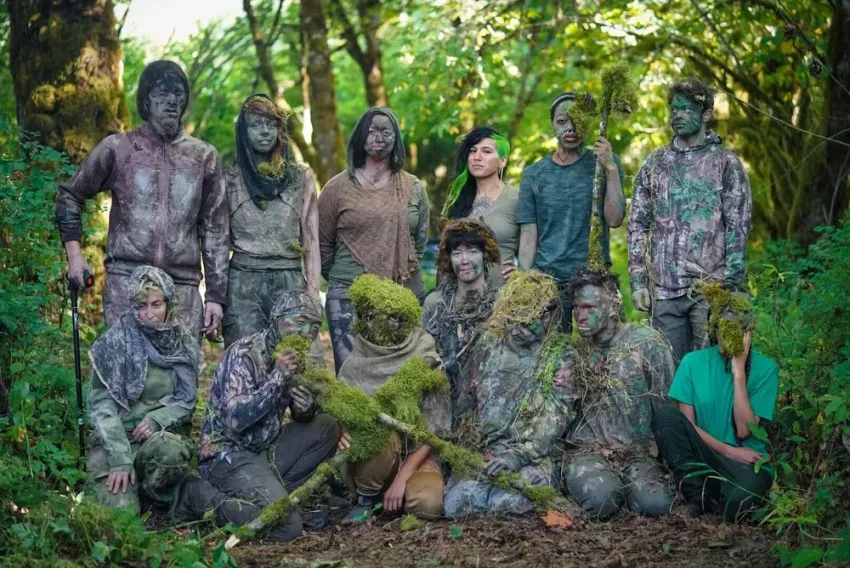
For many LGBTQIA+ people, the outdoors holds a complicated history. Outdoor communities often center cisgender, heterosexual norms, while cultural narratives frame Queer identities as unnatural. Queer Nature, a Washington state–based organization, was founded to interrupt that pattern.
Created by Pınar and So Sinopoulos-Lloyd in 2015, Queer Nature originally started as an offshoot of LGBTQ+ lectures at a women’s outdoor recreational nonprofit in Colorado. According to the founders, they recognized that many Queer and Trans people face a double isolation when it comes to outdoor recreation: exclusion from communities and disconnection from nature itself.
“We just wanted to create spaces where other Queer folks could come together and learn about different place-based skills,” So said.
The ecology of belonging
Research supports the need for these spaces. Historically, negative language around Queer lives and experiences has disrupted Queer people’s connection with nature, according to a 2024 study in the Journal of Adventure Education and Outdoor Learning.
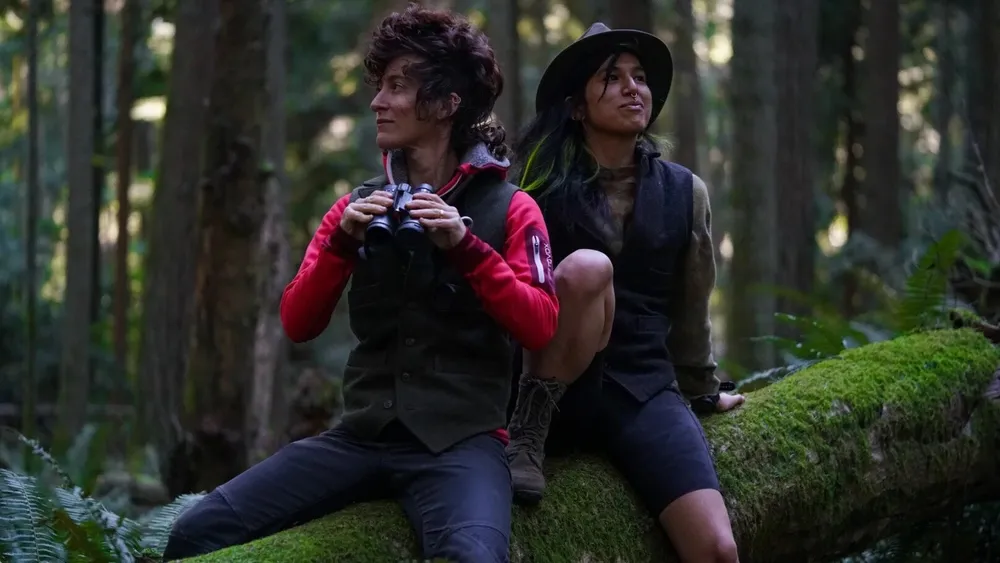
“For a lot of Queer folks, we’ve been given this narrative — either by close people or by the culture at large — that we are in opposition to what is natural, that we are not natural, that queerness is not natural,” said Nic Caddell, a naturalist educator and guest coinstructor at Queer Nature. “I mean, it begs the question in your own body, right? Of, first of all, is there no mirror for this in the rest of the living world? And I think that the question that’s underneath is, ‘Do I not belong?’”
Queer Nature addresses this through an “ecology of belonging,” an interconnected framework that views human identity, health, and community as part of a larger living system. This approach reframes belonging as something that emerges through relationship — with land, with other species, and with each other — rather than something individuals must achieve alone.
“This identity was not a reason I didn’t belong to the world,” Caddell, who identifies as Queer, said. “It was the reason that I did.”
Remembering the broader ecological community
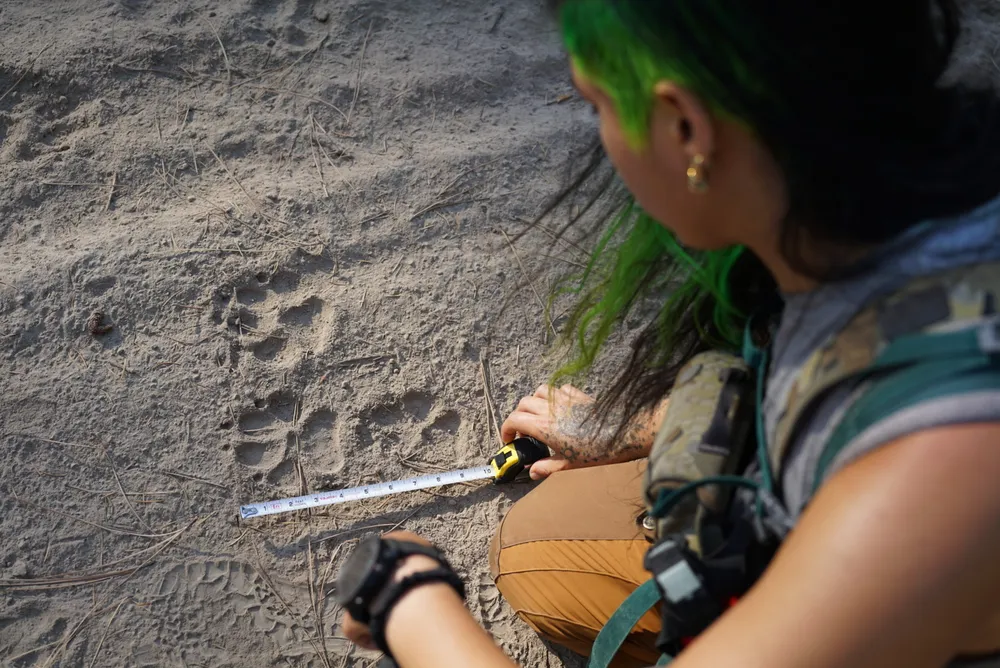
Queer Nature’s approach blends rites of passage and transformational frameworks with detailed field observation grounded in natural sciences. The organization runs single-day workshops and multiday immersions throughout Washington state. Signature programs include “The Multispecies Monastery,” a 10-day retreat based on traditional rites of passage; and “Ecology of Power & Privilege,” which uses natural observation exercises to explore social dynamics. Participants learn to track wildlife, identify plants, read animal behavior, and understand their place within larger ecological systems.
“There’s something kind of relieving about being able to be like, ‘OK let’s take these amazing witnessing and observing skills that you have of the human world, and let’s use that and let’s train that on the world that’s beyond the human — or also encompassing the human — and see what happens,’” So said. “I think there’s been so much joy in that.”
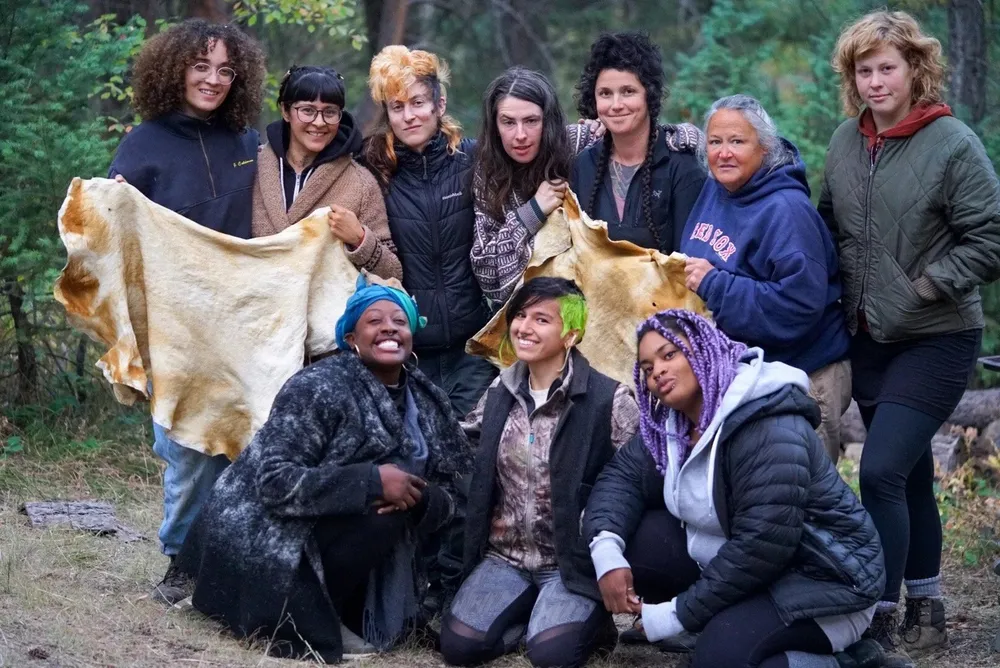
Traditional skills taught in workshops — basket weaving using cedar and willow, hide tanning using traditional methods, natural dye creation, and camouflage techniques — also represent forms of creative practice passed down through generations.
“The amount of observations that happen over generations of time — over lifetimes of time — that basically encompass more than any of us …,” So added, “there’s been this interest for us in the value of community storytelling and what I would call community natural history and observation of what’s going on in the lives of beings around us.”
Mapping meaning onto landscapes
Queer Nature’s work extends beyond individual skill-building toward something more relational. The organization aims to build networks where participants know they have support when navigating both ecological learning and Queer identity.
“We’re just existing and we’re just sending this bat signal out to other people,” So said. “It’s this form of companionship that I think we’ve wanted to offer as we’re able to others.”
Caddell also emphasized that the relationships formed through Queer Nature programs extend beyond the workshops themselves: “I want people to walk away knowing who’s got their back. Knowing who they can call on, knowing who they can talk to.”
Find out more at www.queernature.org.
Support the Seattle Gay News: Celebrate 52 Years with Us!
As the third-oldest LGBTQIA+ newspaper in the United States, the Seattle Gay News (SGN) has been a vital independent source of news and entertainment for Seattle and the Pacific Northwest since 1974.
As we celebrate our 52nd year, we need your support to continue our mission.
A monthly contribution will ensure that SGN remains a beacon of truth and a virtual gathering place for community dialogue.
Help us keep printing and providing a platform for LGBTQIA+ voices.
How you can donate!
Using this link: givebutter.com/6lZnDB
Text “SGN” to 53-555
Or Scan the QR code below!