

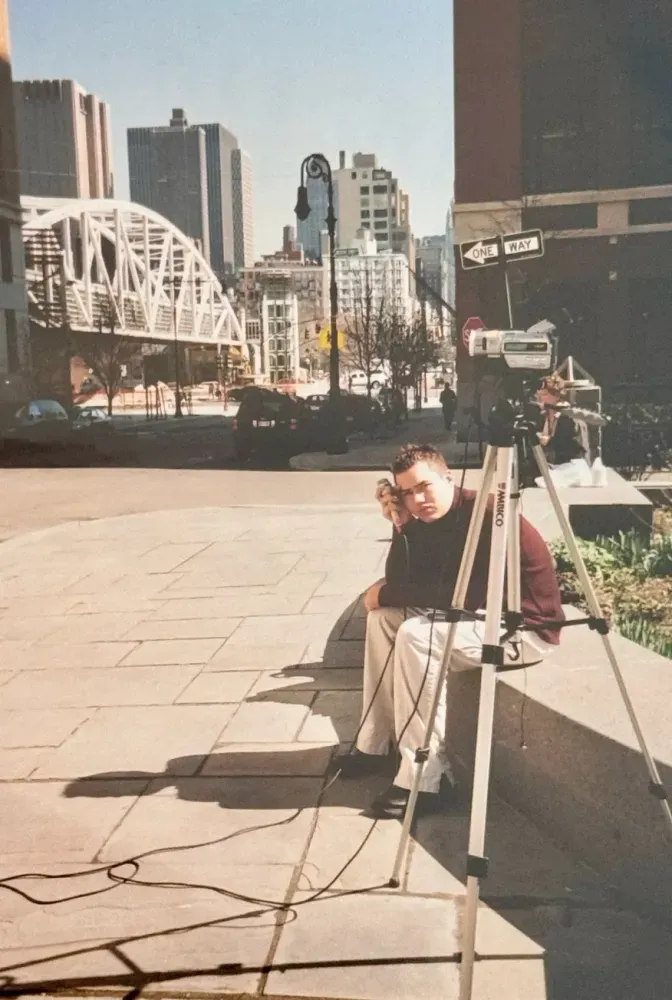
Twenty-five years ago, while much of America watched the unimaginable unfold on television, 16-year-old Joseph Fenity was sitting nearly 1,800 miles away in Texas, asking a question that would ultimately shape his career: Who is listening to the young people?
The independent journalist was just a teenager when he embarked on an ambitious project to document the voices of New York City high school students who had experienced September 11, 2001, firsthand.
Now, a quarter-century later, those interviews with students from Stuyvesant High School are set to be preserved by the Library of Congress in its American Folklife Center archives.
For Fenity, now 40, the recognition brings his journalism career full circle.
“The most vivid memories for most people alive at that time are likely the burning towers, the rush of people on the streets of New York trying to outrun massive walls of debris,” Fenity recalled. “I’ll never get over that.”
There is one image he still cannot bring himself to revisit: the moment a plane struck the World Trade Center. But watching from Texas, it was another attack that profoundly changed the way the teenager understood what was happening.
“What really rocked me as a 16-year-old watching in real time a ‘safe’ 1,800 miles away in Austin, Texas, was seeing the Pentagon attacked and on fire,” he said. “The Pentagon? You mean the headquarters of our nation’s defense and one of the most secure structures on the planet? A building like that could be attacked and was now on fire?”
His teenage reaction was immediate: “Forget it. Game over. If the Pentagon can’t protect itself, we are all in deep trouble.”
Rather than remain a spectator, Fenity decided to become a reporter.
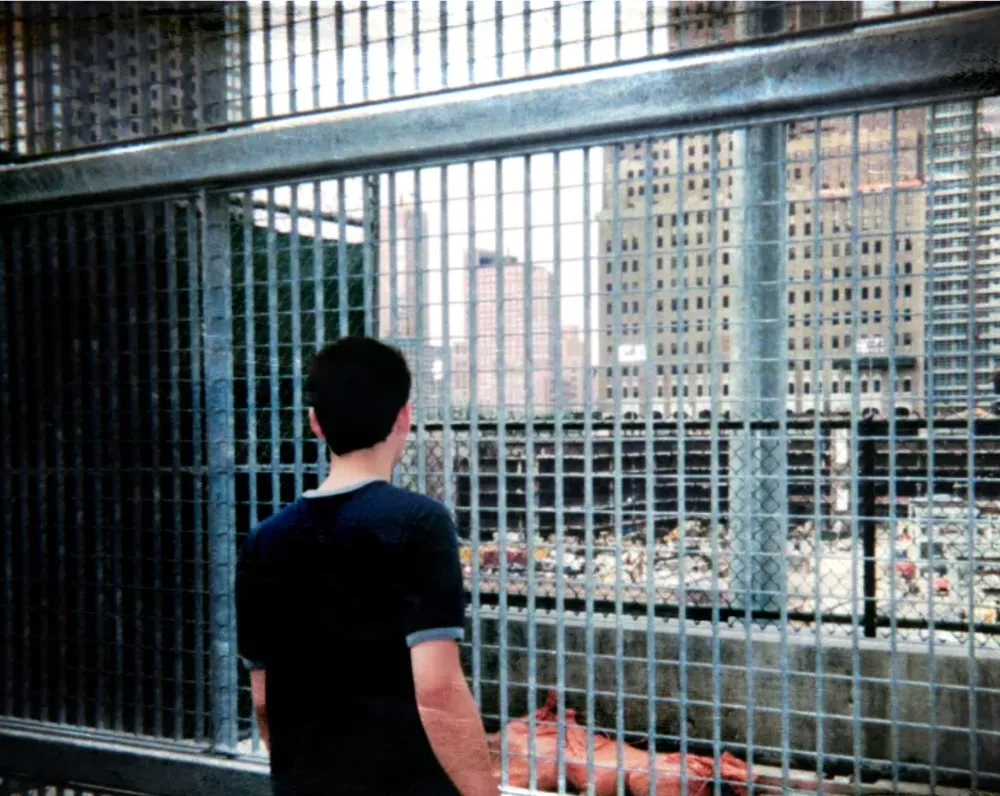
Audacious idea
His idea was audacious: travel from Texas to New York City, visit Stuyvesant High School, and interview teenagers who had witnessed the events and aftermath of 9/11.
Convincing everyone that this was a reasonable plan proved to be part of the adventure.
“Yes! Sherry, our school’s front desk lady!” Fenity said, when asked whether anyone thought he was crazy.
She initially resisted even giving him the school’s long-distance PIN so he could return calls from administrators at Stuyvesant.
“‘212 is a New York area code. Why do you need to call New York?’” Fenity remembered her asking. “She looked at me like I was a unicorn. I was.”
Looking back, he understands the skepticism.
“Her resistance is understandable, because this project was a crazy idea — especially for a 16-year-old in small-town Texas,” he said. “But 9/11 was a crazy event, so I met the moment with a crazy idea.”
Fortunately, Fenity found allies. His school’s technology teacher, one of the sponsors of his independent 9/11 project, and his campus principal supported the plan.
The motivation behind it was surprisingly simple. “After weeks of wall-to-wall media coverage, I grew tired of seeing only adults interview other adults,” he said. “All the experts were adults, victims were adults and eyewitnesses were adults. I wanted to hear from the kids — the people my age…
“I often wonder if people were just so panicked and in full-on survival mode that maybe they couldn’t process young people’s difficult-to-answer questions.”
He wanted answers to questions that weren’t being asked: “What did they experience that day? What did they feel? How will they go on? What will their America look like?”
His solution was characteristic of the journalist he would eventually become.
“I thought, ‘No one else is doing this, so I will.’ The story of my life.”
The resulting recordings capture young New Yorkers speaking about an event they were still trying to comprehend. Today, those voices carry another significance: They are teenagers speaking from a moment before anyone knew what the next 25 years would bring.
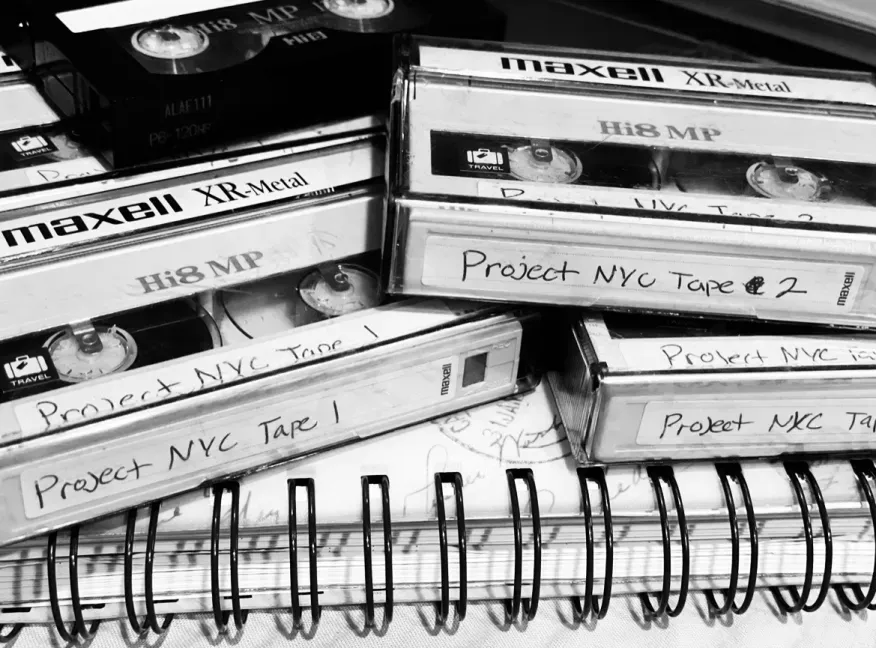
Voices preserved
Learning that the interviews would be preserved by the Library of Congress has been difficult for Fenity to fully process. “It’s a difficult thing to wrap my head around,” he said. “And not in a bad way, of course. It’s just bittersweet.”
The honor cannot be separated from the tragedy that created the recordings.
“There’s sorrow in ever having to cover something this tragic in the first place,” he said.
Even after a quarter-century, Fenity said certain memories of 9/11 remain painful: the passengers aboard United Flight 93, including Todd Beamer, and the people trapped inside the World Trade Center who faced unimaginable choices.
“I’m sorry to be so graphic here, but these are the very images that haunt my generation and reemerge from the back of our minds every September,” he said.
“So, while it’s a true honor knowing that the stories I’ve documented have been deemed historically significant and worthy of preservation, there’s still much sorrow that those Tuesday morning attacks ever happened in the first place.”
Listening to the recordings today also means hearing Fenity’s teenage self. What does the veteran journalist hear when he listens to the 16-year-old reporter asking the questions?
“Insecurity in my voice and confidence in theirs,” he said. “Although we were around the same age, I was playing ‘on-camera reporter’ for the first time and trying to do everything just right. They were simply being themselves — something I eventually learned to do, by the way.”
Career
That teenager from Texas would go on to build a career across radio, podcasts, and print, with work associated with such outlets as The Hollywood Reporter, Metro Weekly, and Out Magazine.
Fenity said the Stuyvesant project was the moment journalism became more than an interest.
“Absolutely,” he said. “I took that project incredibly seriously. I fell in love with interviewing strangers, the editing process, and just hearing people’s stories firsthand.”
His career has not always followed a straight line.
“My journey in the news media and storytelling landscape — from radio to podcast to print and back again — has been a very up-and-down road,” Fenity said. “As an independent journalist, I often feel like I’m in a complicated relationship with other segments of mainstream media.”
Through those changes, one idea has remained constant.
“I just value the idea of being a messenger,” he said. “In fact, the ‘messenger’ title applies to me even more than reporter, writer, or even journalist. I take delivering other people’s words and stories seriously — it’s an honor.”
A Queer journalist finding the overlooked
That instinct to find voices other journalists might miss extends well beyond the Stuyvesant tapes.
Fenity, a proud Queer journalist and former president of the Los Angeles chapter of the NLGJA: The Association of LGBTQ+ Journalists, has spent much of his career seeking out stories involving LGBTQ+ people and other communities that have historically struggled to receive attention from mainstream media.
His own childhood helped shape that perspective. “As a young Gay man growing up in a conservative small Texas town, I know all too well what it feels like being dismissed, overlooked, and underestimated,” he said.
That experience continues to surface in his journalism: “Many of my stories very often return to a similar theme: the lead character being overlooked or not getting ‘the pot of gold’ at the end of the rainbow.”
Whether investigating the murder of Betty Willis, writing about forgotten singer-songwriter Lari White, or preserving the voices of teenagers who witnessed one of the defining events in modern American history, Fenity has repeatedly found himself drawn toward people whose stories risk being lost.
In that sense, the Library of Congress preservation feels particularly appropriate. What began as one teenager’s determination to make sure other teenagers were heard is becoming part of the historical record.
More than a bumper sticker
Few phrases are as closely associated with September 11 as “never forget.” Fenity has complicated feelings about it.
“‘Never forget’ is right up there with ‘thoughts and prayers,’” he said.
But in 2001, the teenager took those two words literally.
“After 9/11, when people kept saying ‘never forget,’ I took that two-word instruction seriously and did something about it,” he said. “‘Never forget’ was more than just a bumper sticker for me. It became my motto.”
Twenty-five years later, the interviews provide an opportunity to hear 9/11 not through politicians, historians, or television anchors but young people who were living through history without knowing how the story would end.
Fenity hopes future generations hear something beyond fear and tragedy when they discover the recordings.
“People listening to these Stuyvesant High School student interviews I conducted will hear young voices from the turn of the last century speaking of bravery, resilience, and optimism,” he said. “And that is beautiful to me.”
The 16-year-old who once had trouble getting permission to make a long-distance phone call to could hardly have imagined where those calls would eventually lead. Today, the voices he fought to record are poised to become part of the nation’s permanent cultural memory.
“I’m honored to be able to deliver their firsthand accounts of that for years to come,” Fenity said, “even long after I’m gone from this planet.”
Readers can visit josephfenity.com to hear The Stuyvesant Tapes.
Support the Seattle Gay News: Celebrate 52 Years with Us!
As the third-oldest LGBTQIA+ newspaper in the United States, the Seattle Gay News (SGN) has been a vital independent source of news and entertainment for Seattle and the Pacific Northwest since 1974.
As we celebrate our 52nd year, we need your support to continue our mission.
A monthly contribution will ensure that SGN remains a beacon of truth and a virtual gathering place for community dialogue.
Help us keep printing and providing a platform for LGBTQIA+ voices.
How you can donate!
Using this link: givebutter.com/6lZnDB
Text “SGN” to 53-555
Or Scan the QR code below!