

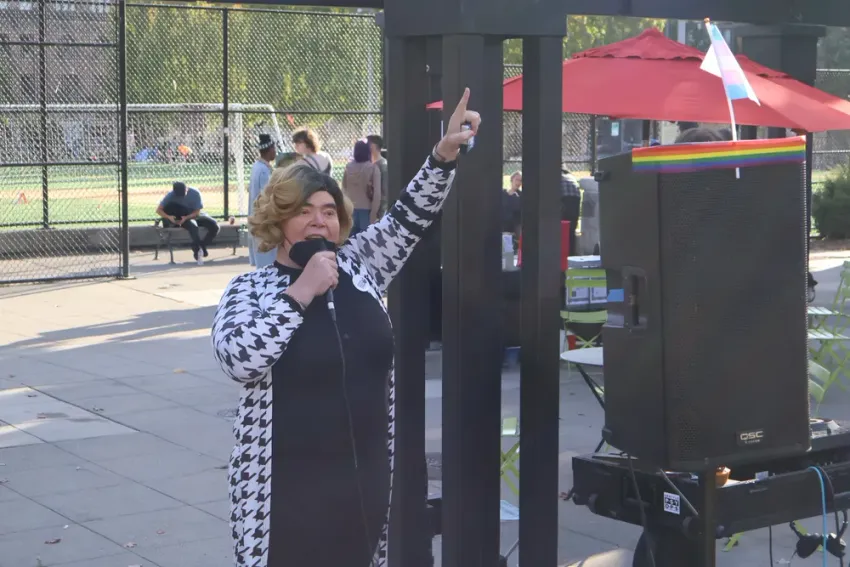
I am a Transgender elder, and I have lived long enough to know that being down is not the same thing as being finished.
I have also lived long enough to know that simply telling people we are hurting is not enough.
The Transgender movement has much in common with the civil rights movements that came before it. Our histories are not identical, and we should never pretend that they are. But there are lessons we should be willing to learn.
People can be judged, excluded, and denied opportunity because of characteristics they did not choose and cannot simply change. They can lose jobs, housing, relationships, and security because other people have decided that something about them makes them less deserving.
That is discrimination. It is real. And it has consequences.
But there is another truth we need to talk about inside our own community. There is classism and elitism within LGBTQ+ life, just as there is everywhere else.
Some Transgender people have careers, money, professional networks, and enough financial security to withstand discrimination. Others are one missed paycheck away from losing their homes.
It is one thing to be openly Transgender when you have savings in the bank. It is another when losing your job means losing your apartment.
It is one thing to speak about liberation from a position of security. It is another to live openly when you have almost nothing left to lose.
Those differences matter.
Surviving
I know because I have lived on both sides of them.
At 21, I was obsessively motivated by work. I believed that if I worked hard enough, built enough, and kept moving forward, I could create a life for myself.
Sometimes I did. I experienced accomplishment and recognition. I knew what it was like to be capable, to contribute, and to build something of value.
But I was also hiding. I hid parts of myself to remain employable. I made myself smaller so I could survive. I pursued opportunities that allowed other people to benefit from my labor without necessarily giving me the security or recognition I needed.
And I kept believing that the next opportunity would be the one that changed everything.
It wasn't always.
There were recessions, losses, student loans, economic upheaval, bad decisions, and circumstances I could not control. I also made choices that made my own life harder. I chose alcohol as an escape. I isolated myself. I spent years trying to manage contradictions in my life by becoming less visible.
I worked. I hid. And I survived.
But survival has a cost.
You can spend so much of your life trying to survive that you never get the opportunity to build the life you imagined. You can become so accustomed to making yourself smaller that you forget you were entitled to take up space in the first place.
Helping
That is why I worry about younger Transgender people.
Not because I think they should all live the way I did. Quite the opposite. I want them to have choices I didn't have.
I want them to have homes. Careers. Friendships. Families. Businesses. Savings. Meaningful work. Stability. The ability to live openly without having to choose between authenticity and survival.
And I want our movement to become better at helping people get there.
Resistance matters. Protest matters. Legal challenges matter. Political organizing matters.
But resistance alone does not build a future. We need people who can organize, but we also need people who can build businesses, acquire skills, pursue education, create institutions, mentor others, and turn the energy of protest into something that can sustain a community for generations.
We need to stop treating a dead end as a destination.
That does not mean everyone has to work a conventional job. Not everyone has the same abilities, resources, health, or opportunities. Nobody should have to become wealthy or respectable by somebody else's definition to deserve dignity.
And I am not making a bootstrap argument.
Some people have no boots. Some people have been knocked down repeatedly by forces much larger than themselves. Some need a hand, a home, treatment, protection, or simply the chance to begin again. They deserve that help.
But help should lead somewhere. People struggling with addiction, poverty, despair, or the exhaustion of simply staying alive are not disposable. They are not lost causes. They deserve support that does more than keep them alive another night. They deserve a path toward stability, purpose, and belonging. Compassion without opportunity can become another form of abandonment.
Responsibility
And those of us who have achieved some measure of security have responsibilities, too.
If you have influence, use it to open doors.
If you have money, invest in people and institutions that create lasting opportunity.
If you have professional standing, help someone else get hired.
If you have access to decision-makers, bring people into the room who are routinely left outside it.
Do not simply tell struggling Transgender people that you see them. Help make it possible for them to be seen.
And do not confuse writing a check with solidarity.
Money matters. Resources matter. But so do mentorship, employment, housing, advocacy, accountability, and the willingness to stand beside someone when doing so carries a cost.
This is especially important here in Seattle. We are fortunate to live in a city with a long LGBTQ+ history and a community with enormous talent, activism, creativity, and institutional knowledge. But a city can celebrate its LGBTQ+ history while people in that community are still struggling to find housing, employment, stability, and a place where they belong.
We should be asking why. We should be asking who gets invited into the rooms where decisions are made.
Who gets funding? Who gets listened to? Who gets hired? Who gets a second chance? Who gets to grow old with dignity? And who is expected simply to be grateful that someone noticed they were struggling?
Solidarity cannot be measured by how passionately we talk about our community. It should be measured by what changes because we showed up.
Justice and opportunity
I have spent much of my life working, hoping, hiding, succeeding, failing, and starting over. I know what it means to believe that one more effort will finally make everything right.
I also know that hard work alone does not guarantee success when the system is stacked against you. That is why I believe we need both things at once.
We need justice. And we need opportunity.
We need to fight discrimination without allowing discrimination to become the entire story of our lives.
We need to demand accountability from institutions while building institutions of our own.
We need to recognize differences in class, age, race, ability, and circumstance without allowing those differences to become reasons to abandon one another.
Most importantly, we need to stop competing for crumbs and start building a table large enough for all of us.
I am down sometimes. I have been down before. I know what it is to be tired, disappointed, and to wonder whether all the work was worth it.
But being down is not the end of the story. And saying that we care about one another is not the end of our responsibility.
It is not enough to say I am down. It is not enough to say we are oppressed. It is not enough to say we deserve better.
We have to build better. We have to make room for one another. We have to demand more from our institutions, more from those who hold power, and more from the movement we are creating together.
Our liberation must mean more than the right to exist. It must mean the opportunity to live, to work, to create, to prosper, to contribute, and to grow old with dignity.
I do not want the next generation to inherit only our grievances. I want them to inherit what we built.
The mountain is still there. The question is whether we are prepared to move it together.
Elle Cree is a Transgender BIPOC marine and codirector of Stone Soup Crew.
Support the Seattle Gay News: Celebrate 52 Years with Us!
As the third-oldest LGBTQIA+ newspaper in the United States, the Seattle Gay News (SGN) has been a vital independent source of news and entertainment for Seattle and the Pacific Northwest since 1974.
As we celebrate our 52nd year, we need your support to continue our mission.
A monthly contribution will ensure that SGN remains a beacon of truth and a virtual gathering place for community dialogue.
Help us keep printing and providing a platform for LGBTQIA+ voices.
How you can donate!
Using this link: givebutter.com/6lZnDB
Text “SGN” to 53-555
Or Scan the QR code below!