

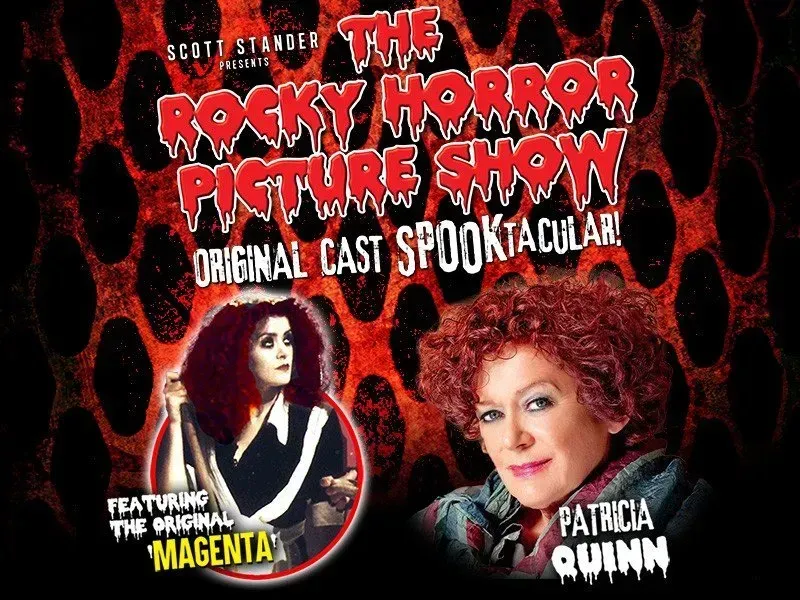
More than half a century after The Rocky Horror Picture Show first stumbled into theaters, Patricia Quinn is still discovering just how enormous the strange little movie became.
Quinn, who originated the role of Magenta in The Rocky Horror Show before bringing the character to the screen, is returning to Seattle’s 5th Avenue Theatre on October 15, as part of the Original Cast Spooktacular Tour celebrating 51 years of Rocky Horror.
The evening will feature a screening of the original unedited film, complete with audience participation and a live performance by the Seattle shadowcast Blue Mouseketeers. There will also be a costume contest and a VIP meet-and-greet, offering fans the opportunity to meet Quinn, take a personal photo, and have an item autographed.
For Quinn, the continuing phenomenon remains almost impossible to comprehend. Asked if she had any sense while playing Magenta that this strange, subversive creation would still be filling theaters more than half a century later, her answer was immediate.
“No, of course not,” she said, “considering it was a sleeper after we made it. Didn’t do anything for two years.”
Of course, everything changed when Rocky Horror found its audience through midnight screenings. What began as a small stage production eventually became one of cinema’s most enduring cult experiences, complete with costumes, callbacks, props, and generations of fans who know every lyric and every step of the Time Warp.
Those Famous Lips
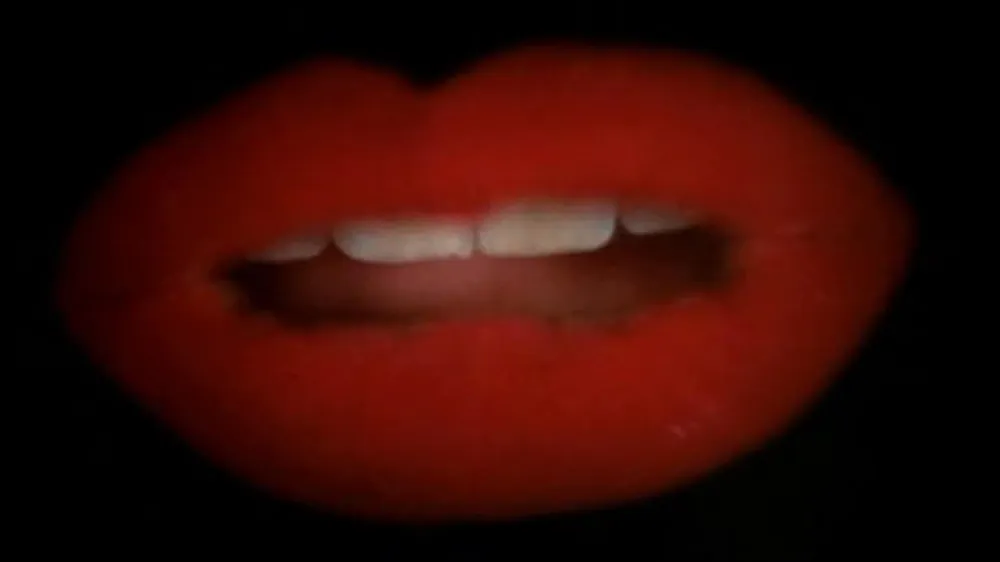
Quinn’s contribution to Rocky Horror begins before Magenta even appears onscreen. Those iconic red lips floating against the black background during “Science Fiction/Double Feature” belong to her.
The story behind them is almost as wonderfully bizarre as the movie itself. The production was finished. Quinn was exhausted and ready to go home. “It’s a wrap. Bye-bye,” she recalled thinking. “Thank God for that.”
Then, on the final day of filming, director Jim Sharman approached Quinn with an idea inspired by surrealist artist Man Ray’s image of a woman’s lips floating in the sky. He envisioned Quinn’s lips performing “Science Fiction/Double Feature,” although Richard O’Brien’s recorded vocal would ultimately accompany them.
She wasn't entirely thrilled. Quinn considered “Science Fiction/Double Feature” her song and was furious that O’Brien got to sing it for the movie. “My lips and his voice — how much?” Quinn remembered responding.
The actual filming of the lips happened later, at Elstree Studios during a strike, leaving Quinn working with only a tiny camera crew.
There was another problem: they couldn’t keep her mouth centered in the frame.
Every time Quinn mouthed the lyrics, her natural head movements caused problems for the extreme close-up. Finally, someone on the crew noticed the clamp used for an arc lamp and came up with a solution.
“So he screwed my head into the clamp,” Quinn recalled. And suddenly it worked.
Was it painful? “Not painful, no.”
The resulting image became one of the most recognizable opening sequences in movie history.
Creating the Time Warp
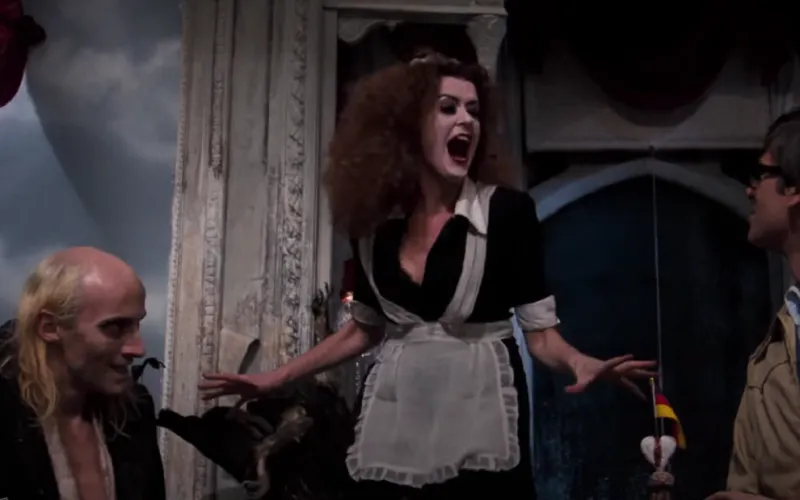
Then there is “Time Warp.”
Today it is nearly impossible to imagine Rocky Horror without it, but Quinn remembers a time when the show itself wasn't even finished.
During rehearsals at the Royal Court Theatre, the company was working in a tiny upstairs space with approximately 60 wooden chairs, no elaborate set, and very little money. “Rocky Horror wasn’t written,” Quinn recalled. “Nothing was complete about Rocky Horror when we began it.”
Sharman wanted a musical number incorporating a line-dance-style movement inspired by Jean-Luc Godard’s Bande à part. O’Brien returned with what would become “Time Warp.”
Quinn’s initial reaction was considerably less historic: “God, do we have to learn all of this?”
They did — and generations have been learning it ever since.
I told Quinn about performing “Time Warp” with the Seattle Men’s Chorus during the Pride Parade, singing and doing the choreography while marching before having to run to catch up with the rest of the parade. It was exhausting.
Quinn understood. But she also recognized that something unusual had happened to the song.
“The Time Warp went into clubs and things,” she said. “The Time Warp took a life of its own.”
I told her that Magenta’s spoken section remains one of the most distinctive parts of the song and that, particularly around Halloween, hearing her voice instantly transports people back into the world of Rocky Horror.
Her reaction was priceless: “Good God, I never knew that.”
Discovering the American phenomenon
For someone so closely associated with Rocky Horror, Quinn says even she underestimated the intensity of its American following until she began touring the United States.
This is her third tour, and the experience has changed her understanding of the phenomenon. At first, she imagined herself visiting small cinemas filled with devoted Rocky Horror fans. Instead, she found herself appearing in theaters seating 2,000 or 3,000 people in cities like Chicago and Detroit.
And the response wasn't polite applause. “They don’t clap,” Quinn said. “They stand and scream... I was never so overwhelmed in my life by anything.”
The travel and constant performances were physically exhausting, but something happened once she encountered the fans. “The adulation was so amazing,” she said. “And the fans are so stunning that I got high on it. It’s great.”
Seattle audiences will now get their turn when Quinn arrives for the Original Cast Spooktacular Tour, accompanied by the kind of audience participation that helped transform Rocky Horror from box-office curiosity into cultural institution. The Blue Mouseketeers shadowcast will bring another generation of performers into a tradition that has existed for decades.
Quinn, however, has an interesting relationship with those famous audience callbacks. When she returned to Rocky Horror onstage 21 years later, having audience members shout lines during a live theatrical performance wasn't quite as much fun for the actors.
“That’s a pain in the ass, because they’re interrupting your performance,” she said.
Movie screenings are another matter. Quinn admitted she generally doesn't stay around for them. But after 51 years, perhaps she can be forgiven for skipping the occasional midnight screening.
“We weren’t setting out to change people’s lives”
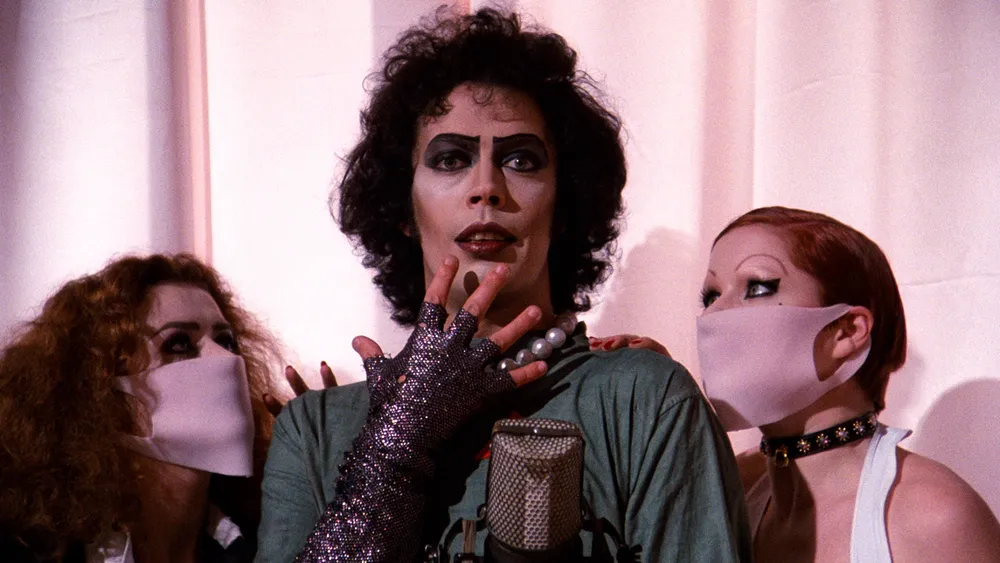
One reason Rocky Horror continues to fascinate is the cultural meaning audiences have attached to it. Generations of LGBTQ+ people and others who felt outside the mainstream found freedom in its celebration of sexuality, gender expression, and unapologetic individuality.
For Quinn, the cultural impact remains almost as surprising as the movie’s longevity.
Yet she says none of that was planned. “We didn’t set out to change anyone,” she said. “We weren’t setting out to change people’s lives,” Quinn said. “That’s just extraordinary that that happened.”
Asked what she would like the next 50 years of Rocky Horror to look like, she laughed at the idea of trying to imagine that far ahead. “I can’t begin to think what will happen in 50 years’ time. Give me a break,” she said. “I didn’t expect this to happen ever.”
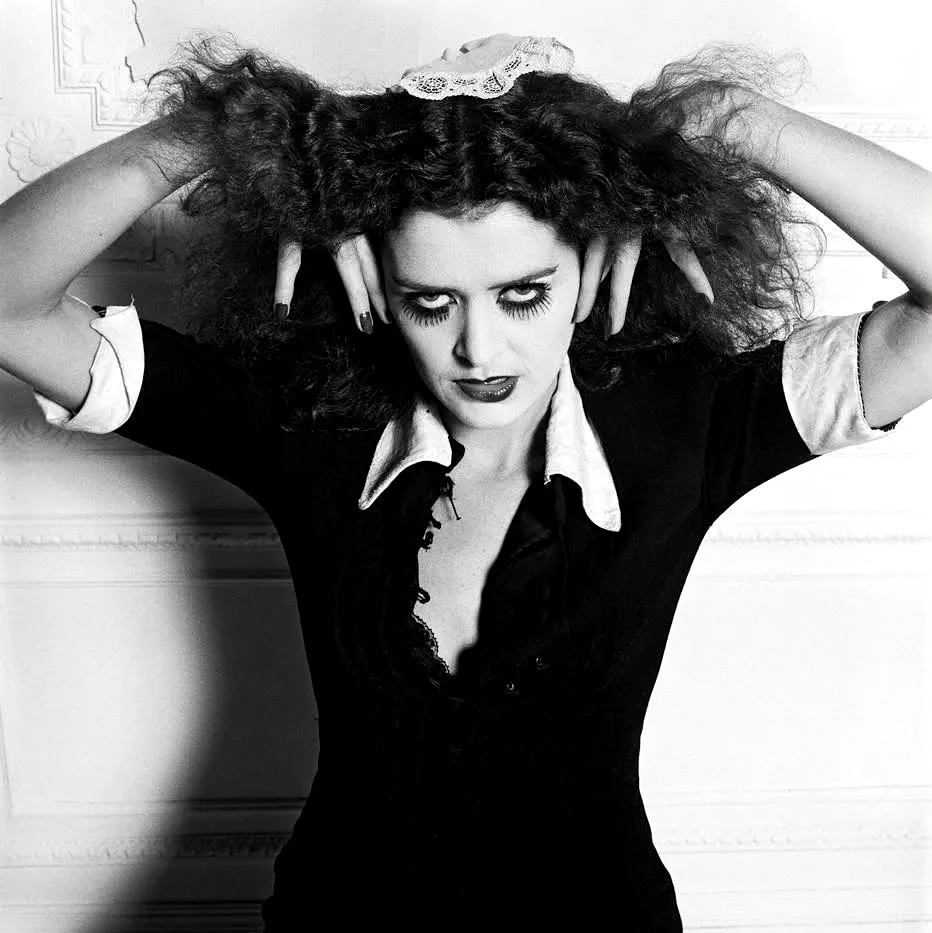
There is only one Magenta
I ended with the same question I had previously asked Barry Bostwick: If Quinn hadn't played Magenta, which other Rocky Horror character would she have wanted to play?
“Nobody.” Not Frank-N-Furter. Not Columbia. Not Janet.
Magenta.
For Quinn, the character isn't simply another role in a long acting career. She was there when Magenta was created, before anyone knew what Rocky Horror would become.
She compared it to Shakespeare: Countless actresses have played Lady Macbeth, including Quinn herself. But Magenta was different.
“There was nothing comparable,” she explained. “So it’s like [she] belongs to one part somehow, because she created it.”
And 51 years later, audiences still agree.
When Patricia Quinn walks onto the stage, people don't merely applaud. They stand. They scream.
And somewhere, inevitably, someone is getting ready to jump to the left.
The Original Cast Spooktacular Tour features Patricia Quinn in person, a screening of the original unedited Rocky Horror Picture Show, audience participation, a costume contest and a live shadowcast performance by the Blue Mouseketeers. VIP Meet & Greet tickets include preferred seating, a special Rocky Horror VIP laminate, a personal photo opportunity with Quinn, and an autograph. Guests may bring their own item to be signed or select a photo from Quinn’s collection. More information is at https://www.stgpresents.org/events/rocky-horror-picture-spooktacular-tour/.
Support the Seattle Gay News: Celebrate 52 Years with Us!
As the third-oldest LGBTQIA+ newspaper in the United States, the Seattle Gay News (SGN) has been a vital independent source of news and entertainment for Seattle and the Pacific Northwest since 1974.
As we celebrate our 52nd year, we need your support to continue our mission.
A monthly contribution will ensure that SGN remains a beacon of truth and a virtual gathering place for community dialogue.
Help us keep printing and providing a platform for LGBTQIA+ voices.
How you can donate!
Using this link: givebutter.com/6lZnDB
Text “SGN” to 53-555
Or Scan the QR code below!