

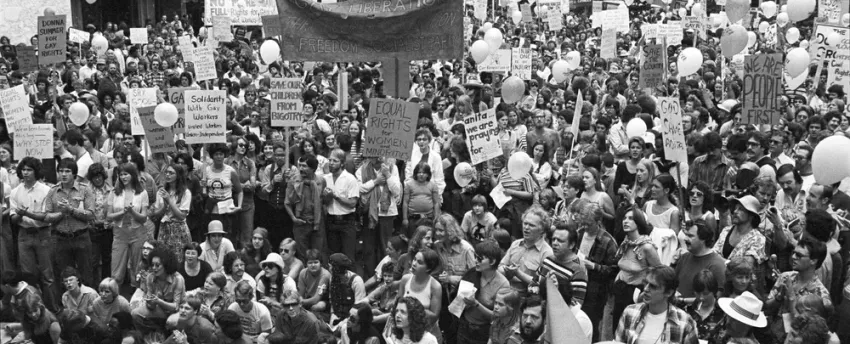
Seattle’s LGBTQIA+ history continued to come alive at MOHAI as the History Café celebration brought another collection of remarkable voices out of the archives and into the spotlight. On September 15, community members gathered to revisit the memories, struggles, humor, and courage of those who helped shape Queer life in the Pacific Northwest.
Thanks to the Northwest Lesbian and Gay History Museum Project (NWLGHMP), which has been preserving these stories since 1994, the evening offered something far more personal than a history lesson. It was an opportunity to hear from the people who lived through a time when simply being yourself could cost you your job, your reputation, or even your freedom.
Darlene Aanderud
One particularly moving story came from Darlene Aanderud, whose oral history was brought to life by Rachel Spence. Aanderud recalled her early years working at Harborview Medical Center after earning her master's degree from the University of Washington in 1969. As a young Lesbian working in psychiatric care, she lived with the constant fear that being discovered could destroy her career. She remembered evenings when Gay men and Lesbians would visit straight establishments together, pretending to be heterosexual, before eventually finding their way to places where they could relax and be themselves.
One such refuge was Madame Peabody's, where an otherwise enjoyable night of dancing suddenly turned frightening when she spotted sheriff's deputies she recognized from work. Her instinct was to leave immediately. The fear of being identified was very real, particularly in an era when police surveillance and the possibility of appearing on a list could threaten someone's livelihood.
Yet Aanderud's memories weren't entirely filled with fear. There was also plenty of attitude, and frankly, a little fabulous rebellion. She recalled an occasion when straight couples entered a Gay establishment simply to stare at the patrons as though they were animals in a zoo. Rather than tolerate the spectacle, Aanderud and her friends turned their chairs around and began staring right back. The unwelcome visitors eventually left. Talk about turning the tables! Beneath the humor, however, was a powerful reminder that Queer people had to fight even for the simple pleasure of enjoying an evening in their own spaces.
Aanderud also reflected on growing up during a period when homosexuality was classified as a psychiatric disorder. Despite what the medical establishment suggested, she never believed there was anything wrong with her. She understood that her sexual orientation was simply part of who she was.
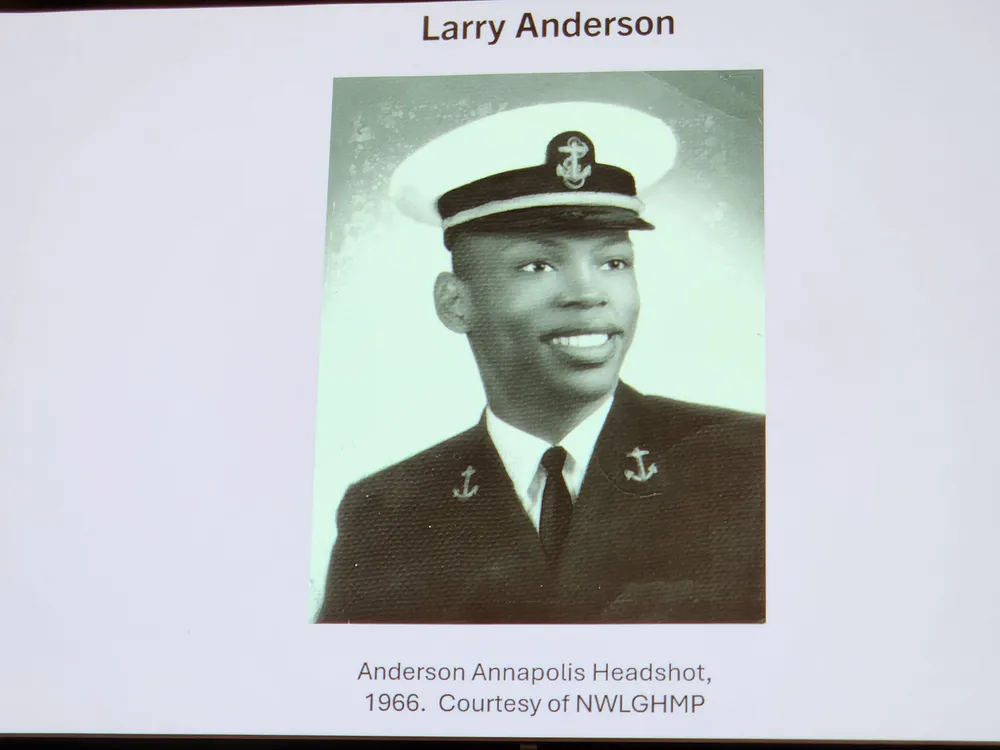
Larry Anderson
Another fascinating history came from Larry Anderson, whose experiences were presented by Rosette Mulialla. Anderson — who later became involved in Seattle's Gay Community Center, the Sexual Minority Prisoners Caucus, and advocacy for blind and deaf communities — recalled his experiences at the United States Naval Academy. His account offered a surprisingly humorous, sometimes outrageous, and ultimately revealing look at the contradictions of military life.
Surrounded by young men who publicly boasted about their heterosexual adventures while privately struggling with sexual curiosity and repression, Anderson found himself questioning the rigid rules and traditions of the institution. Even something as innocent as the way he examined his fingernails attracted unwanted attention from an upperclassman. Apparently, masculinity came with a very specific instruction manual, and nobody had bothered to give Anderson a copy.
But behind the laughter was a much more serious story about personal integrity. Anderson described being expected to participate in the same humiliating treatment of incoming students that he had experienced as a first-year cadet. Despite his academic success and promising military future, he could not justify participating in a system that demanded obedience at the expense of human dignity.
Walking away from the Naval Academy meant sacrificing opportunities and financial security, but he refused to compromise his values. His story was a reminder that standing up against injustice doesn't always happen during a protest or in front of television cameras. Sometimes it happens quietly, when one person decides that doing the right thing matters more than following orders.
What made these oral histories so compelling was their remarkable mixture of vulnerability, humor, and resilience. These weren't distant historical figures whose names appear only in textbooks. They were ordinary people navigating extraordinary circumstances, finding friendship in hidden bars, questioning powerful institutions, and refusing to accept that their identities made them less deserving of dignity. Their stories also reminded us how much has changed and how much remains unfinished. The fear of losing a job, being publicly identified, or facing discrimination may look different today, but the struggle for acceptance and equality remains familiar.
Connecting generations
The History Café program, produced through a partnership between HistoryLink, the Pacific Northwest Historians Guild, and MOHAI, demonstrated why preserving LGBTQ+ oral histories is so important. With nine histories featured throughout the evening, the event connected generations through the voices of those who experienced Seattle's Queer past firsthand. Some stories brought laughter, others brought uncomfortable reminders of discrimination, and still others inspired admiration for the courage it took simply to exist openly.
As the evening continued, one thing became beautifully clear: Queer history is not just about landmark court decisions, Pride parades, or political victories. It's about the people who danced when they were told to hide, loved when they were told they shouldn't, and challenged institutions that demanded their silence. Thanks to these preserved memories, their voices are still being heard, and their stories are still teaching us something about courage, community, and the importance of being unapologetically ourselves.
And if history has taught us anything, it's that the LGBTQIA+ community has always known how to survive adversity: with determination, a little attitude, and occasionally a perfectly timed eye roll.
Check back throughout the month for more oral histories from this extraordinary celebration of Seattle's LGBTQIA+ past.
Support the Seattle Gay News: Celebrate 52 Years with Us!
As the third-oldest LGBTQIA+ newspaper in the United States, the Seattle Gay News (SGN) has been a vital independent source of news and entertainment for Seattle and the Pacific Northwest since 1974.
As we celebrate our 52nd year, we need your support to continue our mission.
A monthly contribution will ensure that SGN remains a beacon of truth and a virtual gathering place for community dialogue.
Help us keep printing and providing a platform for LGBTQIA+ voices.
How you can donate!
Using this link: givebutter.com/6lZnDB
Text “SGN” to 53-555
Or Scan the QR code below!