

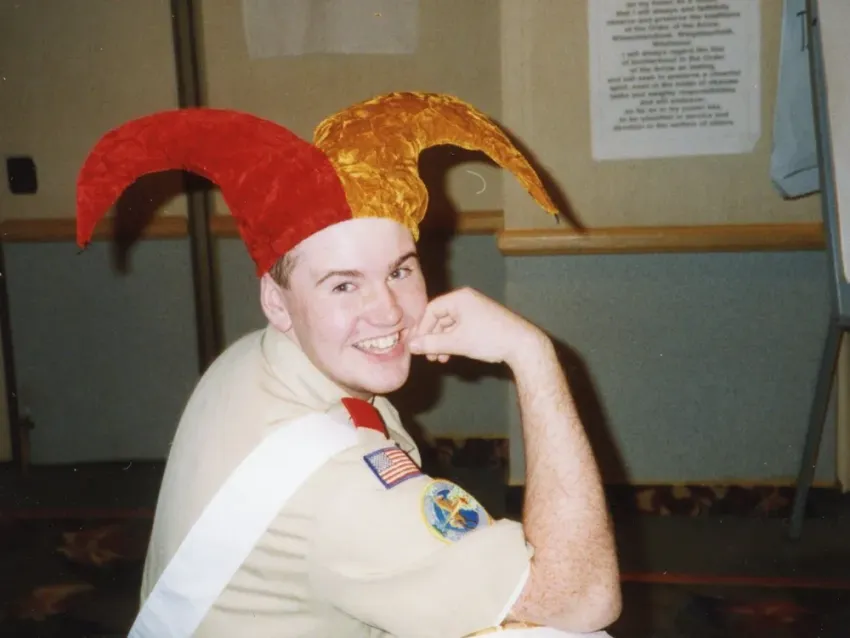
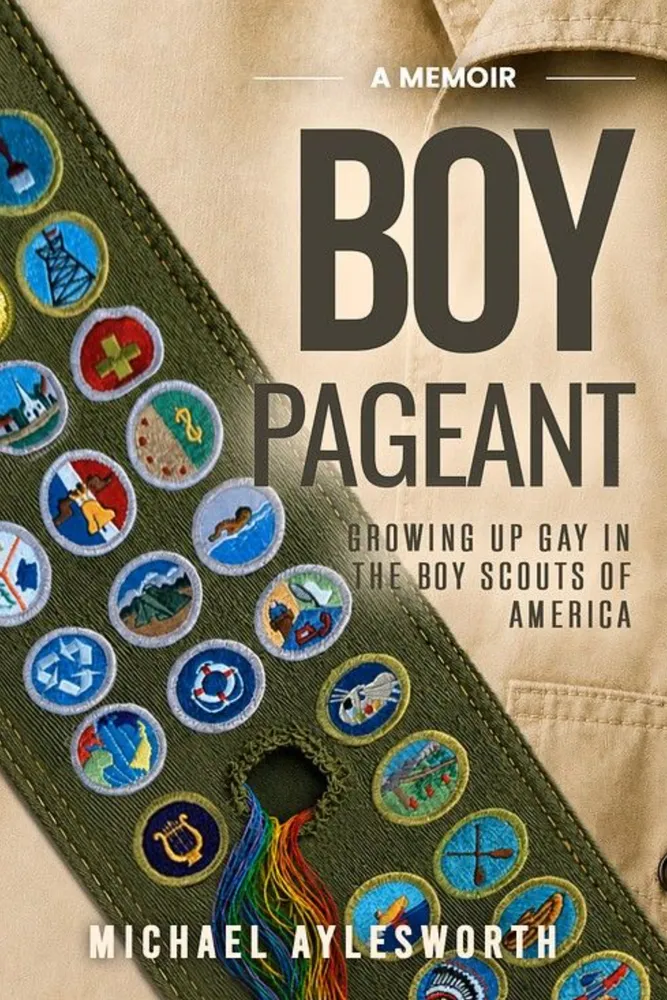
Some memoirs about Scouting lean on nostalgia alone: campfires, merit badges, rituals, and the easy shorthand of American adolescence. Boy Pageant: Growing Up Gay in the Boy Scouts of America reaches for something more complicated and more honest. Michael Aylesworth uses his experience not simply as a backdrop but as the framework for a deeper story about identity, performance, belonging, and the cost of trying to become the “right kind” of boy.
At the center of the memoir is Aylesworth, learning to navigate an institution built around rules, ideals, and a very specific vision of masculinity. His story traces his path from anxious outsider to accomplished Boy Scout and youth leader, while quietly revealing the tension beneath that success: the growing realization that the self he was expected to present did not fully match who he was.
What makes Boy Pageant compelling is that it doesn’t reduce the Boy Scouts to either villain or sanctuary. Aylesworth allows the contradictions to stand. Scouting gave him skills, structure, confidence, and community. It also reinforced norms that made authenticity feel risky. That doubleness gives the memoir its emotional weight. The book is not just about exclusion; it is about the strange intimacy of loving a system that doesn’t fully have room for you.
Wanting to learn more about the experiences behind Boy Pageant and the reflections that shaped it, I contacted Michael with a few questions about the memoir, Scouting, and the complicated journey from belonging to self-acceptance.
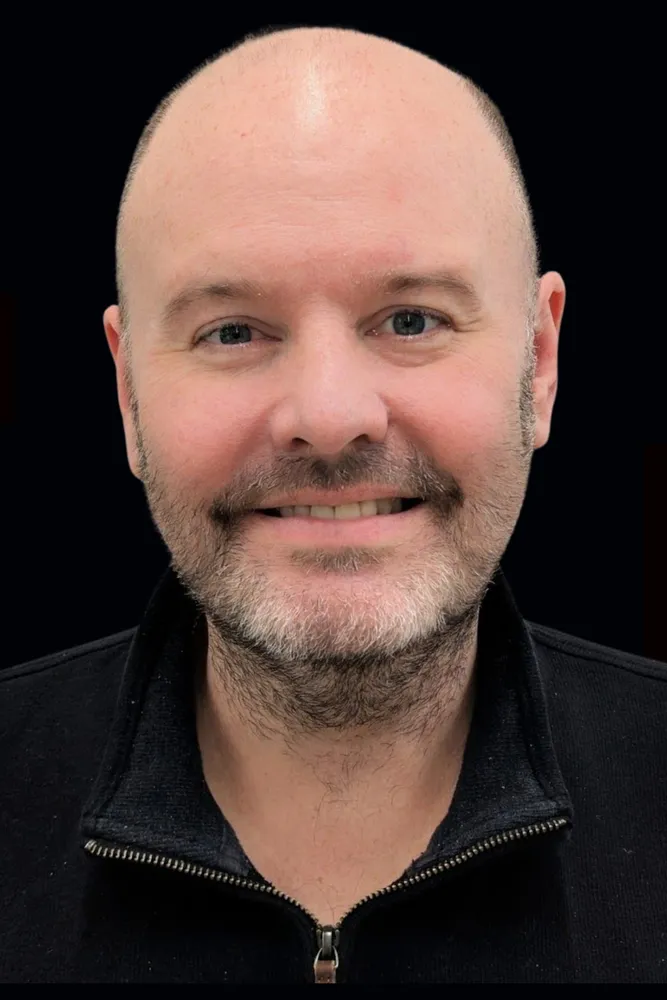
Frank Gaimari: What first made you decide that this was the moment to tell this story?
Michael Aylesworth: I think the story had been sitting with me for a long time. For years, I had thought about my experiences in Boy Scouts, but I never really considered writing a book about them. It happened when I was young, and like a lot of people, I eventually moved on with my life.
But the older I got, the more I realized that what happened wasn’t just a story about being a Gay teenager who was pushed out of an organization. It was a story about identity, belonging, masculinity, and what happens when an institution you have given yourself to decides you don’t fit its definition of who you should be.
I also realized I had spent a considerable part of my childhood trying to earn something I ultimately couldn’t have. I worked toward becoming an Eagle Scout, invested years in the organization, and genuinely believed that if I worked hard enough and followed the rules, I would get there.
Writing the book became a way of reclaiming that experience. I wasn’t interested in simply telling people that Scouting was wrong. I wanted to tell the story of what it felt like to be a kid who believed in something so completely, only to discover that the organization didn’t believe in him.
And, honestly, I reached a point in my life where I felt comfortable enough to tell it. I wasn’t writing as an angry teenager anymore. I was writing as an adult who could look back, laugh at some of the absurdity, acknowledge the hurt, and recognize how much that experience shaped me.
FG: Was there a particular scene or chapter that was especially difficult to write?
MA: The most difficult parts were the moments surrounding my coming out and what followed. I had spent so much of my childhood building an identity around Scouting. It wasn’t just an extracurricular activity. It was my social life, my aspirations, my friendships, and a big part of how I understood myself.
When I finally told someone I was Gay, I was 18. I wasn’t expecting a parade, but I also wasn’t expecting the social consequences that followed. There was no dramatic letter telling me I was no longer welcome. There wasn’t some formal ceremony where somebody took away my membership. In some ways, it was worse, because it happened through silence, exclusion, and the gradual realization that I wasn’t welcome anymore.
Trying to recreate those feelings on paper meant going back to a time when I was considerably less confident than I am today.
Another difficult aspect was writing about the people involved. These were real people, many of whom were important to me. I didn’t want to turn everyone into villains just to make the story more compelling. People are complicated, and institutions can do tremendous damage even when the individuals involved don’t necessarily see themselves as doing anything wrong.
I wanted to be honest without being vindictive. That was probably one of the harder balancing acts in the book.
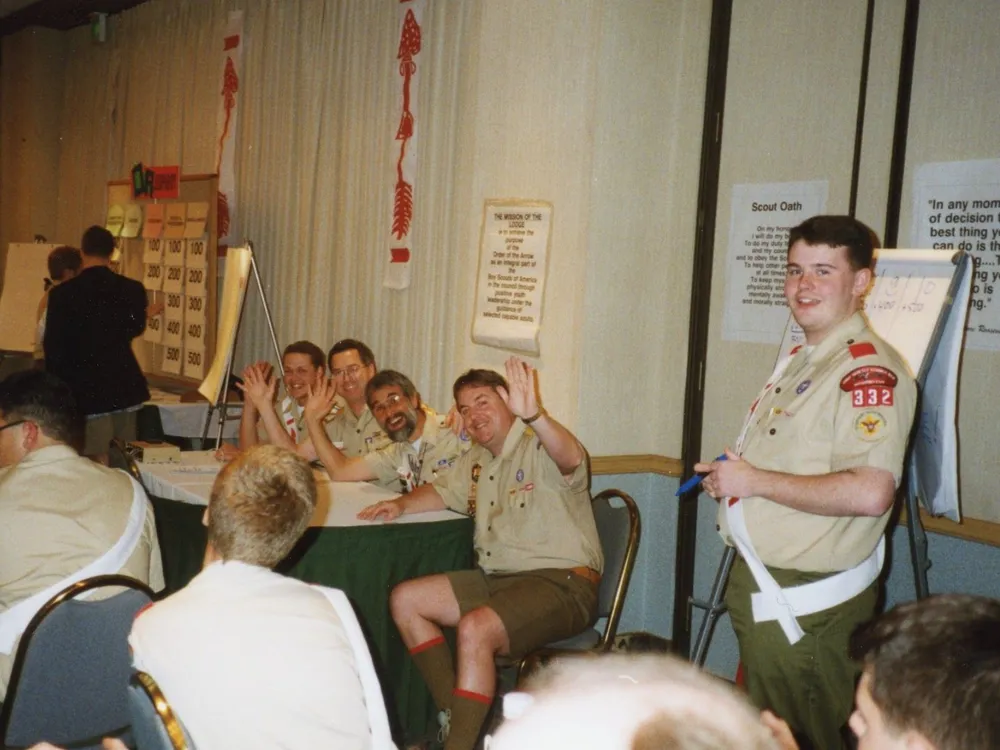
FG: Did writing the book change how you see your younger self?
MA: Absolutely. I think I was much harder on my younger self before I started writing.
When you look back, it’s easy to wonder why you didn’t speak up sooner, why you didn’t recognize what was happening, or why you kept trying so hard to belong somewhere that wouldn’t accept you.
But writing the book forced me to remember that I was a kid. I was a kid who genuinely believed in the organization, who wanted to become an Eagle Scout, and who thought that if he worked hard enough, he could accomplish something meaningful.
I also recognized how much courage it took to come out in that environment and at that time. Today, we sometimes forget how different the cultural climate was in the 1990s. There wasn’t the same visibility, acceptance, or language around LGBTQ identity that exists today.
I have a lot more compassion for that kid now. I don’t see him as naive or foolish for believing in Scouting. I see somebody who was trying to find his place in the world.
And I think there’s something important about that. I don’t want to erase that younger version of myself just because the organization eventually rejected him. He deserved better, but he also accomplished more than he probably realized at the time.
FG: What do you hope former Scouts take away from the memoir?
MA: I hope former Scouts recognize themselves in the book, even if their experiences were completely different from mine.
One thing I loved about Scouting was the sense of community. The camping trips, the friendships, the traditions, the ridiculous activities, the uniforms, the merit badges, and all the little things that seemed incredibly important when you were 14.
I think many former Scouts have complicated feelings about their experiences. They may have wonderful memories of the organization while also recognizing that some people weren’t treated fairly.
I don’t want someone to read my book and feel like they must disown every positive experience they had in Scouting. That’s not the point. I hope they think about the people who might have been standing beside them, wearing the same uniform, working toward the same goals, but quietly wondering whether they were actually accepted.
And for former Scouts who experienced something similar, I hope they realize they weren’t alone. Sometimes, knowing somebody else went through something similar can be incredibly validating.
I’d also like people to think about what belonging really means. An organization can talk about character, leadership, and service, but those values don’t mean much if they’re only extended to people who look, think, or love the way the organization expects.
FG: What does the title, Boy Pageant, mean to you?
MA: The title is a little bit of a joke, but it’s also a pretty accurate description of how I came to understand Scouting.
Growing up, I thought of Scouting as an enormous adventure. There were ranks to earn, merit badges to collect, ceremonies to attend, uniforms to wear, and eventually the chance to become an Eagle Scout.
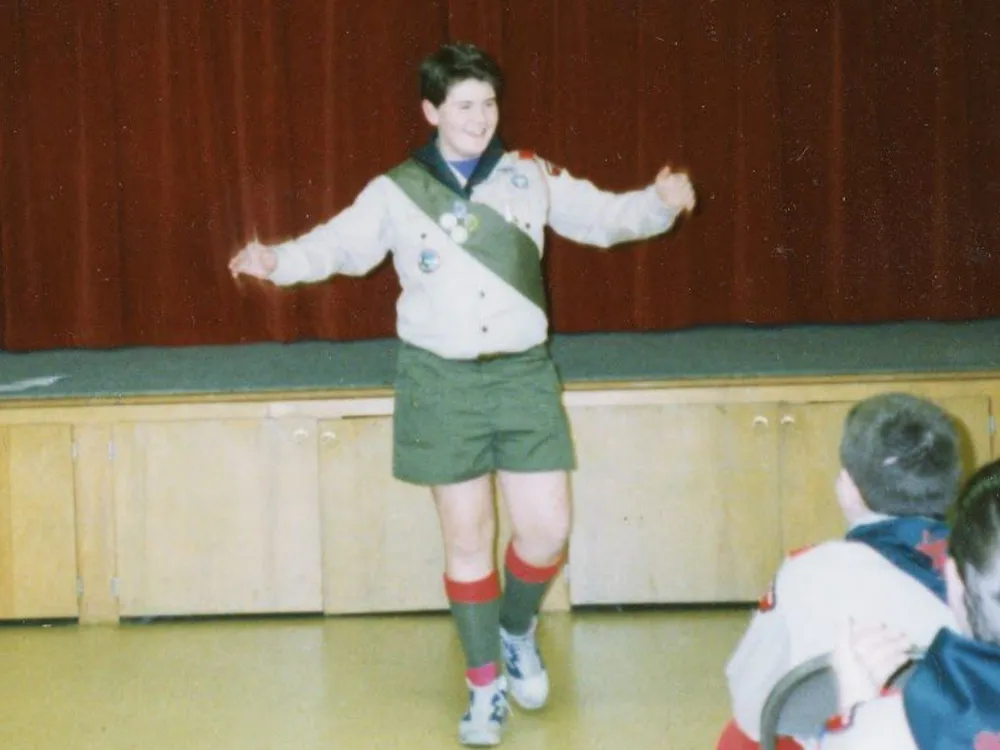
But as I got older, I started to recognize how much of it was about performance. You learned the expectations, wore the uniform, displayed your accomplishments, and demonstrated that you understood the rules. There was a hierarchy, a certain amount of pageantry, and a very specific image of what a successful Scout was supposed to look like.
The Order of the Arrow took some of that to another level. The ceremonies, sashes, honors, and elaborate traditions created an almost theatrical atmosphere. I don’t mean that as an insult. I was completely invested in it all. I loved the traditions and wanted to be part of that world.
But looking back, the whole experience felt almost like a pageant. You were being evaluated, recognized, rewarded, and ultimately judged on how well you fit into an established ideal of American boyhood.
The title also has a more personal meaning. I spent so much of my childhood trying to earn my place in a particular version of masculinity. I was essentially auditioning for a role that I would eventually discover I wasn’t allowed to play.
Boy Pageant is about that performance, the expectations surrounding it, and what happens when you realize you don’t have to keep auditioning.
FG: How did you decide what to include and what to leave out when writing your memoir?
MA: That was probably one of the biggest challenges. I had to remind myself that I wasn’t writing an encyclopedia of my childhood or a complete history of Boy Scouts. I had plenty of stories I loved, but loving a story doesn’t necessarily mean it belongs in the book.
I focused on experiences that moved the larger narrative forward. If a story helped explain my relationship with Scouting, my desire to become an Eagle Scout, the organization’s culture, or the person I eventually became, it probably deserved a place.
I also wanted readers to understand why Scouting mattered so much to me before they understood why losing it was so painful. That was important. I didn’t want the book to begin with the assumption that Scouting was simply a terrible experience. It wasn’t. I genuinely cherished wonderful moments, friendships, adventures, and traditions. Those positive experiences are what make the later conflict meaningful.
I also made a conscious decision not to write a book that was simply a list of grievances. There is a serious story here, but I wanted it to be entertaining, too. Humor is part of how I process experiences, and I think some of the absurdity of my childhood deserves a laugh.
Ultimately, I asked myself one question: Does this story help explain how I got from the kid who wanted to become an Eagle Scout to the adult who eventually found the confidence to speak publicly about what happened?
If it did, it probably belonged.
FG: Looking back, do you think Scouting helped shape your voice as a writer and advocate, even while it constrained you?
MA: I do, and there’s an interesting irony in that.
Scouting teaches you to be prepared, take responsibility, lead, and speak up when something needs addressing. Those are all qualities that became important to me.
I learned how to organize people, communicate, work toward long-term goals, and advocate for something I believed in. Ironically, some of the skills I developed through Scouting eventually helped me challenge the organization itself.
When I was 21, I contacted United Way of King County after learning about its position on funding organizations that excluded people based on sexual orientation. My approach wasn’t particularly sophisticated. I was a young adult who believed something was wrong and decided to do something about it. That experience eventually became part of a much larger public conversation, including my appearances on national television.
I don’t think my younger self would have imagined any of that.
Scouting gave me a framework for leadership, but it also gave me a very narrow definition of who was allowed to exercise that leadership. Eventually, I had to realize I didn’t need the organization’s permission to become the person I wanted to be.
In some ways, the organization taught me how to advocate for myself by giving me something I needed to advocate against.
FG: Now that Scouting has become more inclusive of Gay members, what’s your honest reaction to that change, especially thinking back on your own time in Scouts?
MA: My reaction is complicated, but ultimately, I’m glad it happened.
I think it’s wonderful that Gay kids today can participate in Scouting without having to hide who they are or worry that being honest about themselves could cost them their place in the organization. That’s a significant change, and I don’t want to minimize it.
But I would be lying if I said there isn’t some sadness attached to it. I spent years working toward something that I was ultimately denied because of who I was. I didn’t get to finish that journey on the same terms as other Scouts.
It’s a strange feeling to watch an organization eventually embrace something that it once treated as grounds for exclusion. You can be happy that things changed and still be disappointed that they didn’t change sooner.
I also think it’s important to remember that these changes didn’t happen simply because the organization woke up one morning and decided to become more inclusive. People challenged it. People spoke publicly. Families, advocates, former Scouts, and members pushed back against policies they believed were discriminatory. I was one of those people, and I’m proud of that.
I don’t need the organization to go back in time and give me an Eagle Scout badge. That’s not really what this is about anymore. I’ve built a life, a career, and an identity that have very little to do with whether I ever received that recognition.
But I do hope today’s Gay Scouts understand that they don’t have to be grateful simply for being allowed in the room. They deserve the same opportunities, recognition, friendships, and sense of belonging as everyone else.
And perhaps that’s the most important change. The goal shouldn’t simply be to let Gay kids participate in Scouting. It should be to make sure they never have to question whether they belong there in the first place.
Aylesworth captures the tension between belonging and self-erasure with nuance, wit, and compassion, crafting a memoir that feels both deeply personal and widely relatable. It invites readers not only to reconsider Scouting culture but also to think more broadly about how we define manhood, acceptance, and authenticity.
The book is available on Amazon at https://a.co/d/0eM6cLdL.
Support the Seattle Gay News: Celebrate 52 Years with Us!
As the third-oldest LGBTQIA+ newspaper in the United States, the Seattle Gay News (SGN) has been a vital independent source of news and entertainment for Seattle and the Pacific Northwest since 1974.
As we celebrate our 52nd year, we need your support to continue our mission.
A monthly contribution will ensure that SGN remains a beacon of truth and a virtual gathering place for community dialogue.
Help us keep printing and providing a platform for LGBTQIA+ voices.
How you can donate!
Using this link: givebutter.com/6lZnDB
Text “SGN” to 53-555
Or Scan the QR code below!