

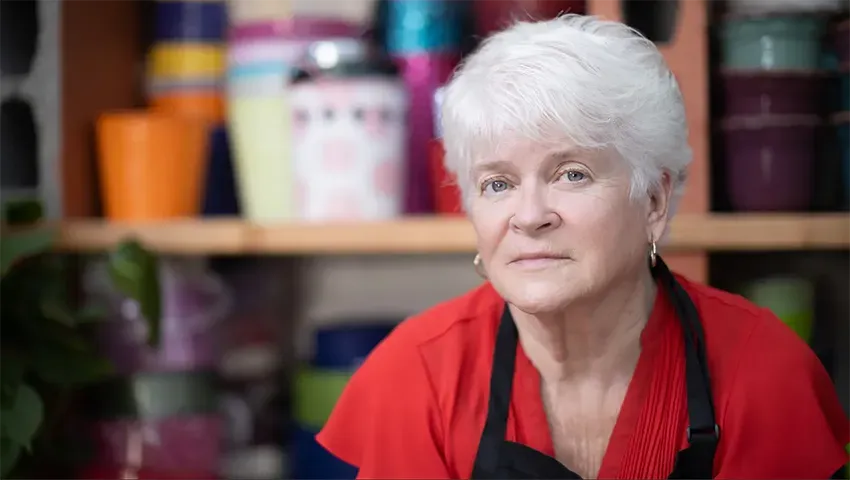
The US Supreme Court has declined to hear an appeal from Barronelle Stutzman, a Richland florist who refused to provide wedding flowers for a Gay couple.
The high court's July 2 ruling leaves in place a Washington State Supreme Court ruling that Stutzman violated the state's anti-discrimination laws when she refused service to Robert Ingersoll and Curt Freed.
Stutzman claimed that she had a First Amendment right to do so because same-sex weddings violated her religious beliefs. After losing a string of court cases, she filed a final appeal to the US Supreme Court.
Four justices are required to agree to hear the case, but only Justices Samuel Alito and Clarence Thomas – the most hard-core of the high court's conservative majority – said there were grounds to take the appeal.
The court's rejection of her appeal marks the end of the road for a court case that extends back to 2013.
Taking advantage of the new Washington state law legalizing same-sex marriage, long-time couple Ingersoll and Freed decided to marry. They asked Stutzman – who had been their regular supplier of flowers – to provide wedding arrangements.
She declined, and ultimately the couple sued her for violating Washington state's anti-discrimination laws. They were represented by the ACLU.
Washington's attorney general, Bob Ferguson, also filed a consumer protection action against Stutzman. That action resulted in a relatively modest penalty for Stutzman: a $2,000 fine, a $1 payment for court costs, and agreement not to discriminate in the future.
Stutzman, however, refused to comply, alleging that her religious liberty rights were being infringed. She also filed a countersuit, charging that the state's action had hurt her business.
On November 15, 2016, Ferguson personally argued the case in front of the Washington State Supreme Court, which found unanimously that Stutzman had violated state anti-discrimination and consumer protection laws.
Stutzman then filed an appeal in federal court, alleging that her First Amendment rights to freedom of religion were being violated.
In 2018, the US Supreme Court vacated the State Supreme Court's ruling, but without deciding on the merits of Stutzman's arguments. Instead, the high court instructed Washington state courts to determine whether they'd acted out of prejudice against Stutzman's religious convictions.
Once again, the Washington State Supreme Court ruled against Stutzman. Once again, she appealed to the US Supreme Court. In this latest decision, the justices said clearly she had no further claims on their attention.