

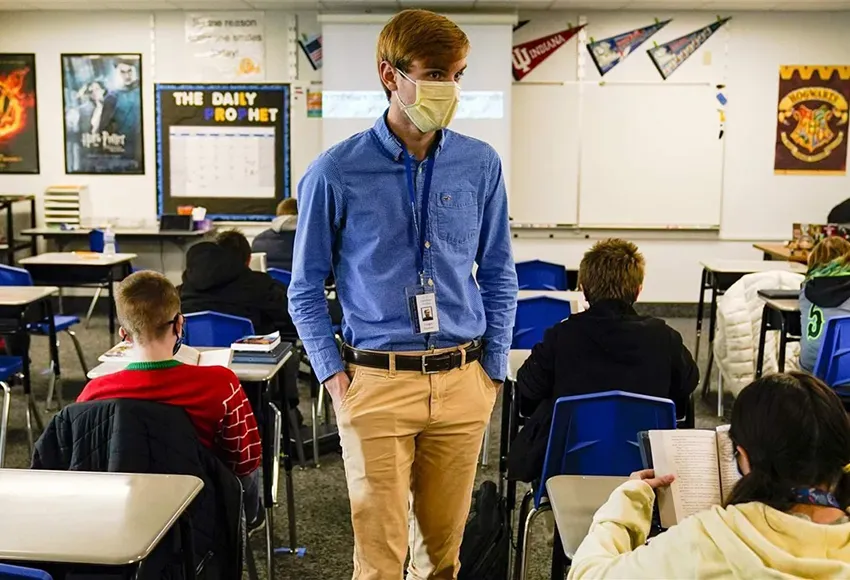
When COVID-19 reached Washington in the spring of last year, Gov. Inslee had no choice but to cancel in-person learning for the remainder of that school year. While he was attempting to lead the state out of the pandemic in the quickest and most science-based way possible, K-12 students were negatively affected.
However resilient they may be, schoolchildren the pandemic has taken a toll on them. They could no longer see their friends or classmates, they had to adapt to learning full-time via a screen (if they were lucky enough to have access to a laptop or computer at home, that is), and they lost the opportunity to engage in sports and activity groups. LGBTQ+ students in particular lost inclusive and gender-affirming spaces from the get-go
The well-being of children living through the pandemic has been an area of high priority for the Centers for Disease Control and Prevention (CDC) and Washington state's Department of Health (DOH) since the start. For the past year and a half, officials have been taking every precautionary measure – including virtual learning – in order to protect students from contracting and spreading the virus.
Things are looking up for this new 2021–22 school year, though, which has only just begun.
In May of 2021 – near the end of the previous school year – Pfizer's coronavirus vaccine was authorized in adolescents as young as 12 years old. This move by the Food and Drug Administration (FDA) was a major stepping stone in allowing students to resume in-person learning. However, students younger than 12 years old are unable to receive the most effective form of protection against the virus, which is why the DOH has come up with a game plan (more specifically, requirements and courses of action) relating to COVID-19 safety and prevention in schools.
A quick look at the facts
Vaccines save lives. Those who choose to become fully vaccinated against the coronavirus are significantly less likely to develop severe COVID-19-related health outcomes, such as hospitalization and death. Over 90% of all new cases, hospitalizations, and deaths in the state over the past several months occurred in those who were not fully vaccinated.
As of September 1, 2021, the DOH reported that 41.5% of 12–15-year-olds in the state are fully vaccinated while 48.7% of 16–17-year-olds are fully vaccinated.
The Pfizer BioNTech vaccine is still only available for those ages 12 and above, and although the pharmaceutical company has been conducting clinical trials in those ages 6 months to 11 years, Pfizer doesn't expect a vaccine to become available for younger age groups (5 to 11 years old) until at least this winter.
Moderna's vaccine is currently available for those ages 18 and above, and clinical trials in younger age groups remain ongoing. The Johnson & Johnson vaccine is still only available for those ages 18 and above.
School Safety 101
First and foremost, all schools must be able to provide full-time in-person learning for all students who are interested and must follow the DOH's COVID safety measures.
One thing the DOH emphasizes in its back-to-school requirements is that all school staff, students, and visitors must wear face masks indoors – the second most important tool when it comes to stopping the spread of the virus – regardless of their vaccination status. It is important to note that vaccinations are not required to participate in in-person learning; however, schools must promote vaccines for unvaccinated students who are eligible.
Going into the year, schools will begin verifying the vaccination status of their staff members and students. Vaccination verification includes the CDC-issued vaccination card containing the recipient's personal information and documentation of the vaccination from a healthcare provider.
Students and staff should also stay home if feeling unwell.
Masks
Again, if you take a single step into the building, you are required to wear a face mask, even if you're fully vaccinated. The mask requirement extends to public transportation, such as school buses. Masks are not required if the individual is under 2 years of age or has a medical condition that prevents them from wearing one. Furthermore, 2–4-year-olds must be supervised when wearing face masks.
Cloth and surgical masks are recommended by the DOH for all school attendees. Teachers who are verified to be fully vaccinated may remove their masks indoors when no children are present or expected to be present, however.
Luckily, COVID transmission outdoors remains low, so both fully vaccinated and unvaccinated people are allowed to remove their masks outside; however, the wearing of masks outdoors should still be encouraged. It is strongly advised that unvaccinated people wear masks outdoors when in tightly crowded areas.
Physical distancing and ventilation
Students are required to maintain at least three feet of physical distance (or as much as possible) from others in classrooms. Teachers and students must also work to limit interactions when in large groups. Teachers are encouraged to open windows when class is in session and to spend more time learning outdoors.
Handwashing
The job of a teacher doesn't start and stop with the textbook. Particularly when it comes to younger age groups, teachers tend to take on a sort of parenting role, which includes educating youngsters on when and how to adequately wash their hands. Teachers should reinforce handwashing for 20 seconds with soap after students use the restroom, come in from outdoor playtime, before preparing or eating food, and after petting animals.
If handwashing is not possible, hand sanitizer should be used as an alternative – just not in poorly ventilated spaces. Students and staff are also encouraged to practice basic coughing and sneezing etiquette, such as covering up and immediately handwashing after.
Cleaning
Frequently touched surfaces don't need to be cleaned after each use, but they need to be disinfected after all the students leave for the day or if someone in the room is ill.
Sports
Masks are required by all trainers, coaches, and athletic staff when in K-12 indoor facilities, regardless of vaccination status. Masks are not required for any outdoor sports, but they are recommended when near others, such as in the dugout or on the sidelines. Athletes engaging in low-to-moderate-contact indoor sports, regardless of vaccination status, are not required to wear a mask when actively competing. Masks are not required for fully vaccinated athletes actively competing in high-contact indoor sports, such as basketball and wrestling, and they are not required for unvaccinated athletes who participate in screening testing.
Screening testing is required for unvaccinated athletes to participate in high-contact indoor sports. Screening testing must take place twice per week, with the first test taking place within 24 hours of a competition and the second 3–4 days following (or prior to) a competition. Unvaccinated athletes participating in low-to-moderate-contact indoor sports are not required to undergo screening tests, although it is recommended. Positive test results will lead to elimination and removal from the competition and will be reported to the local health jurisdiction.
Performing arts
Three-layer medical face masks are required for students and staff in performing arts classes and activities. Masks are required for everyone in music class when singing, and teachers should provide students with medical masks to replace their cloth ones. During speech and debate, singing, band, and theatre, students are required to wear masks while performing; students who play woodwind and brass instruments are allowed to remove their masks while performing but must pull them up immediately after. The DOH also advises reducing the use of shared equipment as much as possible for these activities.
Reporting COVID-19 cases and outbreaks
If a person develops COVID-19 symptoms while at school, they must immediately be isolated and sent home with a referral for diagnostic testing. If a person visited the school while contagious (48 hours before symptom onset or 48 hours prior to a positive test result), close contacts must be identified and isolated if needed.
Close contacts are those who were within six feet of the COVID-positive person for at least 15 consecutive minutes during the contagious period. Close contacts exclude students who kept a three-foot distance from the COVID-positive person when both were wearing masks; this does not apply to teachers or staff.
If an outbreak occurs, the school's COVID-19 coordinator must immediately inform the school and local health jurisdiction while obtaining information on those who may be close contacts. An outbreak is defined as follows:
Testing/quarantining
If a test result is positive, that person may return to school once symptoms have improved, 24 hours after a fever resolves without the use of fever-reducing medication, and 10 days since the symptoms began or since a positive test result. This applies to unvaccinated and fully vaccinated people.
Close contacts who are fully vaccinated and asymptomatic aren't required to quarantine but should get tested. However, if symptoms develop, they should quarantine. Close contacts should quarantine for at least 10 days but can cease the quarantine at day 7 if they develop no symptoms and receive a negative test result.