

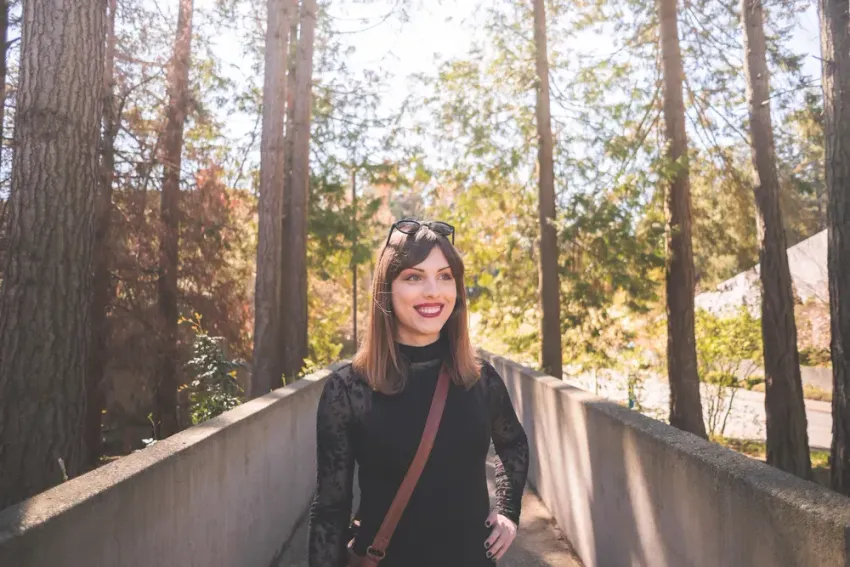
Genitals — perhaps no other part of the body dictates our desires, capacities, and identities more as people on this earth. And from a very young age, we are conditioned — whether through family, friends, the media, the public education system, religions, etc. — to believe that our most intimate bits, no matter what we inherit, will immutably define who we can be and who we can love, for the remainder of our lives. Despite decades of efforts by the feminist and LGBTQIA+ movements to expand the narrow definitions of what it means to be a man, woman, or somebody that subverts the mold altogether, in 2026 we are still in many ways constrained by these gendered expectations in both our public and private lives.
As a Transgender woman, I have spent 28 years of life, so far, getting very familiar with that fact. From childhood, a lot of my actions, mannerisms, and appearances did not sit well with the expectations put upon me as a “boy.” At ten years old, I snuck spare clothing out of my sister’s closet and wore it while lying in bed, resentfully crying to God for not making me a “girl.” In middle school, I began to grow out my hair, shave my legs, and wear more feminine clothing — I was particularly proud of my Joan Jett & The Black Hearts band tee that I’d usually pair with Converses and black skinny jeans (naturally).
It was the late 2000s: Obama had just been elected president, and the winds of social change were picking up. However, my conservative Christian hometown in Eastern Washington would remain hostile-to-Queers territory for the rest of my formative years, and I was constantly pressured by family, teachers, and peers to conform more to what I was supposed to “be” and “look like.” It would take until I went to university to discover that the dormant, Queer femininity I had yearned to release from within for so long had a name (Transgender woman) and an associated process I could act upon (gender transition or “transitioning”).
What I’ve learned since then, from dating as part of this country’s now greatly contested gender minority, is that intimacy is inextricably tied to identity and social hierarchy, whether we realize it or not. Restrictions on the kinds of love that can be pursued — and what people will accept as “legitimate” — affect everybody in some capacity; however, they hits the Trans community especially hard.
And from it all, what I’ve gathered — over years of app-based courtships, heartbreaks, and a long journey toward self-acceptance — is that by choosing to not let myself be stuck in predetermined roles and not following people’s assumptions about who I’m supposed to go to bed with and how, I free myself to seek more fulfilling sexual and romantic possibilities.
Trans turns mainstream
Trans people, and Trans women in particular, were never supposed to be coveted as objects of sexual or romantic desire, nor deserving of love and respect. That was, and mostly still is, the taboo we’re all culturally expected to uphold. It has been long expressed in our movies, music, and stand-up routines (in spite of outliers like Lou Reed, who famously dated Mexican Transgender woman Rachel Humphreys, whom he attributed as being an inspiration for much of his songs). Even the most well-known romance flick associated with our city, the 1993 classic Sleepless in Seattle, has a scene in which Meg Ryan’s friend strongly warns her that Tom Hanks’ character — who inadvertently courts her all the way from Baltimore by sharing his romantic woes publicly on national radio — might secretly be a dangerous drug addict or worse: a “transvestite.”
But over the last decade, due to hardworking Queer activists, Trans exclusion in society has slowly been eroded — dating included. Apps like OKCupid have expanded gender labels and pronouns for people to choose from. Sapphic and WLW events in Seattle regularly make it a point to include Trans and Nonbinary people. Celebrities lend support by wearing Trans flag and “Protect the Dolls” T-shirts, while shows centering Trans stories, like FX’s Pose and Euphoria, have become smash hits.
But with greater inclusion have also unfortunately come conservative politicians, who have cynically fostered resentments among their supporters toward these hard-fought changes. In this day and age, it is strange as a Gen Z Trans person to experience this dichotomy between broader social acknowledgement and a still-lingering (but significant) lack of understanding by others.
Flash-forward to 2019, when I left my comphet (compulsory heterosexual) relationship in college and started to date again. In my first year of transition, I began to benefit from what in the Trans community is called “early passing privilege,” as I experienced for the first time what it was like to be treated as a woman by others.
As much as it felt great to finally receive gender validation, it also came along with harassment and misunderstanding. I started getting catcalled, creeped on by older men, and even followed home from the bus stop. At my summertime mining-camp job, a closeted Trans-masc coworker warned me about “covering up” more, so as to not evoke unwanted attention from the men in camp, despite going out of my way to wear only what I thought of already as “conservative” clothing.
And despite the clear “Trans Woman” label on my dating profiles, cis men would still match with me and go through entire conversations before realizing who they were talking to — and the same went down during in-person encounters. Similarly, in WLW spaces, flirty first impressions often led to discomfort and difficult conversations.
In both instances, romantic interactions with cis people would almost always seem to boil down to what I was currently packing “down there.” In those early years, dealing with people’s disappointment after initially seeming so interested in me took a particularly hard toll on my psyche. After experiencing all this, I now understand why so many Trans people often embrace a solely “T4T”-style dating philosophy, where that is not so likely to be an issue. Some of my most rewarding romantic run-ins have been with other Trans people, but I have also had my fair share of cisgender lovers too.
Fetishization
Pornhub, the world's most popular pornographic video website, with nearly four billion monthly visits, releases its user statistics every year. In 2025, the “Transgender” category had risen to the second-most searched category on the platform, an increase of 58% compared to 2024. Above it, “Lesbian” was the most searched, with other LGBTQIA+ terms, like “Queer” and “Bisexual,” also making major strides. While the “Lesbian" category had been at the top before, the “Transgender” category had never been so widely searched.
However, to take a more pragmatic view of these results, Trans and Queer bodies have long been fetishized and sexually exploited in the adult entertainment industry as well as in sex work, and the recent increase may not necessarily correlate to increased acceptance overall. A common experience for Trans women, especially those attracted to men, is dealing with “DL” cis men who will pursue Trans women behind closed doors but are afraid of being publicly shamed for it by their peers. Often, this dynamic is what informs the “Trans panic” response of men who assault, and sometimes even murder, the same Trans women they pursue.
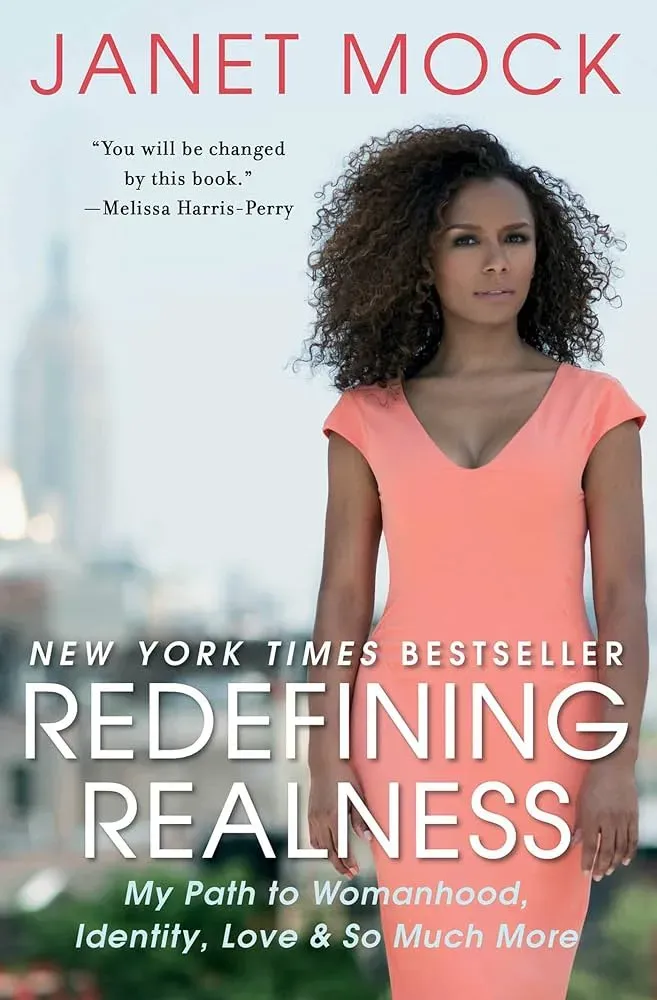
In my first year of transition, I read for the first time an autobiography of another Trans woman’s life: Janet Mock’s Redefining Realness. She wrote about her journey coming out as a Trans youth in Hawaii raised by a single mother. She was also forced, through poverty and as a Trans woman of color, to pursue sex work as a means to not only make her way through college but also obtain gender-affirming surgery in Thailand. Of the men who employed her services, she explained that many would explicitly seek her and other Trans women out to play out their fantasies of “sex goddesses” with “something extra.”
People (usually men) who engage in this behavior are called “chasers,” who pursue Trans bodies as a fetish rather than as human beings. Lou Reed (mentioned earlier) was infamous for not treating his Trans partner well. The story goes that when she decided to pursue gender-affirming surgery, his opposition supposedly led to their break-up. Mock comes to the conclusion, after reflecting on those times that “as long as trans women are seen as less desirable, illegitimate, devalued women, then men will continue to frame their attraction to us as secret, shameful, and stigmatized, limiting their sexual interactions with trans women to pornography and prostitution.”
Regarding her poignant observation, I can say that my own dating struggles also align with it. The idea of commitment is discarded as a possibility altogether when there is still so much shame put upon those who pursue Trans partnerships. And if this past year has been any indication, there is still so much stigma left to break down — for those who are attracted to Trans people, the people in their communities that seek to shame them, and Trans people themselves who are just trying to live their best lives.
Pre-op blues
It is difficult to convey to non-Trans people what it’s like to have woken up one morning to realize everything you’d ever been taught about yourself, from birth, was wrong. To have lived years of your life with this vague but unshakable sense of being uncomfortable in your own body without knowing why. To catch a glance of yourself nude in the bathroom mirror, then completely dissociate from what you had just seen immediately afterward.
My epiphany finally came one January morning in the aftermath of an emotional breakdown I had while experiencing the faltering intimacy of my high school sweetheart turned comphet relationship. Quiet contemplation led to frenzied internet searches, and after staying up all night (my mind racing) looking for the answers I had always longed for, there was only one question left lingering in my head: “Have I been a woman this entire time without even realizing it?”
A flood of memories and emotions that I was previously unable to quantify began pouring out, forming into a torrent of truth that flushed my mind and became unmistakable. And three months later, on my 22nd birthday, only five days away from ingesting my first tablet of estradiol, I walked the streets of Capitol Hill for the first time. Accompanied by my ex-girlfriend, who tacitly supported me through the awkward motions of my early transition, we perused the neighborhood as I bought my first dysphoria hoodie from Out of the Closet (which I then proceeded to wear for weeks on end, like a bad affliction). I lamented to her about how it felt not being gendered correctly by the people we interacted with, as we walked down Pike Street above I-5. She comforted me, saying that someday it would all change. But it was also difficult for her to accept the reality of my transition, and she expressed reservations about how I lacked the collective traumatic experiences of being raised “female” to know what it was truly like being a woman.
There is something unique about the position of being on the same wavelength romantically with somebody — but not having the right kind of “hardware” to reciprocate. Out of high school, we dated for over four years through our undergrad studies. Every Sunday morning, I would make her homemade waffles with strawberries, as we’d lie in bed, lazily watching YouTube makeup tutorials and Olympic women’s gymnastics competitions.
When I came out to her as Trans, I followed up my explanation by saying she was under no obligation to continue the relationship. She began to sob while staring into my eyes, then pulled me into an embrace and muttered, “I just want you to be happy.”
But it turned out that the root of our failing intimacy was also because she too had been experiencing a Queer epiphany all her own: she did not feel sexual attraction toward men and penises. Months went by as we both finished college and I steadily made changes to my life. But the perceived lack of speed in my transition began to frustrate her. She asked in a car ride once if I ever planned on getting “the surgery” and how long that would take. She was additionally very uncomfortable with the fact I had come out as pansexual, having shared with her how I felt attraction toward all types of people. But overall, it ended up being her discomfort with my body and transition that ultimately led to our eventual drifting apart.
The obsession with genitalia in some cis-Queer spaces is often alienating and off-putting to me. Lesbians have used terms like “vagitarian” to describe themselves while hitting on me. A cis Gay friend once told me that the only reason why he felt any attraction toward men at all was because he “loves dick,” not quite understanding the irony of the straight men and Queer women who are constantly attracted to me in spite of my own.
But ultimately, I think the real reason why it all makes me feel so uncomfortable is that subconsciously it feeds into the insecurity and discomfort I still feel deep down toward my own body. Men will use misogynistic language to dehumanize women, referring to them purely by their body parts, perhaps even only valuing their existence in this world because of them. In romantic situations where I’m dismissed for not having the one thing seemingly of value to people, it similarly hurts deeply knowing that it will still take me years before I can finally obtain it through surgical means.
Self-acceptance
But in the meantime, I will try my best to live life with the maximum amount of Trans joy possible. Dating while openly and unapologetically Trans has become as much a triumphant act of defiance as anything else Queer and wonderful worth seeking out in this world.
I think often about the years of my life that were lost spent waiting for “the surgery” that will finally allow me to have intimacy the way I want it. However, I don’t want other people’s pity. Rather, I think it is time we all advocate for a more open-minded approach toward one another that says, “We are all continuously in a state of flux, molding ourselves every day into the people we wish to see reflected back at us in the mirror. We are all on a journey toward becoming more ourselves, and just because some are still working on overcoming obstacles on their path, that doesn’t mean they should be completely discounted.”
Support the Seattle Gay News: Celebrate 52 Years with Us!
As the third-oldest LGBTQIA+ newspaper in the United States, the Seattle Gay News (SGN) has been a vital independent source of news and entertainment for Seattle and the Pacific Northwest since 1974.
As we soon enter into our 52nd year, we need your support to continue our mission.
A monthly contribution will ensure that SGN remains a beacon of truth and a virtual gathering place for community dialogue.
Help us keep printing and providing a platform for LGBTQIA+ voices.
How you can donate!
Using this link: givebutter.com/6lZnDB
Text “SGN” to 53-555
Or Scan the QR code below!