

Dedicated to Kristy — may you rest peacefully my friend.
Some years ago — almost five precisely — having little or no money and nothing in particular to interest me in the midst of pandemic lockdown, I thought I would traverse the sandy shores of Lake Athabasca in the wilderness of northern Saskatchewan to be a cook’s assistant for a Canadian mining expedition. Little did I suspect then how much living and working there for the summer would put my newfound womanhood to the test and push me to both my physical and mental limits.
We set out from Fort McMurray, Alberta, on a cold July morning before the dawn. The town’s surrounding alpine canopy was charred from the 2016 and subsequent wildfires. In the airport hangar — with COVID test results in hand and prepped for the long journey ahead — I was joined by four men. One was a tall and slender geologist from Nova Scotia, tasked by his company to map the region’s topography in search of rare earth minerals (used to make electronics) that, if discovered, would aid Canada’s strategic goal to rely less on Chinese imports. The three other men served as his assistants, two of which were young like me (and also incidentally served as my personal eye candy). The last was a typical, middle-aged bald guy from Toronto who detested “city women” that cared about progressive causes and wore Lululemon.
I had obtained my MA degree the previous month, having written my thesis on the intersection of Chinese cultural practices, environmentalism, and the sinophobia inspired by the coronavirus’s outbreak in Wuhan. Though these gentlemen lost interest in what I did in grad school, it was quickly made up for after their next question: what was one dish I would scratch up for them once we got to camp?
“Spaghetti and meatballs,” I told them after brief contemplation, which elicited nods of approval.
Arrival
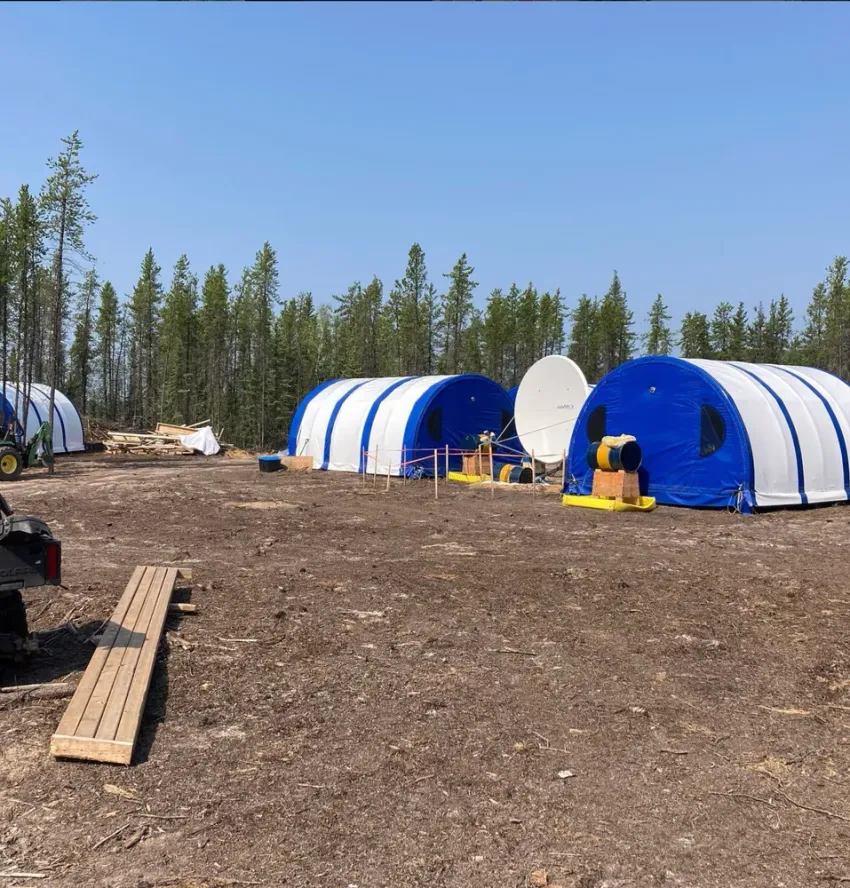
Life in a Canadian mining camp isn’t glamorous, nor is it for the faint of heart. It’s the kind of rugged, frontier-style work that attracts a myriad of characters in search of a job with good pay, and long stints of vacation between assignments. In the case of our camp, the people hailed from every corner of Canada (many were also from its First Nations) except me — the only American.
“Mornin’, ducky” was how the camp’s carpenter greeted me my first week there, while sipping on a cup of tea. He explained that “ducky” was a term of endearment used for young women like myself in Newfoundland (pronounced Noo-fn-land), where he was from. I also watched him construct my bed frame out of leftover plywood, where I would sleep on a black polyurethane foam pad for the next four weeks.
I shared the women’s tent most of my time with just one other person, Kristy, who was also an assistant cook. She was from the interior of British Columbia, with two kids and a Quebecois husband at home; she was also a beautiful Indigenous woman with long black hair, facial freckles, and a gap-toothed smile. Over the course of our working together, we bonded and became close friends through the struggles of feeding and cleaning up after everyone, as the domestic labor of a whole camp inhabited by men rested on us. For the first two and a half weeks, we were also the only two women there.
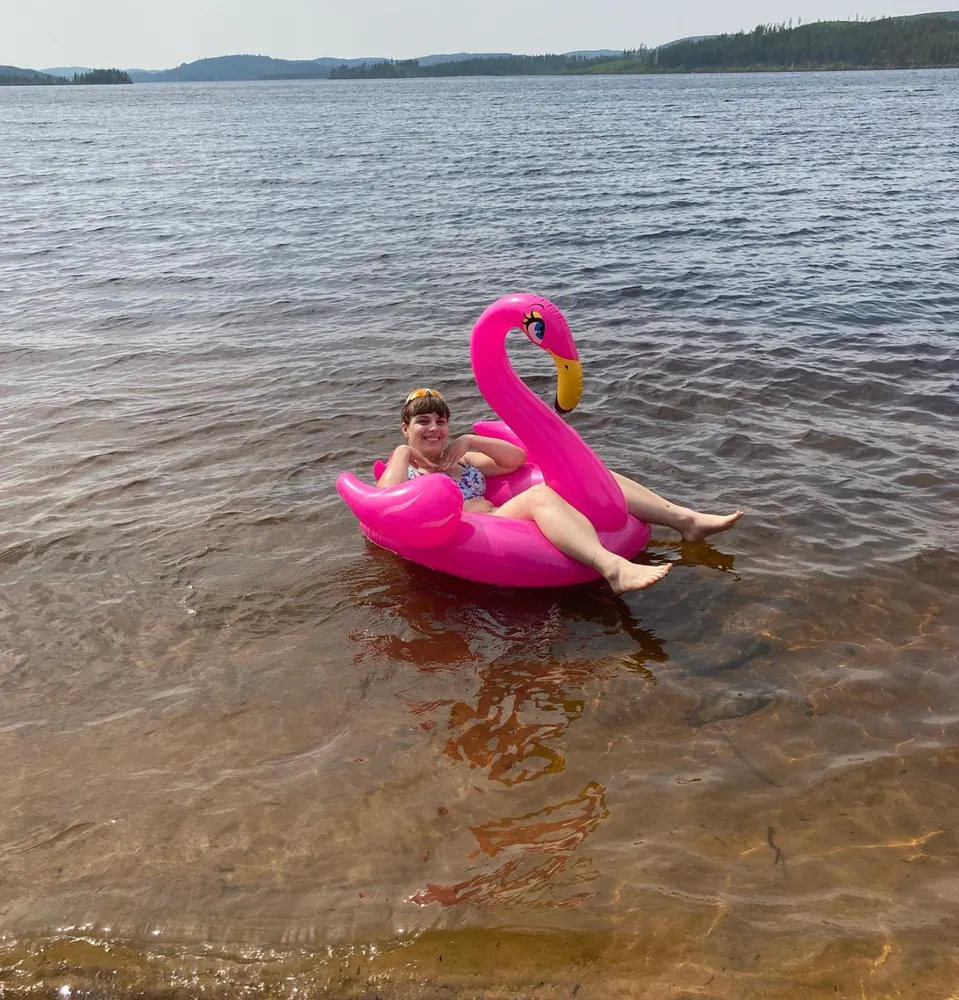
At first I was eager to make myself comfortable — or least the best I could with such limited resources. I created a table out of milk crates and broken plywood, where I set my mirror and cosmetics, while hidden underneath, I placed my secret vial of estradiol, needles, and syringes. In the humid summer heat, I wore my frilly blue bikini and took my pink flamingo pool floaty out into the lake that our camp rested beside. I gave Kristy my phone and asked her to take a picture of me floating and smiling as we commemorated my first day there.
Camp life
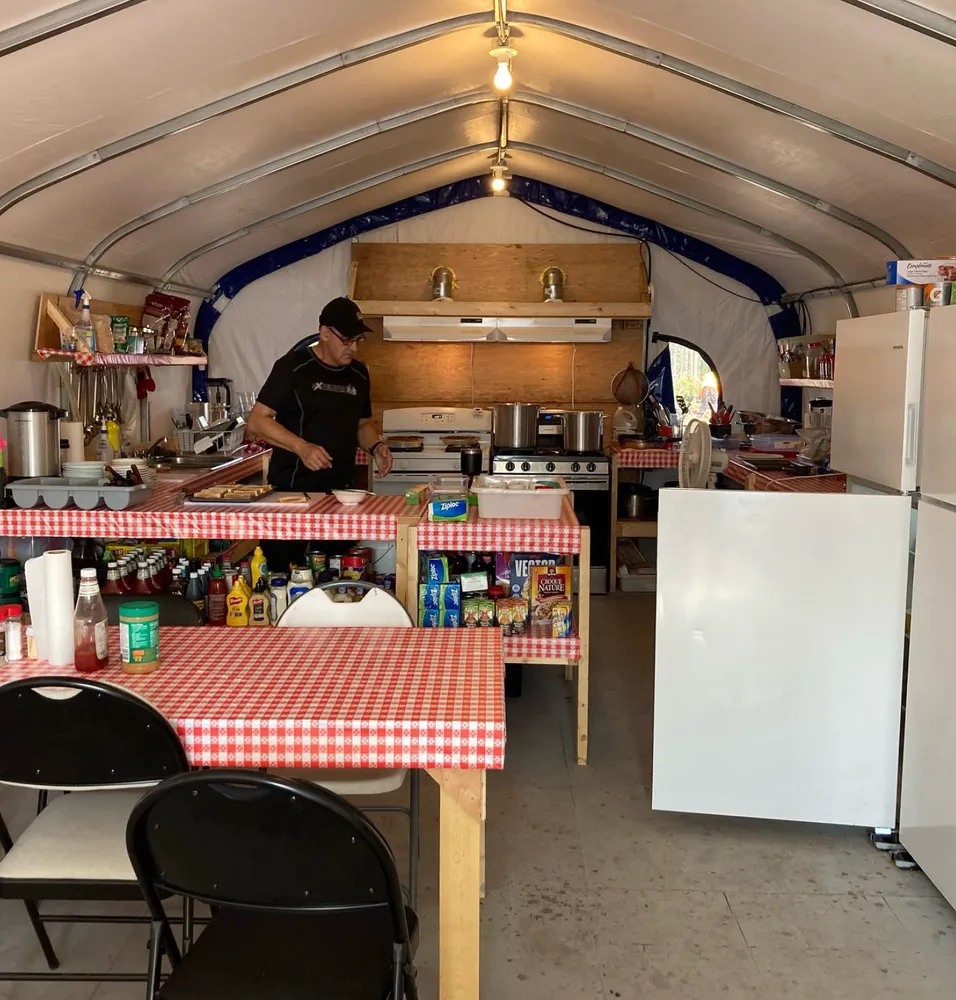
The novelty of my new surroundings wore off quickly as the lack of modern amenities and demands of the work began to set in. In a kitchen crew of 2-3 people max, we had to feed upward of 40+ in the camp at its peak, serving three meals a day plus snacks and beverages (often powdered tea and Gatorade). I was often left with the task of cleaning up all the dishes, canteen, and shower tents, not to mention the two outhouses, which were just plywood shacks placed over holes dug into the ground by an excavator.
The helicopter we all rode in on — and which also took the crews of drillers and geologists out to the field — additionally served as our sole means of getting supplies. The camp cook would write up a list that somebody back in Fort McMurray would grab at the town’s local Save On Foods (a Canadian grocery chain). Once the goods were brought and left by plane at the nearest airfield, the helicopter would drop a large net to the ground attached to a bungee cord. Supplies were bundled onto the net, which was then lifted and taken over to camp, suspended high in the air. The helicopter would lower the full net of goods just outside of the canteen tent, kicking up dirt as we hurried to unload it all.
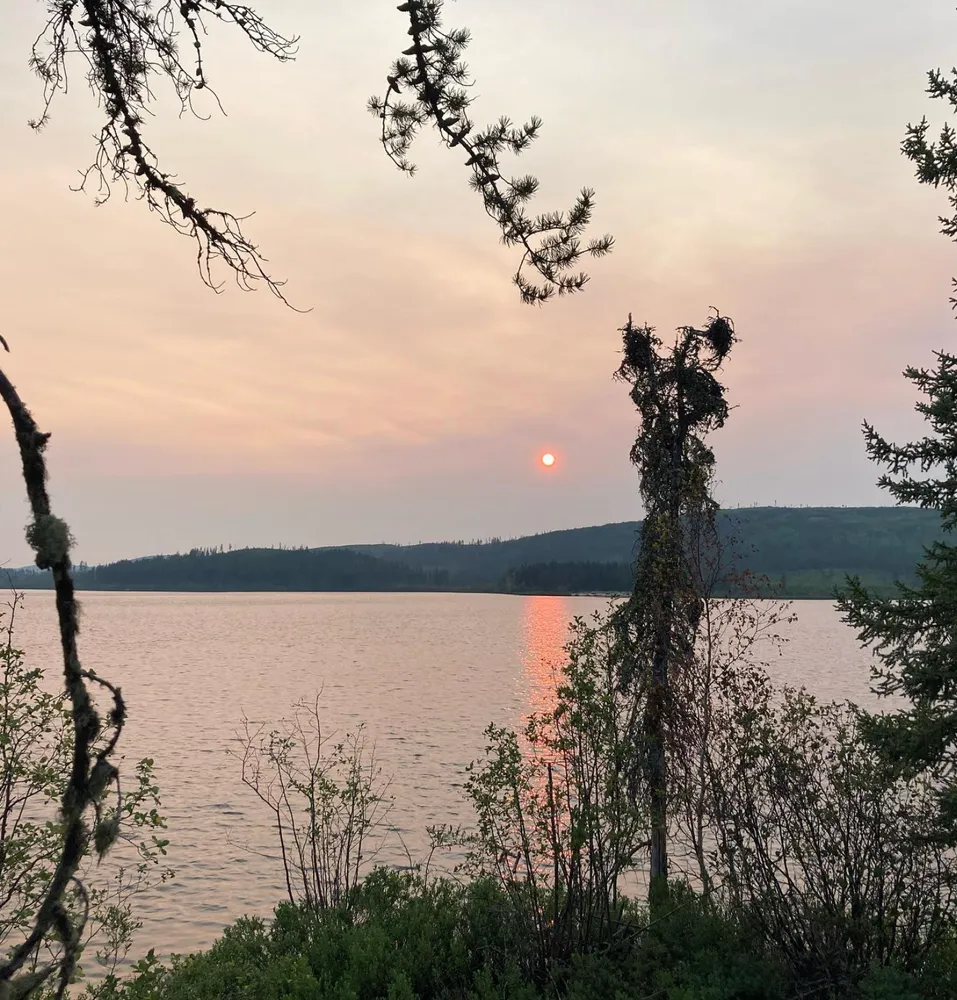
The nature and wildlife around us were often a threat — or at the very least a nuisance. Mosquitos and horseflies were prevalent, which warranted the constant deployment of bug spray and citronella candles. The sky was often blacked out by biblically sized swarms of dragonflies — which, in mating season, did have their own bizarre sense of beauty. Smoke from distant wildfires burning in the Northwest Territories would also sometimes inundate the camp and fill the air.
But the biggest challenge Mother Nature decided to throw at us — an adolescent black bear that kept making its way into the camp, unfazed by the use of airhorns and spray — was sadly shot and killed to keep the workers safe. Thankfully, its carcass was donated to a local Chipewyan community, who made good use of the remains.
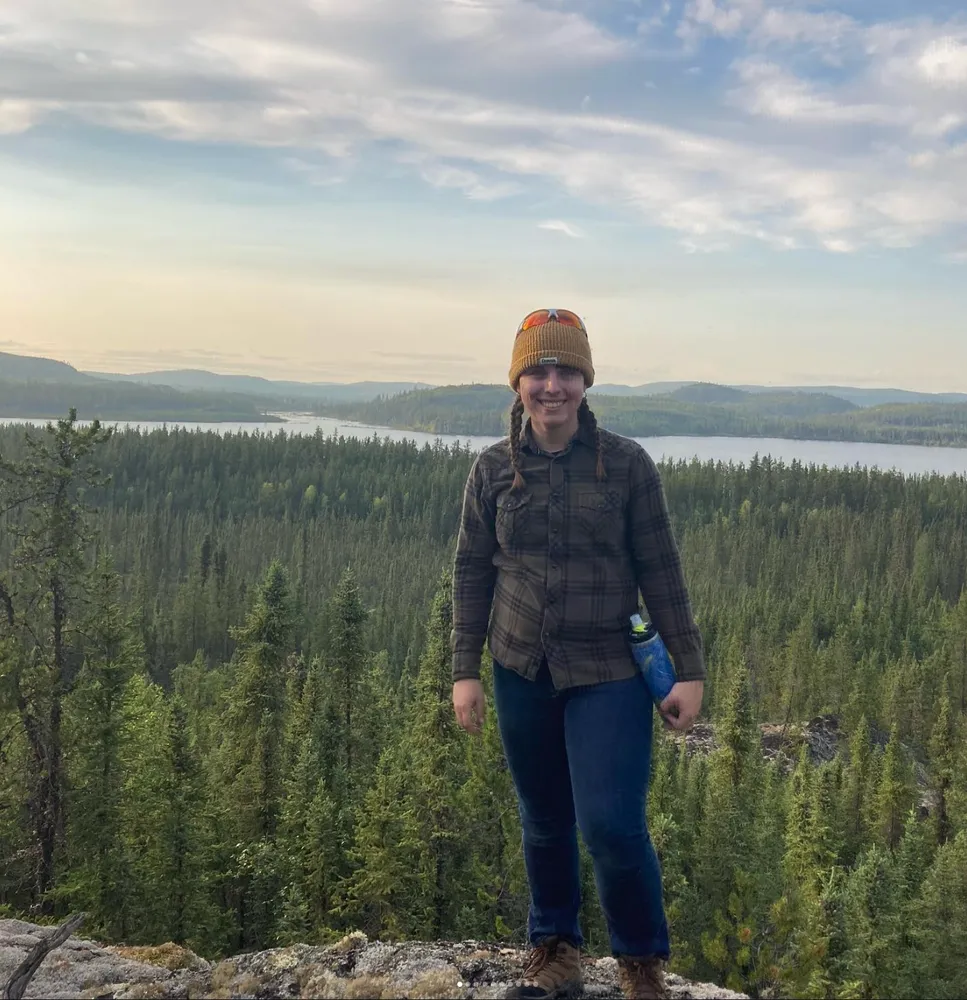
But alongside the numerous challenges of camp life, people also found joy. I would often go out to explore the wilderness with others from the camp, and we fostered our friendships. To escape the heat of July and August, the lake was our most valued respite. Kristy and I, after cleaning up from lunch, would go out to float together in the peaceful calm of its dark, sediment-filled waters. And sometimes I would sneak away on my own to sit in a lawn chair on its shoreline to read the only book I brought on my trip: Between the World & Me by Ta-Nehisi Coates.
A man’s world
At a young age, I had formed a gendered consciousness. The uneven divide of domestic labor between my parents, the double standard of treatment between me and my AFAB peers pre-transition, and the heavy stigma that came with my multiple attempts to connect with my femininity and queerness growing up all culminated into the way I gravitated toward a strong feminist worldview.
Perhaps the greatest potential threat I encountered while at the camp was in the behavior of the men toward me as a young woman. Two years into my gender transition, I got to experience for the first time what it was like to be at the center of (mostly unwanted) male attention. At that point, I had yet to experience sleeping with a man. And although I was immensely cautious about anyone finding out about my hidden gender identity — even to the extent of angling my body in the showers so that my silhouette behind the curtain wouldn’t give my anatomy away — the thrill of thinking about my first male sexual encounter at camp also kept me contemplating whether or not to take the risk.
However, just like in my day-to-day life now, the vast majority of looks and comments on my body I received from the men were unsolicited and discomforting. One camp worker I befriended, a younger man with long hair and a shaggy beard, made comment on how I possessed “childbearing hips.” And despite going out of my way to explicitly wear more conservative clothing as to not “provoke” anyone, many of the guys continued to make passing glances that left me feeling self-conscious and on edge at all times.
Kristy warned me that she had found men trying to sneak into her tent at previous camps. Her advice in this harsh, “man’s world” of mining camp life was to toughen up my demeanor and push back against it or risk getting trampled. So when I had a dispute alone with a hungry driller at 5 a.m. one day — an older, grizzly guy with a bad temper, who blew up and threateningly got in my personal space because I refused to cook him a plate of eggs made to order — I set firm boundaries and placed a tape line in front of the kitchen area (like a schoolteacher), barring non-cooking staff from entering for my own safety.
The remote environment of the camp also meant that the men there were all too comfortable with airing their beliefs on how things “ought to be” between men and women. The first conversation I overheard while working in the canteen tent was how PC culture was everywhere these days, and how you can’t say anything anymore without getting canceled. One helicopter engineer told Kristy and me how he didn’t do any of his own laundry in camp or at home, because “what’s the point of having a wife if she doesn’t do all your laundry for you?”
Trans man incognito
Once the geology students from the University of Manitoba came to do their summer apprenticeships, the camp was legally obligated to have a medic present at all times — who happened to be a closeted Trans man. He talked with the head geologist about how he wanted to be regarded by a masculinized shorthand of his legal name, and although the bulk of the workers obliged, they also regarded him as a strange, gender-nonconforming person that made them feel uncomfortable.
After his arrival, the existence of Trans people suddenly became a hot-button topic of conversation. In a sense, it gave me the unique opportunity to be a fly on the wall, listening to what people had to say about transness and talking with them about it without them knowing I was Trans. Kristy mentioned an “uncle” of hers that would get constantly drunk and cry to her about how they were meant to be a woman. One other lady I worked with in my last week, after Kristy left camp, said she had been trying to inform herself on the experiences of Trans people but had been struggling to understand it all. She admitted to me that she felt like the older a Trans woman was when she decides to transition, the less she saw that person truly as a woman. And the men of the camp were, unsurprisingly, much less open-minded on the topic.
The medic and I began to spend a lot of time together. Being the only other Trans person there, I eventually decided to confide in him, and it led us to become quite close. We shared with one another our stories of Trans self-discovery. He explained how growing up in northern Alberta, he had a fraught relationship with his mother, to the point where at 17 years old, he decided to run away from home to Montreal.
He described how special it felt at the time to finally be in a place that was full of other people like him, watching Queer couples walk down the street holding each other’s hands freely. He also shared his experience of first making love to a Trans woman, how beautiful she was, and how it felt like making love to a cis woman.
He also lamented about where he currently lived, in rural Alberta, where people were much more closed-minded. He told me how people madly honked at him on the highway for the Gay Superman and Batman stickers on his truck; one homophobic guy even chewed him out in a Wal-Mart parking lot because of it.
I talked to him about my life in grad school in Vancouver, BC, all my Queer friendships, and how accepting the city was to Trans people. I even offered to talk with my roommates about giving him a room to rent in our house if he ever decided to choose to leave Alberta.
But he also wasn’t always the most accepting. The friendship I formed with an older camp worker, an affable, hippy-grandpa kind of guy, not too far off in disposition to Tommy Chong, served as testament to this. The medic took me aside one evening to warn me that the man had ulterior motives, and would make suggestive looks toward me behind my back. He let me know that he thought I dressed too suggestively, and also insinuated I had been behaving too flippantly around the men in camp. His advice hurt my feelings at the time, because I felt like I was already trying everything I could not to “arouse” anyone’s attention. His reasoning had an air of victim blaming to it, but looking back now, I know that his intentions were probably only to protect me, and that also he was perhaps projecting some of his own traumatic experiences onto me.
He would talk to me about how bad his gender dysphoria was, and how much he wanted to have top surgery. He explained to me how watching me live freely and be seen by others as my authentic self inspired him. I have a distinct memory of him watching me swim in the lake from the boat we all rode in on, too uncomfortable to take off his shirt and swim with Kristy and me.
Departure
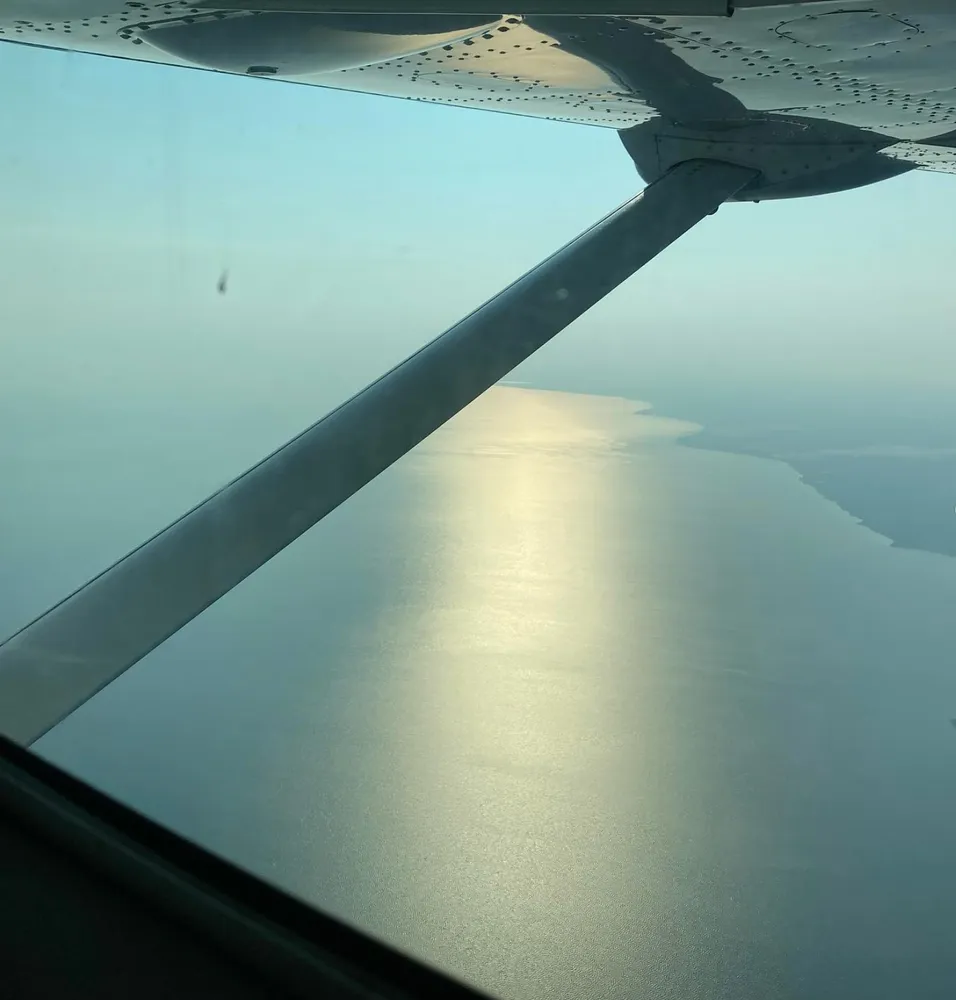
As we rode together in a taxi van back to the Fort McMurray airport, the men who left camp with me (the bald Toronto guy, a helicopter engineer, and a camp worker) chatted with the driver about how excited they were to get out again, and bragged that they should all celebrate by going out to the strip club together, while I awkwardly sat in silence in the back seat.
The helicopter engineer initially caught my attention in camp as being kind of cute, but once he started talking about himself, my impression of him immediately did a 180. He told me how much of a fan he was of Trump and wished that Canada had a great leader like him. He lived in Richmond, BC, but was planning to move to Alberta soon, because he was frustrated with how the city had changed recently (because many Chinese immigrants had settled there). His facial reaction at the airport bar was quite disgruntled after he asked me about my political beliefs, because I told him that I was a progressive woman and a fan of Jagmeet Singh and the NDP (Canada’s most left-leaning party).
“It makes sense,” he said with a nod, in barely veiled disappointment. I tried to maintain my distance from him after that conversation, but in our shared layover in Calgary, he kept asking me multiple times in which specific neighborhood and what street in Vancouver I lived. I ultimately was able to remain vague and deflect the intrusive question each time he asked. And so we awkwardly sat one row from one another on the flight back to Vancouver International Airport, and after arrival, we never saw or spoke to each other ever again.
Postscript
At camp I once told Kristy about the book I was reading, and how much I enjoyed Ta-Nehisi Coates as an author.
“I think I might want to try and become a writer, or a journalist, once I get out of here,” I reflected while scrubbing the gunk off of a miner’s plate. She encouraged me, saying that I should go pursue my passions while I was still young and without any kids.
It took me two and a half years after that moment — and sadly my friend has since passed on — but finally, after having read a book called Transtopia in the Sinophone Pacific by Howard Chiang, I wrote an email to my local LGBTQIA+ newspaper back in Seattle to pitch my first article idea.
Support the Seattle Gay News: Celebrate 52 Years with Us!
As the third-oldest LGBTQIA+ newspaper in the United States, the Seattle Gay News (SGN) has been a vital independent source of news and entertainment for Seattle and the Pacific Northwest since 1974.
As we celebrate our 52nd year, we need your support to continue our mission.
A monthly contribution will ensure that SGN remains a beacon of truth and a virtual gathering place for community dialogue.
Help us keep printing and providing a platform for LGBTQIA+ voices.
How you can donate!
Using this link: givebutter.com/6lZnDB
Text “SGN” to 53-555
Or Scan the QR code below!